The World Cup is about to take over Toronto for 40 days. Most of the fan builds will be forgettable.
The 2026 FIFA World Cup runs June 11 to July 19 with Toronto as a host city, and adidas has built a 25,000-square-foot "Home of Soccer" fan hub at STACKT Market for the full tournament. For brand and agency teams, the lesson from the strongest World Cup…
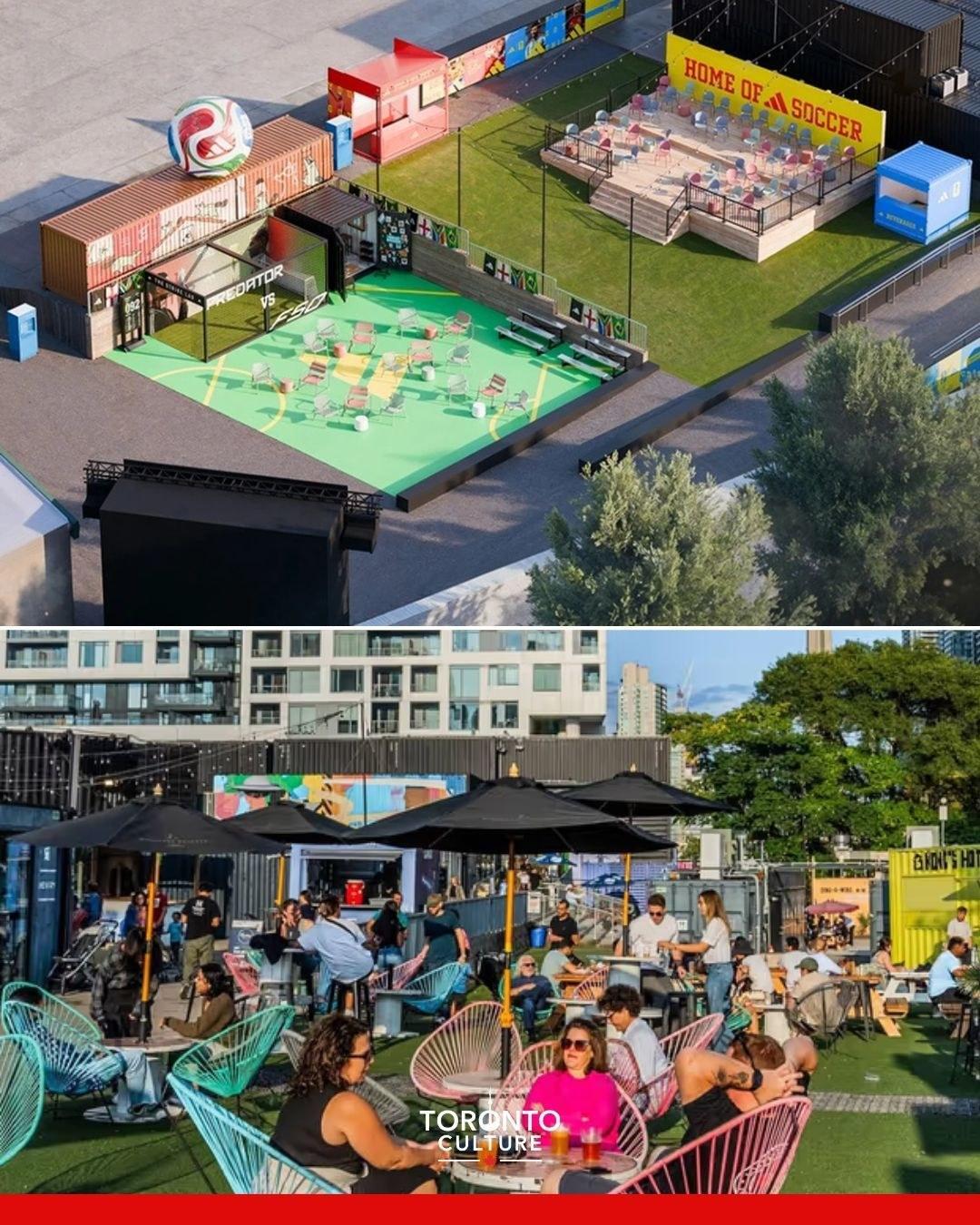
In brief. The 2026 FIFA World Cup runs June 11 to July 19 with Toronto as a host city, and adidas has built a 25,000-square-foot "Home of Soccer" fan hub at STACKT Market for the full tournament. For brand and agency teams, the lesson from the strongest World Cup activations is to give fans something to do, anchor the build to the city, and engineer it to hold up across all 40 days rather than one weekend.
On June 11, adidas opens its "Home of Soccer" hub at STACKT Market and doesn't close it until July 19. That is more than 25,000 square feet of downtown Toronto, a few minutes from BMO Field and the city's FIFA Fan Festival, running for the entire length of the tournament. At the center sits a 13.5-by-24-foot outdoor screen for match watch parties. Around it: The Strike Lab, a 20-by-10-foot activation where fans test adidas Predator and F50 boots and watch their kick speed climb a live leaderboard, and the adidas Studio, where the rotating offer is a barber, custom hair dye, braiding, and temporary tattoos.
The World Cup is in Toronto's backyard now. For the next 40 days, every agency and brand team in the GTA is either working on a tournament activation or wishing they were. The FIFA Fan Festival lands at Fort York and The Bentway. GE Appliances is the title sponsor of the Canada Soccer House. Sponsor activations are about to be everywhere.
Which is exactly the problem.
When a city fills with branded fan zones in the same six weeks, most of them blur into one another. A screen, a logo wall, a sampling table, a photo moment, a queue. The fan walks through, takes the photo, and forgets which brand it was by the time they reach the next one. Tournament season is the easiest time to spend a large activation budget and the hardest time to be remembered.
What the adidas hub gets right
Look at what adidas actually built into STACKT, because it answers the "how do you stand out" question without saying a word about standing out.
The Strike Lab gives fans something to do with their bodies, not just something to look at. Kicking a ball and seeing the speed register on a leaderboard is a participatory loop, not a passive display. The adidas Studio gives them something to leave with that isn't a branded keychain: a haircut, a braid, a tattoo, a physical change they chose. The watch parties give them a reason to stay for two hours instead of two minutes. And all of it is anchored to a real place, steps from the stadium and the Fan Festival, so it belongs to Toronto's tournament rather than floating free as generic brand content.
None of this is about the adidas logo. It is about dwell time, participation, and locality. The brand shows up because the experience is good, not because the experience is plastered with the brand.
What this means for activation work in 2026
One: give fans a verb, not a backdrop. The activations that survive tournament season are the ones where the fan does something. Kick a ball, get a haircut, build a card, cook something. A backdrop gets one photo. A verb gets dwell time, and dwell time is what the fan actually remembers.
Two: anchor to the city, not just the tournament. Toronto fans can tell the difference between an activation that was designed for their city and one that was templated in a deck and dropped into eight host cities. Local chefs, local materials, a location people already know. The tournament is global; the win is local.
Three: the build has to hold up for 40 days, not one weekend. A pop-up that looks great on opening night and tired by week three is a liability across a six-week tournament. Tournament-length activations are a fabrication problem before they are a creative one. The structure, the materials, and the wear points have to be built for a marathon.
For GTA agencies and brand teams sitting on World Cup briefs right now, the adidas hub is the benchmark to measure against. Not because it is the flashiest, but because it is built around what fans do, where they are, and how long they stay.
If you have a tournament brief and you are staring at a screen-and-logo-wall concept, that is the moment to push for the verb and the build. That is the work we do.