Aesop put 10,826 fragrance bottles in a 15th-century church. The quiet activation is back.
Aesop's 2026 Milan Design Week installation, Factory of Light, used 10,826 salvaged fragrance bottles and reclaimed Milanese scaffolding tarps inside a 15th-century church to launch the brand's first lighting collection. Last year's installation drew…
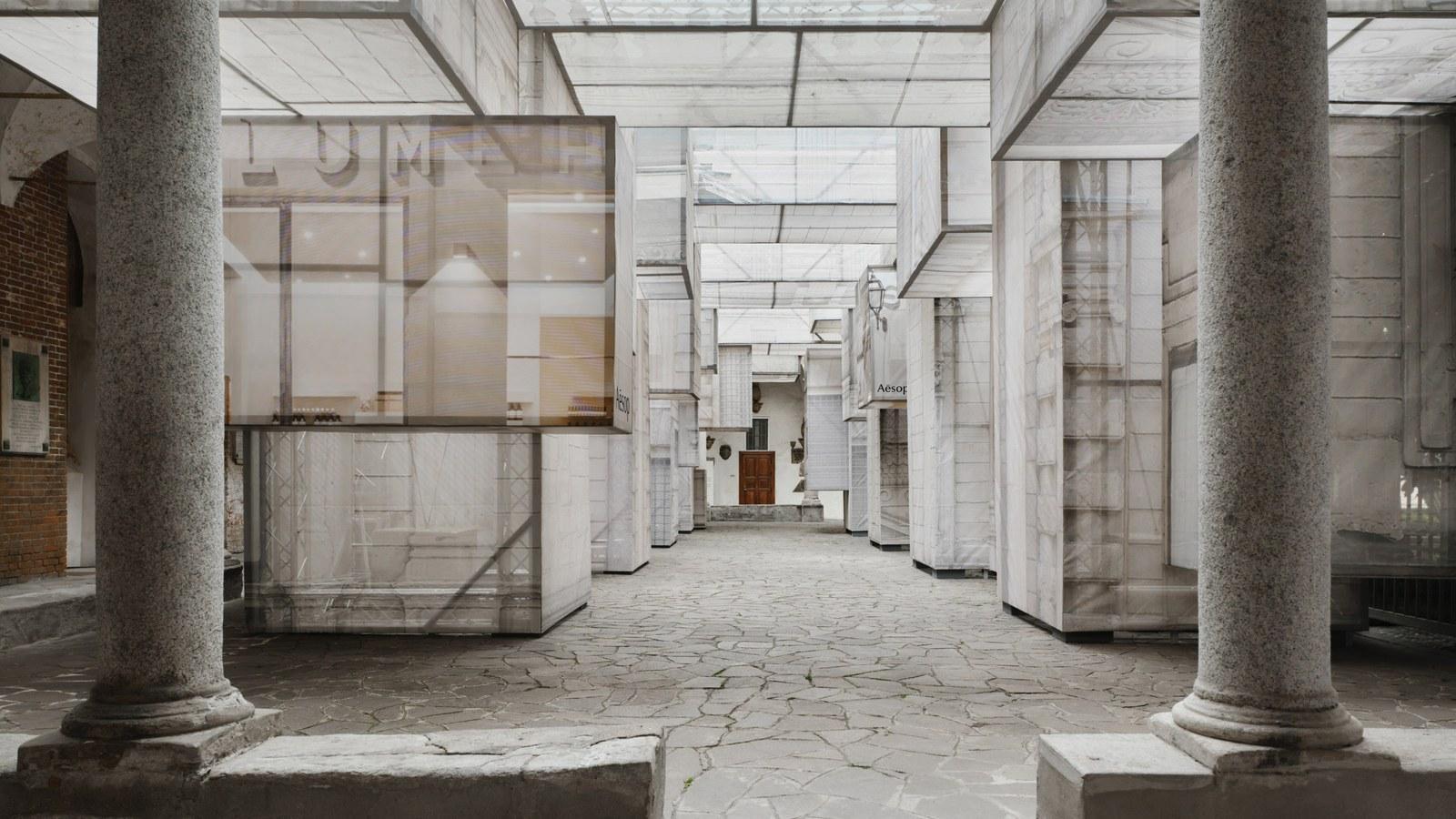
In brief. Aesop's 2026 Milan Design Week installation, Factory of Light, used 10,826 salvaged fragrance bottles and reclaimed Milanese scaffolding tarps inside a 15th-century church to launch the brand's first lighting collection. Last year's installation drew 11,000 visitors without spectacle, AI, or influencer tactics. The piece is a benchmark for material-driven brand activation in 2026.
The bottles weren't full. They were waste. Salvaged from Aesop's production line, stripped of labels, anchored into the floor of the sacristy at Chiesa del Carmine, a 15th-century Baroque church in Brera. Stacked into an undulating amber landscape over 10,826 bottles wide, the surface acts as a topographic ground for the launch of Aesop's first-ever lighting collection, Aposē. Three lamps. A hand-cast brass base from a family-run German foundry. A mouth-blown glass crown made near Murano. One of the lamps is being produced as a limited run of 500.
The architecture around the bottle field was equally constrained. Australian architect Rodney Eggleston of March Studio, Aesop's longtime collaborator, designed the structure from scaffolding wrapped in reclaimed trompe-l'œil tarpaulins that had previously covered Milanese landmarks during restoration. (Trompe-l'œil is a painting technique designed to trick the eye into reading a flat image as three-dimensional. In this case, the tarps depicted the Milanese buildings they had been hiding.) Cut, reassembled, and applied across the framework, the tarpaulins formed a portrait of a fantastical Milanese streetscape.
Inside, four rooms moved guests through the senses: Hear (rotating mechanical lathes shaping the lamp shell), See, Touch, and Smell (where the metallic factory aromas gave way to Aesop's aromatic oil burner blends, and the lamp was first illuminated).
The installation ran April 21 to 26 during Milan Design Week 2026. It was Aesop's third consecutive presence at the event. Last year's installation drew 11,000 visitors.
"I just hope this installation will inspire people and that they will think about light differently," said Marianne Lardilleux, Aesop's director of global retail design.
That's the entire pitch. No spectacle, no AI, no influencer access list. A lamp, a bottle field, a 600-year-old church.
What's worth pulling out
The McDonald's ball pit in Milan was loud. Aesop's Factory of Light was quiet. Both pulled crowds. Both got trade and design press. Both are correct.
The 2026 conversation about activation has weighted heavily toward spectacle, AI integration, and content engineering. Aesop is the most rigorous counter-argument in the room. The lesson isn't that quiet is better. It's that material is the argument, and the material itself can do the heavy lifting if you treat it with respect.
10,826 bottles is not a decorative choice. It's a manufacturing fact. Aesop produces a lot of fragrance. The leftover glass exists. The decision to make that glass the ground of the installation is a brand argument about circularity the brand could not have made through copywriting. It can only be made by anchoring 10,826 bottles into a church floor and letting people walk past them in silence. The same logic applies to the scaffolding tarpaulins. The materials are the message. The brand never says "circularity" out loud. The bottles say it.
This is the move that's hard to fake. A skincare brand without an actual glass surplus, a coffee brand without grounds to repurpose, a sneaker brand without manufacturing waste, all of them can try the quiet material-driven installation play, and it will read as cosplay within a week.
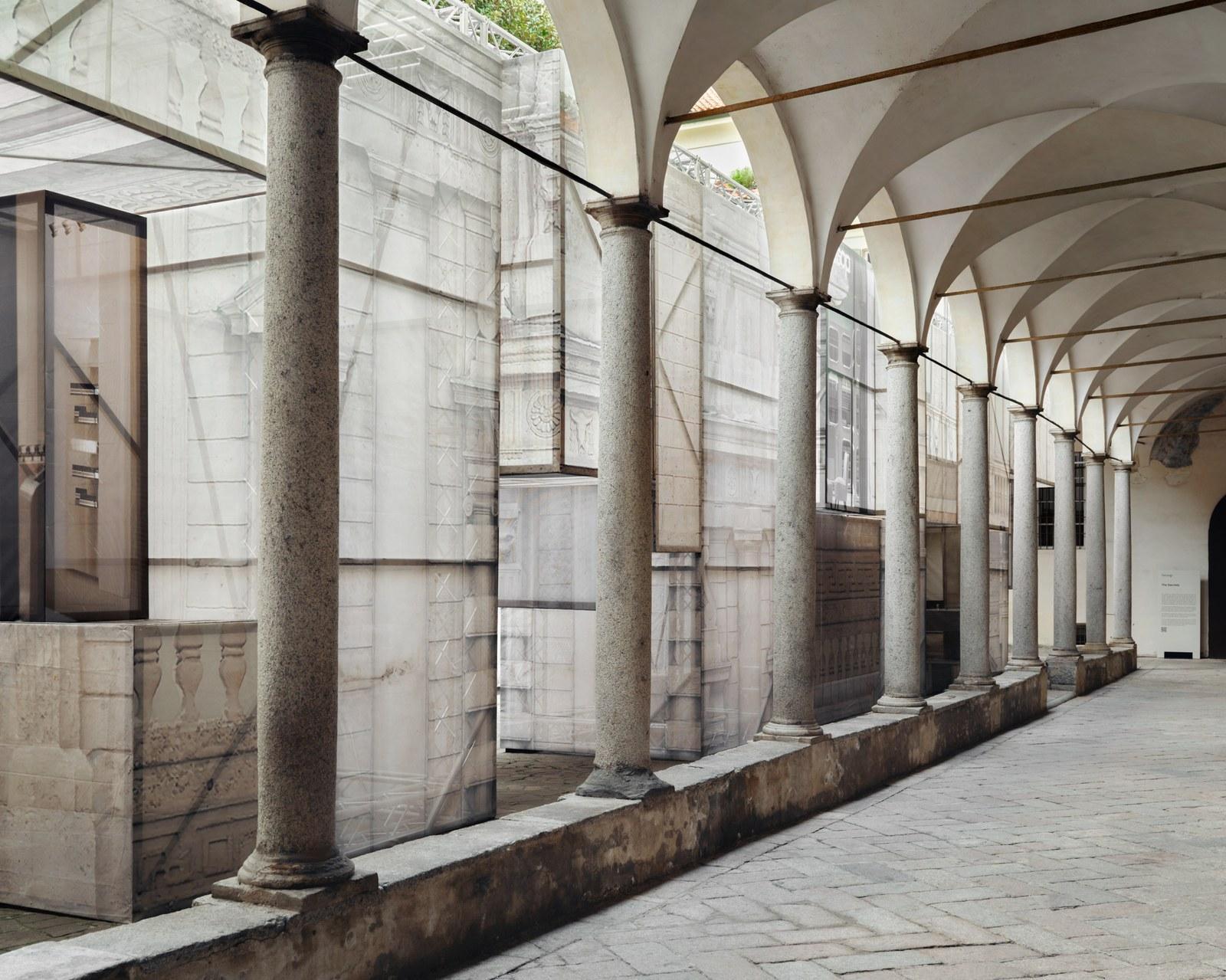
Reclaimed Milanese scaffolding and trompe-l'oeil tarpaulins forming the translucent architecture of Aesop's Factory of Light — Photo: Ludovic Balay, courtesy of Aesop.
What this means for activation work in 2026
One: the material has to come from somewhere true. The brands that pull off Aesop-style installations in 2026 are the ones whose physical product, process, or supply chain can supply the material. If you have to source the material to make the argument, you don't have the argument. Brand teams pitching "sustainable activation" should audit actual waste streams, byproducts, and overruns. That audit is where the installation idea lives. It does not live in a moodboard.
Two: craft scales attention. Aesop's lamps are made in a German brass foundry and a Murano-adjacent glass studio. The bottle anchoring is meticulous. The scaffold tarps are precisely cut. None of this is fast. None of this is cheap to fabricate. All of it is what 11,000 people came to see last year. Speed and cost aren't the enemies of activation work. Sloppiness is.
Three: the brand is mostly absent from the build. There's no Aesop logo over the door. The lamp doesn't say "Aesop" on it. The bottles don't have labels. The press release does the brand work. The installation does the material work. Brands that insist on "brand presence" inside the activation are sabotaging the thing that makes an installation a brand argument.
For Canadian agencies whose clients keep asking "but where's the photo moment?", Aesop's number is the answer: 11,000 visitors last year, no photo wall, no QR code, no logo on the lamp. Quiet installations don't underperform. They underperform when they're done lazily. Done with the right material story, they outperform.
If your next brief wants to feel premium and your client's nervous about restraint, the Aesop number is the argument.
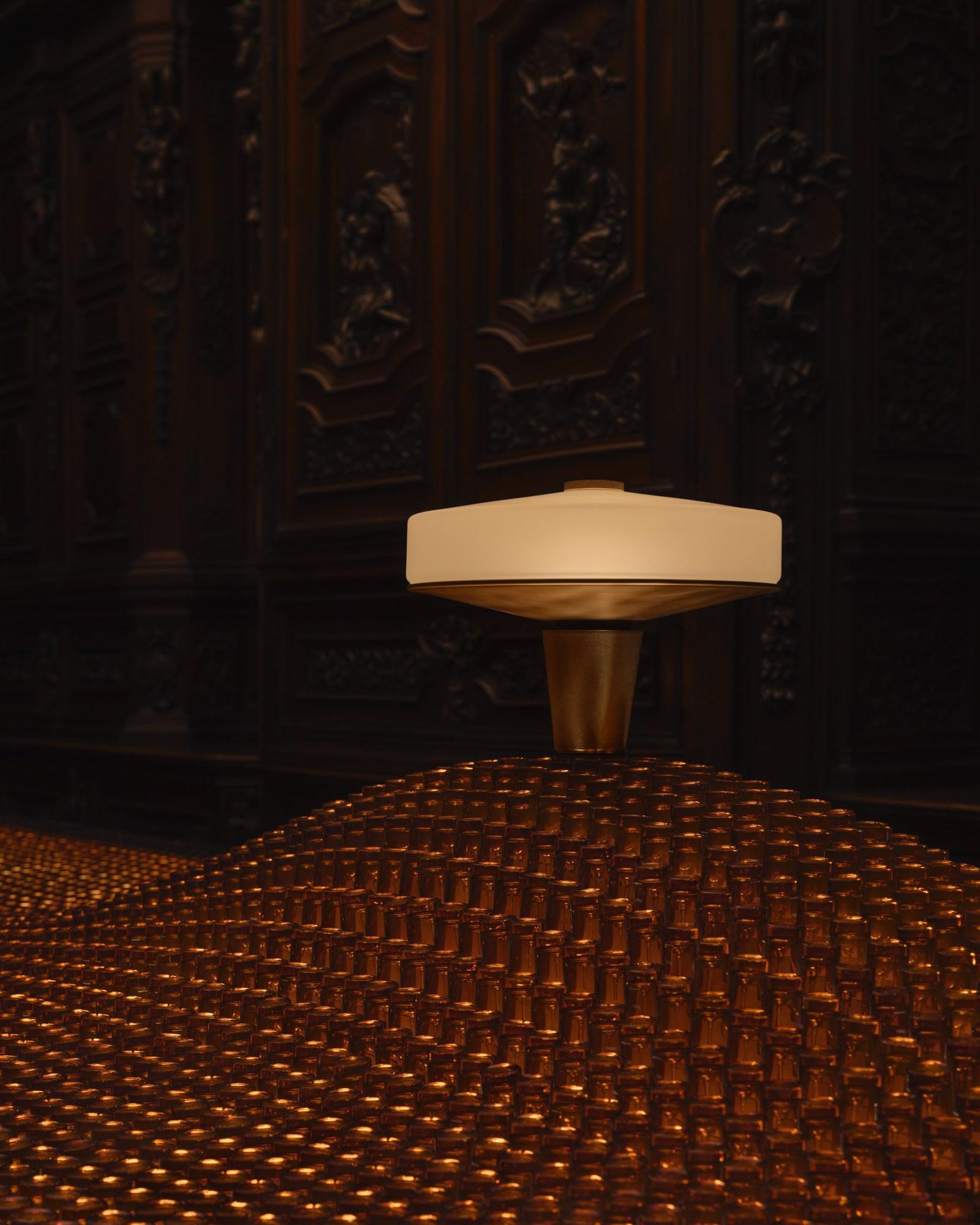
Aesop Apose lamp with hand-cast brass plinth and Murano-style glass crown, Factory of Light installation Milan 2026 — Photo: Ludovic Balay, courtesy of Aesop.