Why Es Devlin keeps designing libraries
Es Devlin has built two libraries in six months. The structural principle: a library-shaped activation doesn’t impose content on the visitor; it offers content the visitor self-selects. The curation is the brand argument.
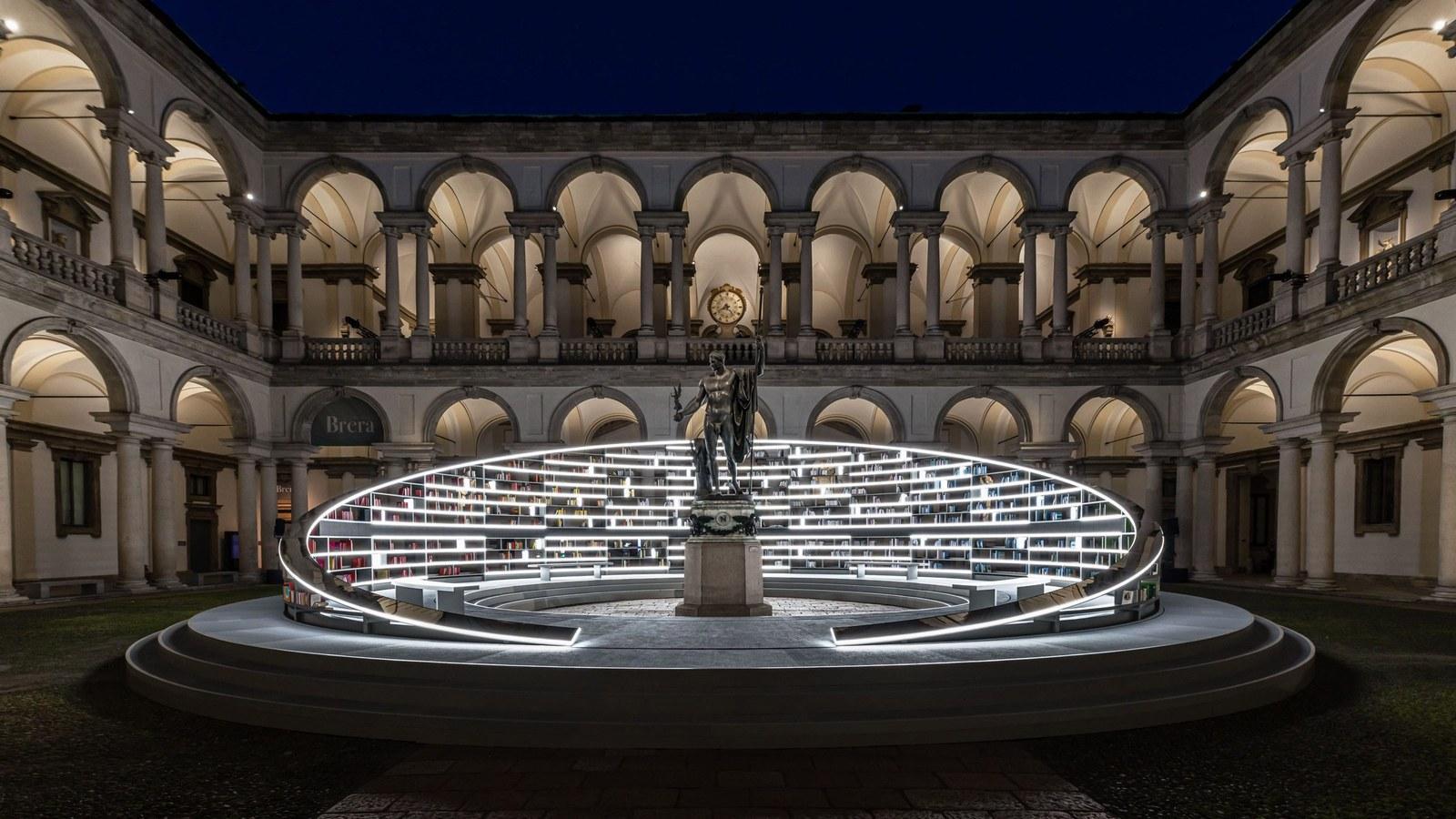
In short: Es Devlin has built two libraries in six months: Library of Light at Milan (a kinetic rotating library in the Pinacoteca di Brera courtyard, filled with 3,000 books) and Library of Us at Miami Art Week (a rotating library of the books that informed her 30-year practice). The structural principle underneath: a library-shaped activation doesn’t impose content on the visitor; it offers content the visitor self-selects. The curation is the brand argument, not the signage.
Photo: Monica Spezia, courtesy of Salone del Mobile.
Es Devlin has spent the last six months designing libraries.
The first, Library of Light, opened at Milan Design Week: a kinetic rotating structure in the Pinacoteca di Brera courtyard, drawn from the form of a fairground carousel and filled with 3,000 books donated by Feltrinelli. The second, Library of Us, opened at Miami Art Week: a massive rotating library on the beach, filled with the books that informed Devlin’s own thirty-year practice. There’s a third, Congregation at PAC NYC, that’s a near-cousin to both.
The question worth asking, if you run brand activations in the GTA, is why she keeps coming back to libraries. The answer points at how the most successful brand experiences of this decade are actually structured.
A library asks the visitor to bring something
The defining feature of a library, as a built form, is that it doesn’t impose content. It offers content. The visitor decides what to pick up, what to read, what to take with them.
That’s the opposite of how most activations are designed. Most push content at the visitor: this is the brand, this is the message, this is the photo op, this is the takeaway. The visitor is a target, and the activation succeeds if the content lands.
A library-shaped activation puts a quantity of brand-aligned material in front of the visitor and lets them self-select. The brand argument isn’t the content; it’s the curation. By putting these particular books, in this particular structure, in this particular space, the brand has argued for what it values without telling anyone what to think. A photo wall can’t produce that kind of impression.
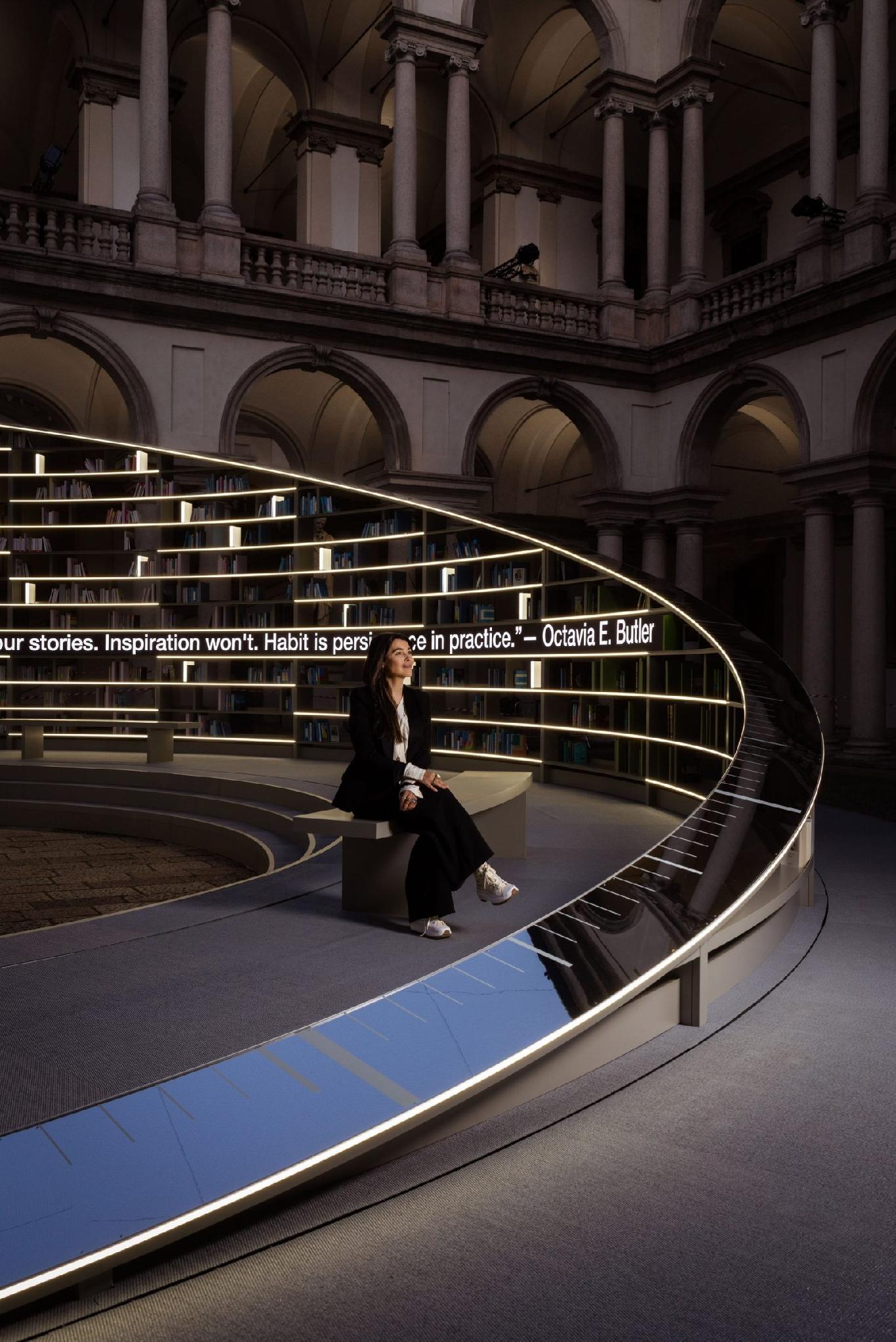
Photo: Monica Spezia, courtesy of Salone del Mobile.
The carousel is doing strategic work
The carousel form in Library of Light isn’t decoration. It’s a structural argument. A carousel rotates: the same books are visible to every visitor, but in a different order, at a different moment, from a different angle. Two people standing side by side see different books at the same instant. The room is collective; the encounter is personal.
It’s the same structural choice as Heineken’s Clinker (a passive sensor, the user does what they were already doing) and Pinterest’s phone-free zone (locked phones, the visitor has to be present). Devlin’s carousel is the gallery-tier expression of the same principle: design the system so the visitor’s natural behavior produces the brand encounter, instead of asking the visitor to perform.
What this scales down to
Design the activation as a structure, not a script. A library is a structure; a scavenger hunt is a script. One lets the visitor self-select, the other tells them what to do. In 2026, the structural model is winning.
Treat curation as the brand argument. What you include is the argument. What you leave out is the argument.
Design for the moment when two strangers are next to each other. The most underused moment in any activation is two visitors in the same space having different but related experiences. Build activations that put strangers near each other and let the interaction happen.
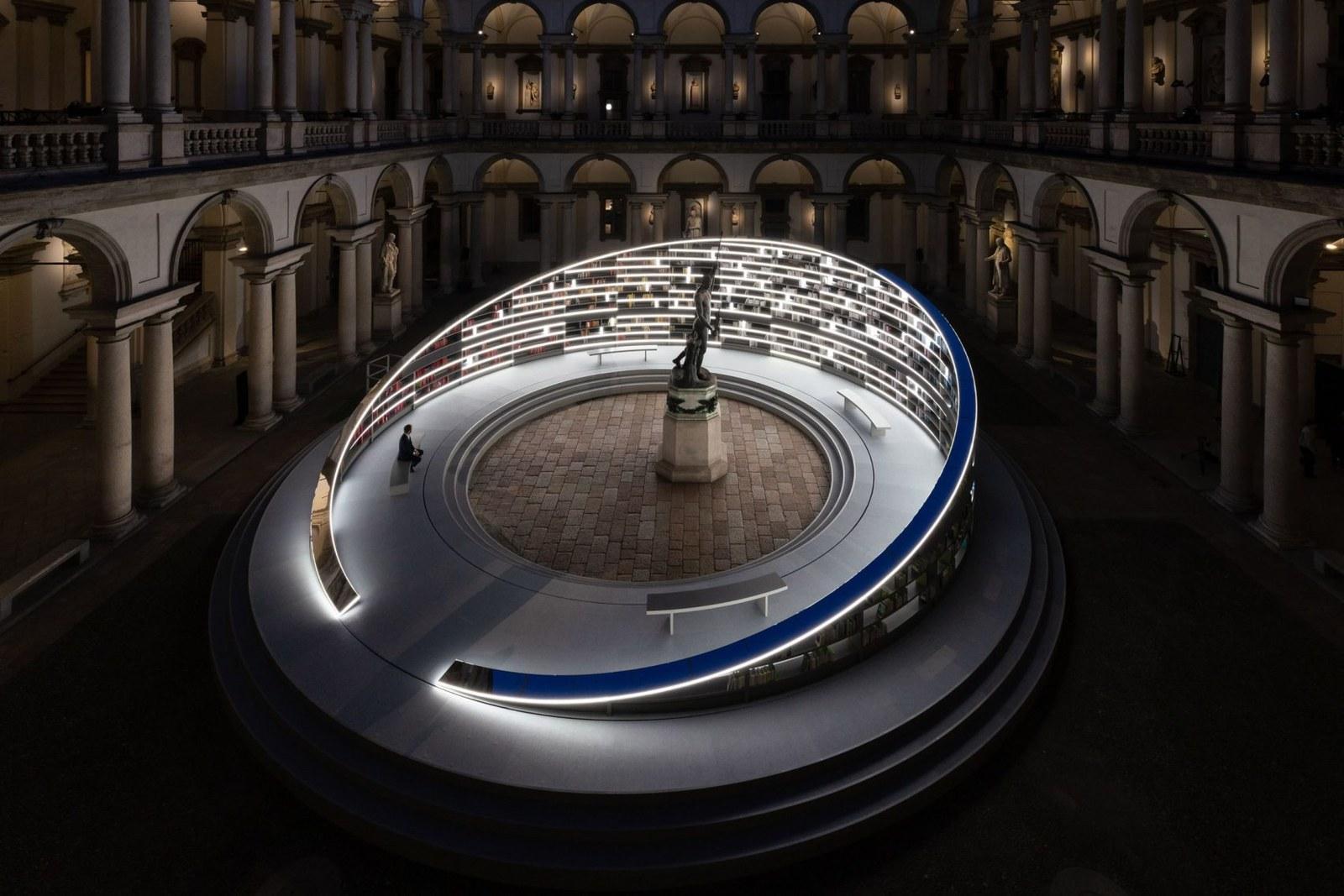
Photo: Monica Spezia, courtesy of Salone del Mobile.