McDonald's spent Milan Design Week arguing about Damien Hirst. The lesson isn't the ball pit.
McDonald's debuted at Milan Design Week 2026 with a 100,000-ball pit referencing Damien Hirst, plus an AI room that generated personal memories for visitors. For brand activation teams, the takeaway isn't the pit itself. It's that McDonald's built one…
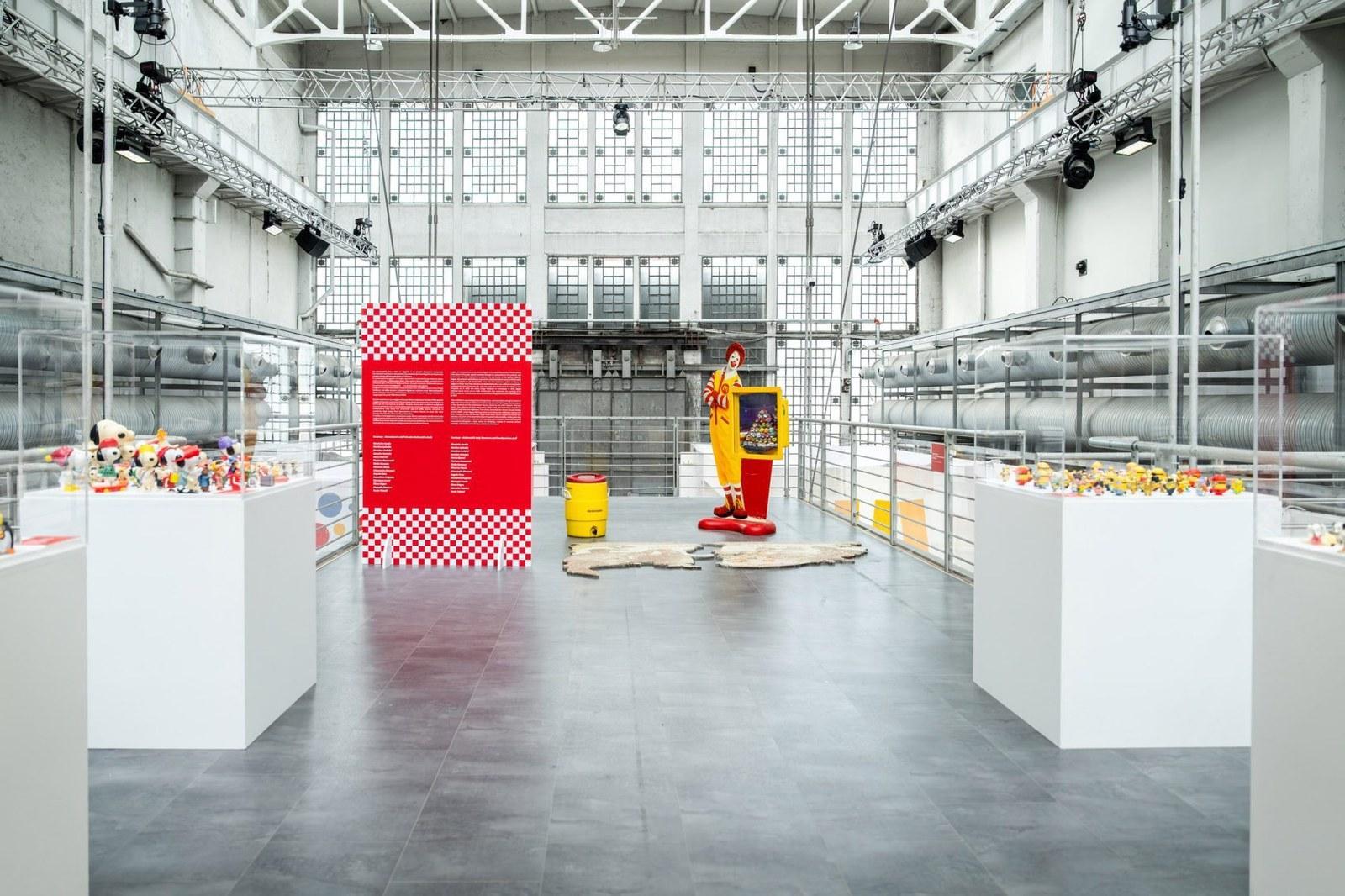
In brief. McDonald's debuted at Milan Design Week 2026 with a 100,000-ball pit referencing Damien Hirst, plus an AI room that generated personal memories for visitors. For brand activation teams, the takeaway isn't the pit itself. It's that McDonald's built one fabricated argument and stayed inside it, with the AI tech buried in the build rather than fronted on a screen.
In April, McDonald's made its Milan Design Week debut on Via Tortona with a 100,000-ball swimming pool, a Damien Hirst reference, and a room where an AI system generated personalized visual memories from each visitor. The installation was called "POOL: Ti sblocco un ricordo." Translation: "I'll unlock a memory for you." It marked 40 years of McDonald's in Italy.
Above the ball pit hung an enlarged painting by Italian artist duo Vedovamazzei, part of a series that imagines how famous artists might have drawn as children. The Hirst they imagined was a sheet of oblong colored splotches on white paper, which the ball pit then echoes in three dimensions. (Hirst is famous for his Spot Paintings, hundreds of works built from identical rows of colored dots, which the artist used to make an argument about repetition and seriality.) A separate room used AI to generate personal memory artifacts for each visitor.
The piece pulled four-block lines. Dezeen, ARTnews, StirWorld, and Design Diffusion covered it. Business of Home named it among the defining objects of Milan Design Week 2026.
It is also, on paper, a McDonald's ball pit.
What agencies should be looking at
The instinct when a fast-food brand turns up at the most-watched design week in the world is to read it as a stunt. Cynicism is cheap and usually wrong. The thing worth pulling apart is the mechanism: how does a brand most people associate with PlayPlaces and Filet-O-Fish end up taken seriously inside a design conversation?
The answer is that McDonald's didn't try to be design-y. The brand built one argument and stayed inside it.
The argument was: nostalgia is a design material, McDonald's has 40 years of it in Italy, and we are going to put it in a room and let people walk inside it. Every element does that one job. The ball pit is the totem object from anyone's PlayPlace memory, scaled to gallery proportions. The Hirst reference puts McDonald's in the same conversation about seriality and repetition (Hirst painted the same kind of dots over and over, McDonald's made the same kind of fries over and over). The Vedovamazzei painting collapses the distance between great artist and kid drawing. The AI room makes the memory machine literal.
The brand never breaks character. There are no golden arches. There is no Big Mac at the center. The build does the arguing.
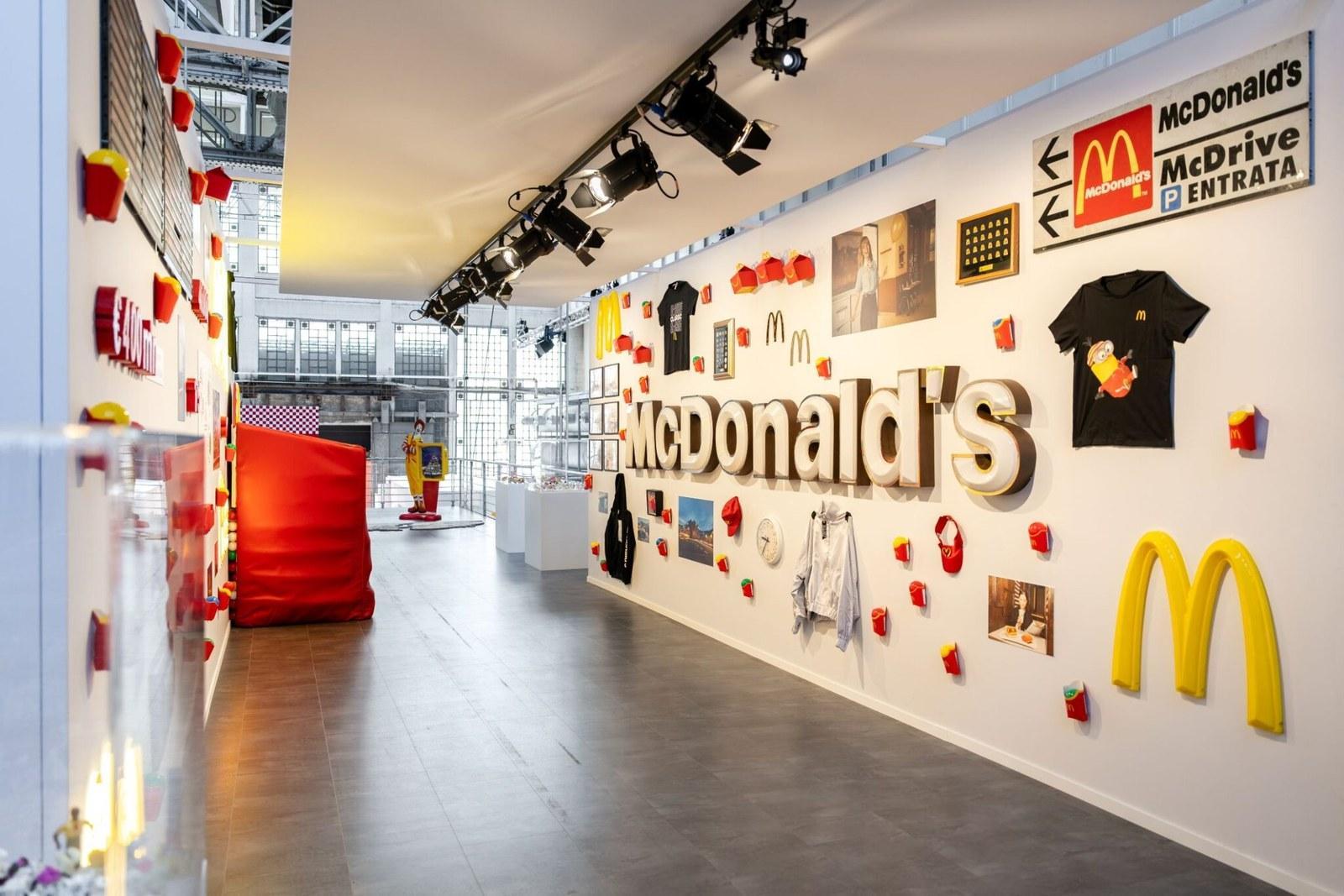
Vedovamazzei Early Works painting of Damien Hirst as a child suspended above the McDonald's POOL installation, Milan Design Week 2026 — Photo: Courtesy of McDonald's.
What this means for activation work in 2026
One: a strong installation makes one argument, not seven. The McDonald's pit lives or dies on the nostalgia-as-material idea. Adding a "fries on display" room or a brand history wall would collapse the whole thing into a marketing event. Brands and their agencies routinely lose this fight in the brief stage. Someone always wants to add a moment for the product. The brands that win at this caliber of work cut the moment for the product.
Two: AI works when it's buried inside the build. The AI room in POOL is not the headline. The ball pit is. The AI generates visitor-specific outputs, which is the right place for the tech to be in 2026: behind the wall, not on top of it. Most AI-in-experience work this year has done the opposite, putting a screen at the front of the room and asking guests to type into a prompt. That work feels dated within a year. The work that buries AI inside a physical environment will hold up.
Three: the fabricated object is the brand argument. A ball pit is a fabricated object. A painting is a fabricated object. The four-block line is a result of fabricated objects, not of a media buy. McDonald's spent Milan on the build because the build was the argument. The press came because the build was strong. The AI was woven in, not bolted on.
For Toronto agencies pitching mid-tier brands on an experiential moment in the next quarter, the McDonald's piece is a useful pressure test. Could you cut your concept down to one fabricated object that carries the whole idea? If you can't, the idea isn't there yet. If you can, the brief just got easier.
If your next brief asks for AI and your team's instinct is to put a screen at the front of the room, the McDonald's piece is the counter-argument. Bury the tech inside the build.
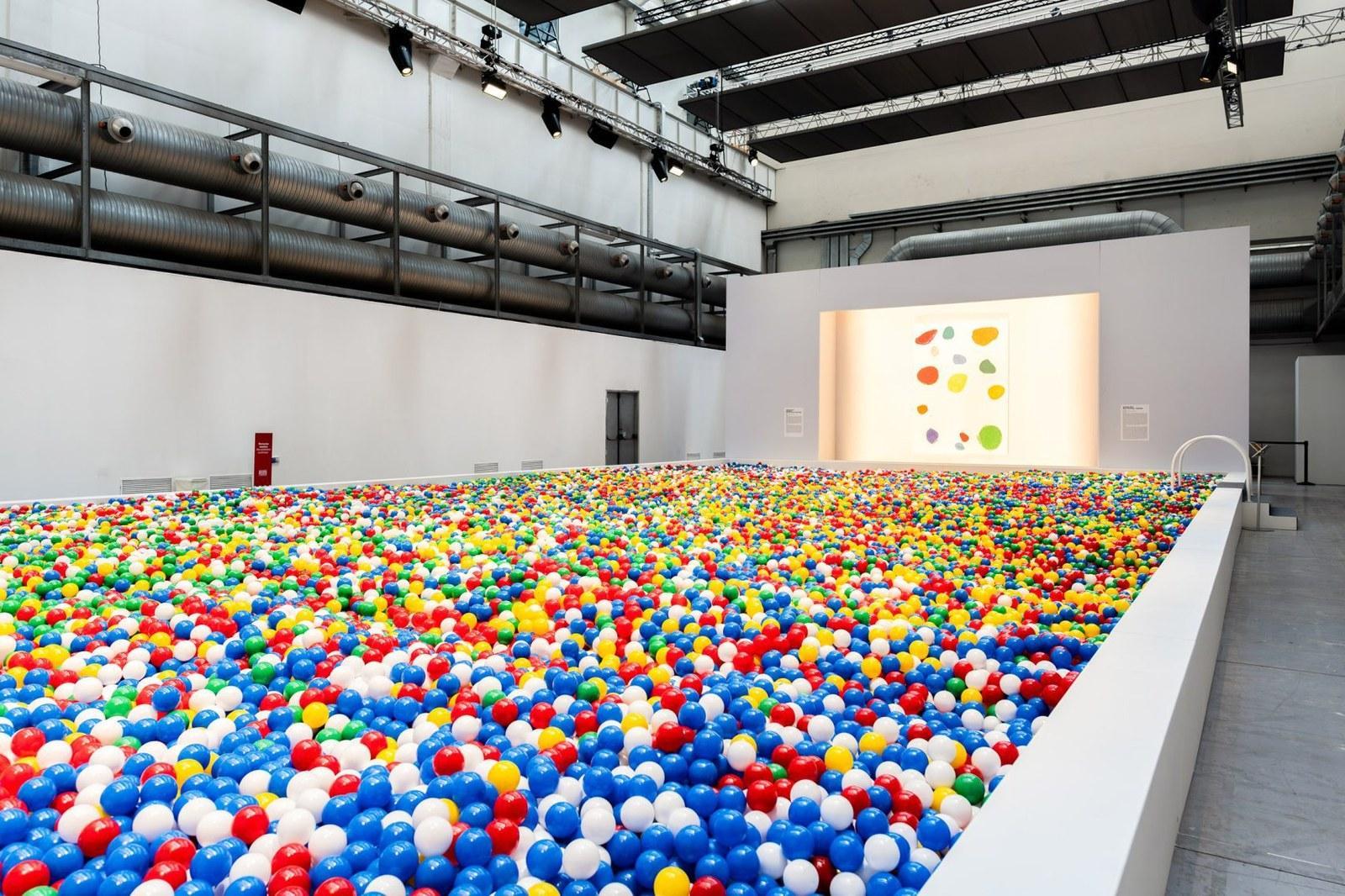
Visitors experiencing the McDonald's POOL installation at Tortona Rocks, Milan Design Week 2026 — Photo: Courtesy of McDonald's, via Dezeen.