What the Met Gala 2026 set design teaches a $100K brand activation
The 2026 Met Gala set design, by Raul Avila with Baz Luhrmann and Derek McLane, was framed as a living installation. The principles scale to any budget: choose venues that already make an argument, hide the hardware, prototype the critical element.
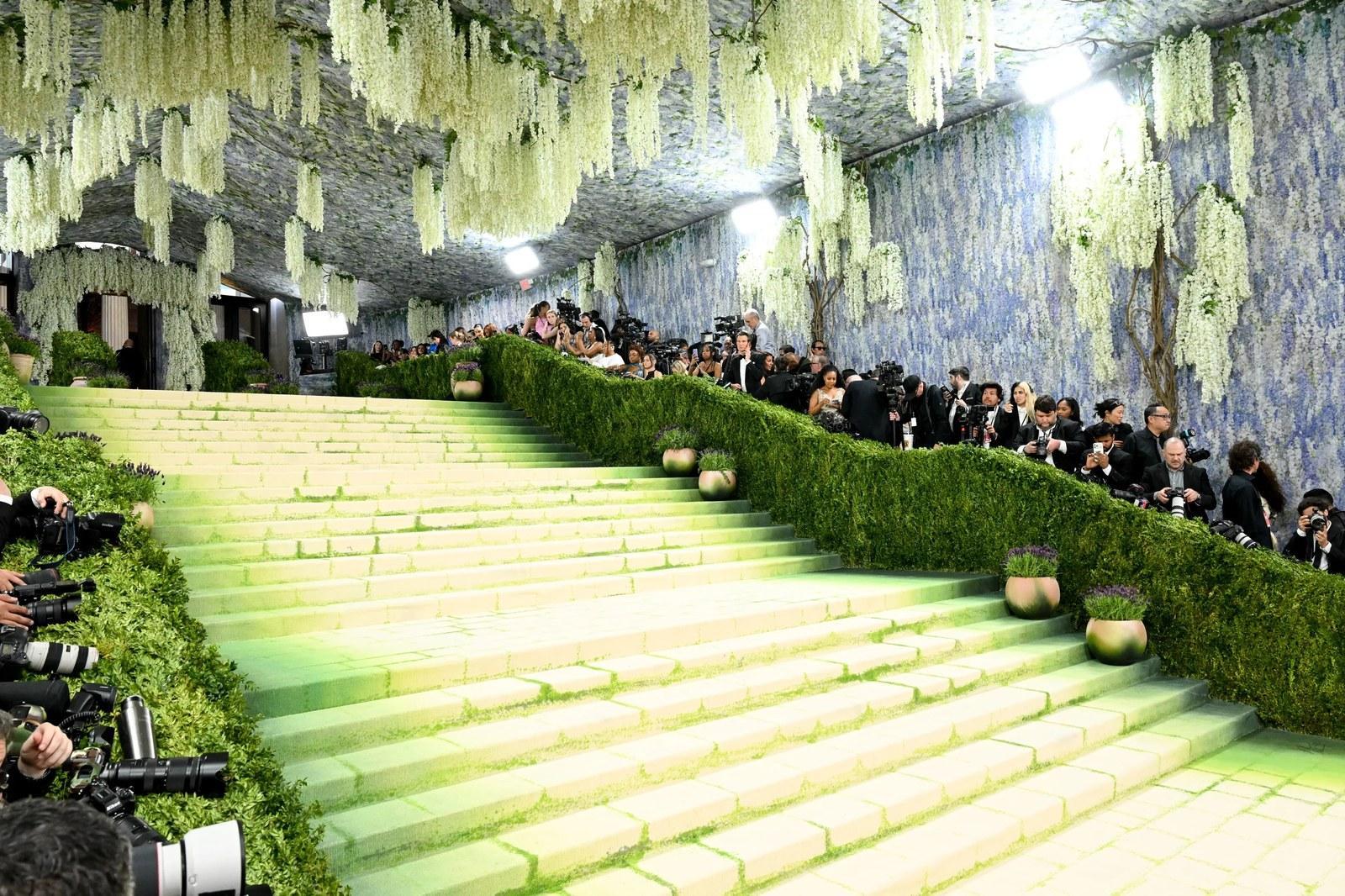
In short: The 2026 Met Gala set design, by Raul Avila with Baz Luhrmann and Derek McLane, was openly framed as a living installation: suspended florals integrated directly into ceiling panels with no visible hardware, a hand-painted carpet mimicking moss-covered stone. EAC Group, the ceiling fabricator, built a full-scale prototype mid-production before committing to final dye-sublimation. The principles scale to any budget.
Photo: Getty Images.
The 2026 Met Gala’s dress code was “Fashion Is Art.” The Costume Institute exhibition it celebrates, Costume Art, treats fashion through art history rather than designer chronology. But the design news isn’t the exhibition. It’s what Raul Avila and his team did to the Great Hall on May 4.
Avila has designed the Met Gala for nearly two decades. This year, for the first time, he framed the work as “a living installation,” collaborating with filmmaker Baz Luhrmann and production designer Derek McLane to treat the room as a co-author of the event. A hand-painted carpet mimicked moss-covered stone. Suspended floral elements were embedded directly into the ceiling panels rather than hung from hardware, so nothing structural competed with the artwork. And a behind-the-scenes account from EAC Group, the ceiling fabricator, describes a full-scale blank prototype built mid-production to validate performance before final dye-sublimation.
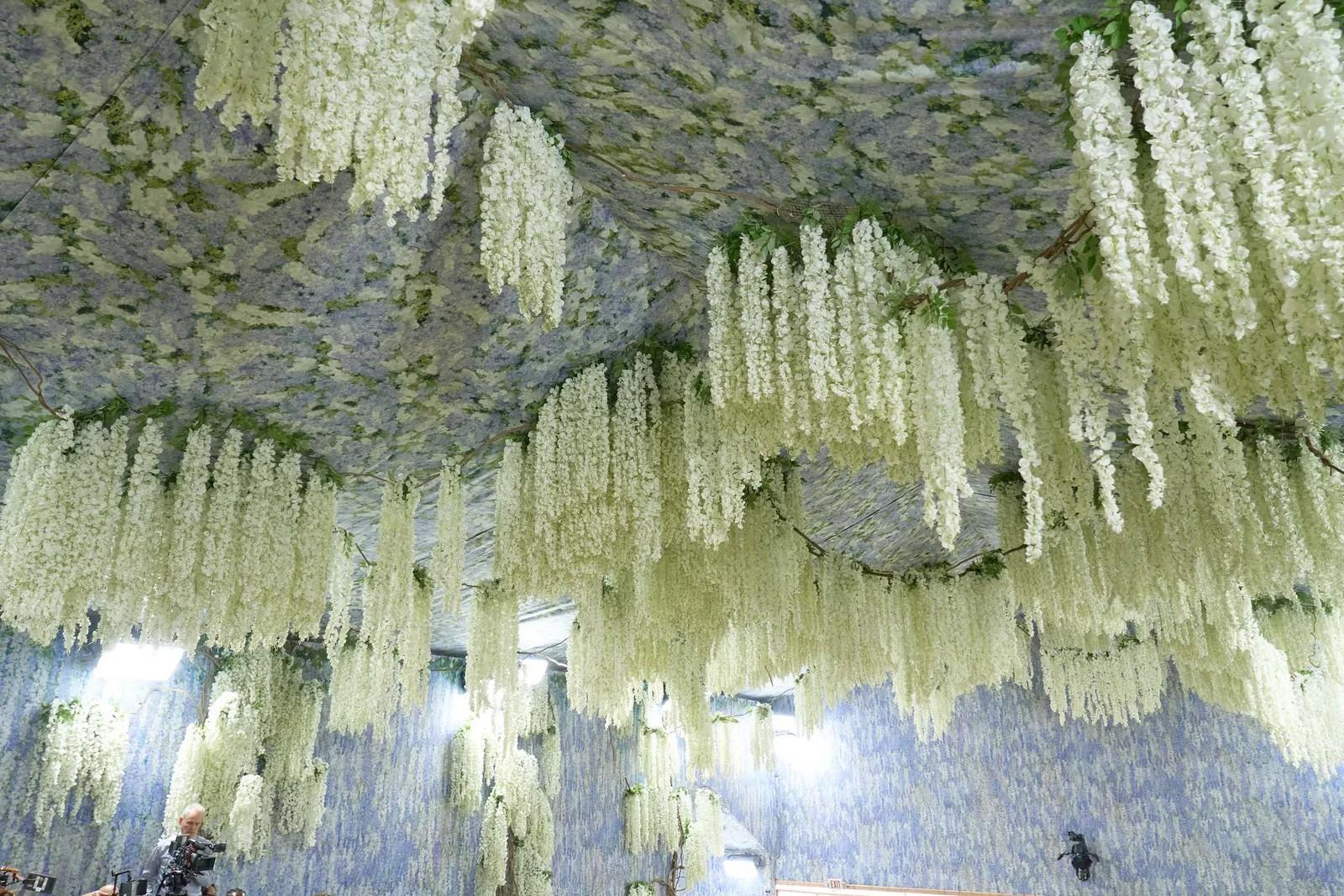
Photo: Poupay Jutharat.
The room as co-author
The most useful idea in Avila’s framing is treating the venue as a participant rather than a container.
Most activations treat the venue as something to fill. The brief says “we have 4,000 square feet, what do we put in it,” and the result is a series of decisions added on top of an inert background. Photo wall here, bar there, product display in the back.
The Met Gala model is the opposite. The Great Hall is a Beaux-Arts environment with its own visual logic, scale, and architectural argument. Avila’s job is to extend that argument with the year’s theme, not cover it up. The painted carpet, the ceiling treatment, every decision sits inside the Great Hall’s existing structure and amplifies it. Nothing fights the room.
Most GTA agencies skip this step. They pick a venue on capacity and convenience, then design as if it’s generic. A $100K activation in the Distillery District that ignores the Distillery’s character reads as cheaper than a $50K activation that uses the cobblestone and brick as part of the brand argument.
Prototype before you commit
The Met Gala worked because EAC prototyped at full scale before final production. That sounds like a luxury for high-budget work. It isn’t. On a $100K activation, a half-scale prototype of the single most critical element costs less than the rebuild when the full-scale version fails in the venue. Most agencies skip prototyping because it’s invisible to the client. They pay for it in the rework.
What this scales down to
Three principles, all portable to mid-market work in the GTA.
Choose venues for the argument they already make, not the square footage. A venue with built-in narrative does half the design work for free.
Hide the hardware. Every visible bracket, exposed wire, and quick-fix piece of duct tape tells the visitor the build was unfinished. Clean edges, hidden joins, concealed lighting: it adds maybe 10 percent to fabrication cost and buys the activation its premium perception.
Prototype the critical element. On every fabricated activation there’s one element that, if it fails, the whole thing fails. The hero object. Prototype that one, half-scale is fine.