A Montreal studio just built three permanent worlds 1,100 feet above Manhattan. The lesson is where they hid the technology.
Montreal studio Moment Factory, with SOFTlab and Journey, built three permanent immersive installations (Pulse, Crystal Cave, and Infinite City) for the Edge observation deck at Hudson Yards. The work shows the principle that matters most for brand…
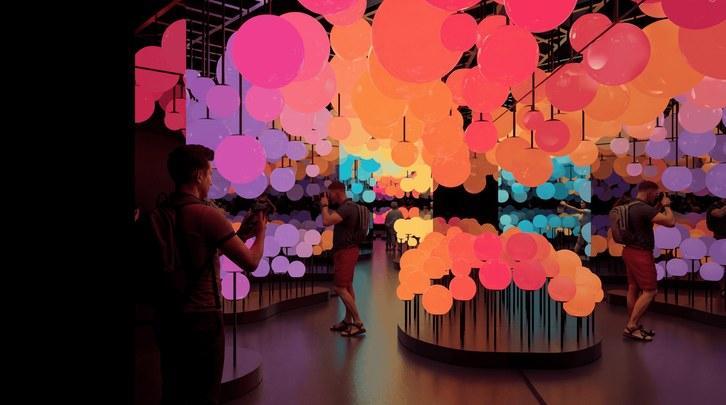
In brief. Montreal studio Moment Factory, with SOFTlab and Journey, built three permanent immersive installations (Pulse, Crystal Cave, and Infinite City) for the Edge observation deck at Hudson Yards. The work shows the principle that matters most for brand experiences in 2026: technology should be felt, not displayed, and the engineering should disappear into the feeling rather than become the headline.
This spring, the Edge observation deck at Hudson Yards reopened its indoor floors with three new permanent immersive installations: Pulse, a room of pulsing color and sound tuned to the city's energy; Crystal Cave, a chamber of translucent jewels that shift color as the real sun moves across the skyline; and Infinite City, a set of luminous vertical "skyscrapers" that fragment and reframe the view. The installations run the full height of Edge's interior, from the fourth-floor entry to the hundredth-floor sky deck, and they change from dawn to dusk and across seasons.
The work was built by Montreal's Moment Factory, with New York studio SOFTlab and experience agency Journey, as part of a multi-million-dollar transformation of the attraction.
Here is the part worth sitting with. Edge already had the view. It is 1,100 feet up. The single most photographed thing in the building is the Manhattan skyline through the glass. And yet the operators spent millions adding rooms of light and color that respond to that same sky. They didn't replace the view with technology. They used technology to make people feel the view differently.
That is the distinction most brands miss when they reach for "immersive."
The trap of immersive-for-its-own-sake
The default version of an immersive brand activation in 2026 is a dark room, a wall of LED panels, and a prompt asking the visitor to wave their hand or type something so the screen reacts. It photographs well for a day. It dates within a year, because the technology is the whole point, and technology ages in public faster than almost anything else.
What Moment Factory did at Edge is the opposite. The tech is real and considerable, but it is in service of a feeling: the city's energy, the movement of the sun, the scale of the skyline. The visitor doesn't think "look at this technology." They think "I feel like I'm inside the city." The engineering disappears into the experience. That is what lets a permanent installation stay good for years instead of months.
For Brience's ICP, this is the cleanest available argument for a principle that is hard to sell into a client: the technology should be felt, not displayed. A skyline-responsive room of color is a harder brief than an LED wall with a prompt screen. It is also the one that lasts.
It helps that Edge didn't try to hide that the work is technical. Pulse, Crystal Cave, and Infinite City are clearly built with serious engineering. The difference is that the engineering serves an emotional payoff the visitor can name without knowing how it was made. A guest does not need to understand the projection mapping, the sensors, or the lighting control to feel that the room is breathing with the city. That gap, between how much technology is under the hood and how little the visitor has to think about it, is the whole game. The more the visitor has to consciously operate the technology, the more it reads as a gadget. The less they have to think about it, the more it reads as magic. Magic ages well. Gadgets do not.
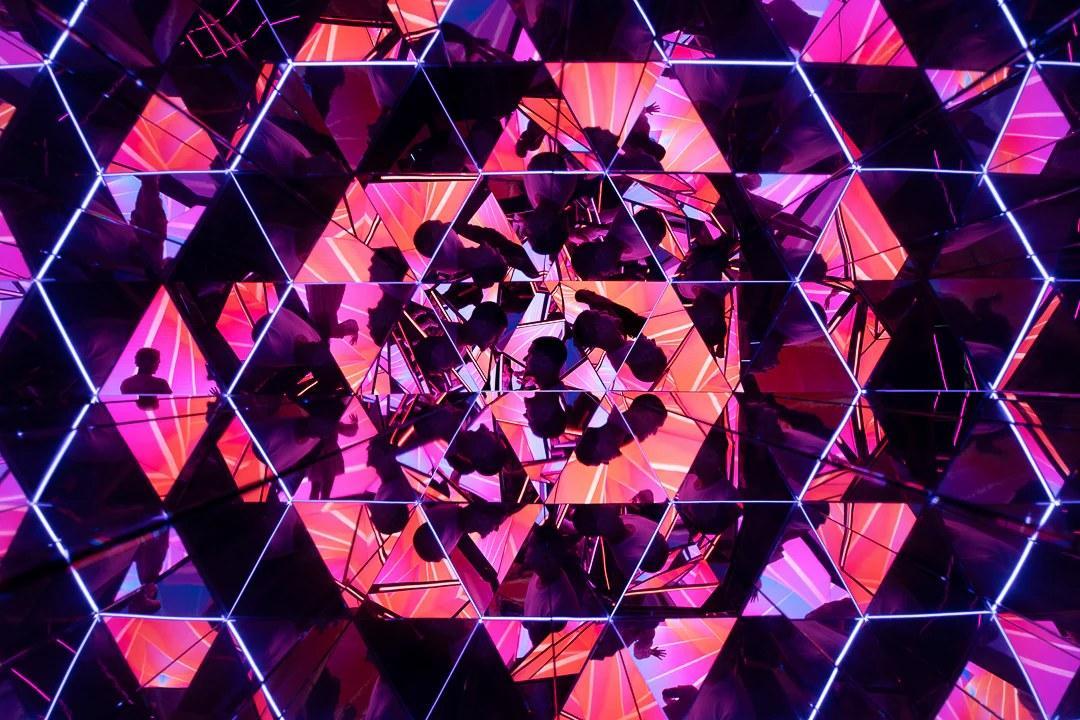
Infinite City installation at Edge NYC, illuminated mirrored columns inspired by New York skyscrapers — Photo: Courtesy of Moment Factory / Edge NYC.
What this means for activation work in 2026
One: immersive is a feeling, not a fixture. A screen is not an experience. The question is never "what technology do we put in the room," it is "what do we want the visitor to feel, and what is the quietest technology that produces it." If the tech is the headline, the work will date.
Two: respond to something real. Edge's installations react to the actual sun and the actual skyline. The best interactive work in 2026 responds to something true in the space (light, weather, crowd, sound) rather than asking the visitor to perform for a sensor. Reactive beats interactive when the thing being reacted to is real.
Three: permanence is a craft test. A one-week pop-up can fake quality. A permanent installation cannot. Materials, lighting, and the technology underneath all have to survive years of daily traffic. Building for permanence forces a level of fabrication discipline that most activation work skips, and it is the level worth aspiring to.
If you are working on something that needs to feel immersive without becoming a screen people poke at, that gap between spectacle and feeling is exactly where the good work lives.
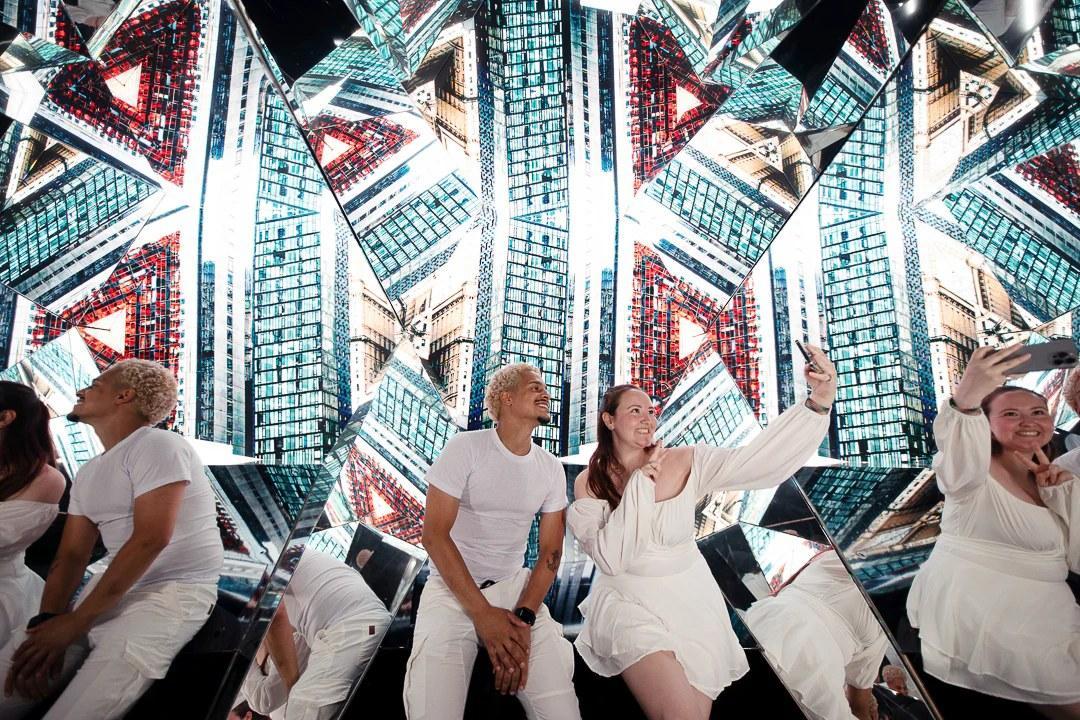
Pulse immersive room at Edge NYC, waves of electric color and light distilling the city's energy — Photo: Courtesy of Moment Factory / Edge NYC.