Prada sold sunglasses in Los Angeles by selling a place instead.
Prada Eyewear ran a 300-square-foot pop-up at The Grove in Los Angeles from May 1 to 24, 2026, marking the brand's 125th anniversary. Rather than display product on shelves, it sequenced visitors through rooms with distinct colors, textures, and pace (a…
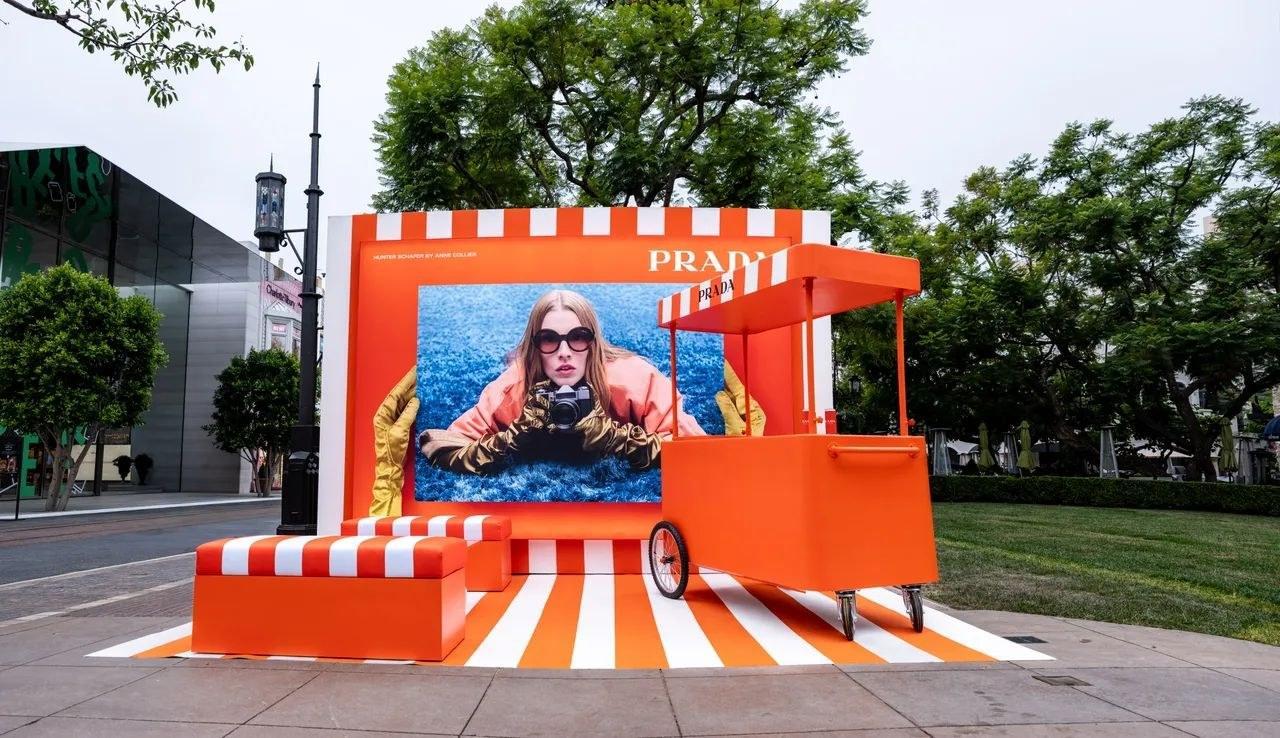
In brief. Prada Eyewear ran a 300-square-foot pop-up at The Grove in Los Angeles from May 1 to 24, 2026, marking the brand's 125th anniversary. Rather than display product on shelves, it sequenced visitors through rooms with distinct colors, textures, and pace (a warm orange showroom, a touchable blue shag room with hand-drawn portraits, an outdoor seltzer lounge), proving that in a small footprint, mood and route sell better than product and screens.
For most of May, Prada Eyewear occupied a 300-square-foot glass box at The Grove in Los Angeles. The pop-up, produced by Gladiator Productions, ran May 1 to 24 and doubled as a marker of Prada's 125th anniversary. The route through it was simple and deliberate: a warm orange showroom where guests could handle and try the spring/summer 2026 sunglasses, including a pair made only for the pop-up; then a blue room lined in thick blue shag you were meant to touch, where a fashion illustrator drew custom portraits; then an outdoor lounge with Prada-branded seltzer.
Three hundred square feet. Sunglasses. And the brand built a sequence of rooms with their own colors, textures, and pace.
The product was almost incidental. The activation sold a feeling of place, and the sunglasses came along with it.
Mood as the medium
There is a version of this activation that most brands would have built: a clean white retail space, product on lit shelves, a mirror, a photo wall, a QR code to buy. It would have sold sunglasses to people who already wanted sunglasses. It would have been forgotten by dinner.
What Prada built instead treats the space as the product. The orange room is warm and bright, the way summer feels. The blue shag room is tactile and slow, a deliberate change of pace that makes you stop and sit for a portrait. The outdoor lounge lets you linger. The sequence has a rhythm: bright, then soft, then open. By the time you leave, you have spent real time inside a constructed mood, and the eyewear is bound up in the memory of that mood rather than sitting alone on a shelf.
This is the part that is hard to fake and easy to undervalue in a brief. The brand spent its 300 square feet on texture and sequence (shag you touch, color that shifts room to room, a reason to sit down) instead of on more product or more screens. The materials do the selling. Gladiator's creative lead framed the goal as an immersive escape that still felt welcoming, and the build delivers exactly that.
The custom-portrait moment in the blue room is worth isolating, because it does something a photo wall cannot. A step-and-repeat (the standard branded backdrop everyone poses against) gives you a picture of yourself in front of a logo. A fashion illustrator drawing you by hand gives you an object made for you, in that room, that exists nowhere else. One is a transaction with a camera. The other is a small commission. It slows the visit down, it gives the guest a reason to sit and stay rather than shoot and leave, and it sends them home with something they will keep instead of a photo that disappears into a camera roll. For the cost of one illustrator, Prada turned a quick stop into a dwell-time experience with a keepsake. That trade, a human-made moment over an automated photo op, is one of the most underrated moves in retail activation right now.
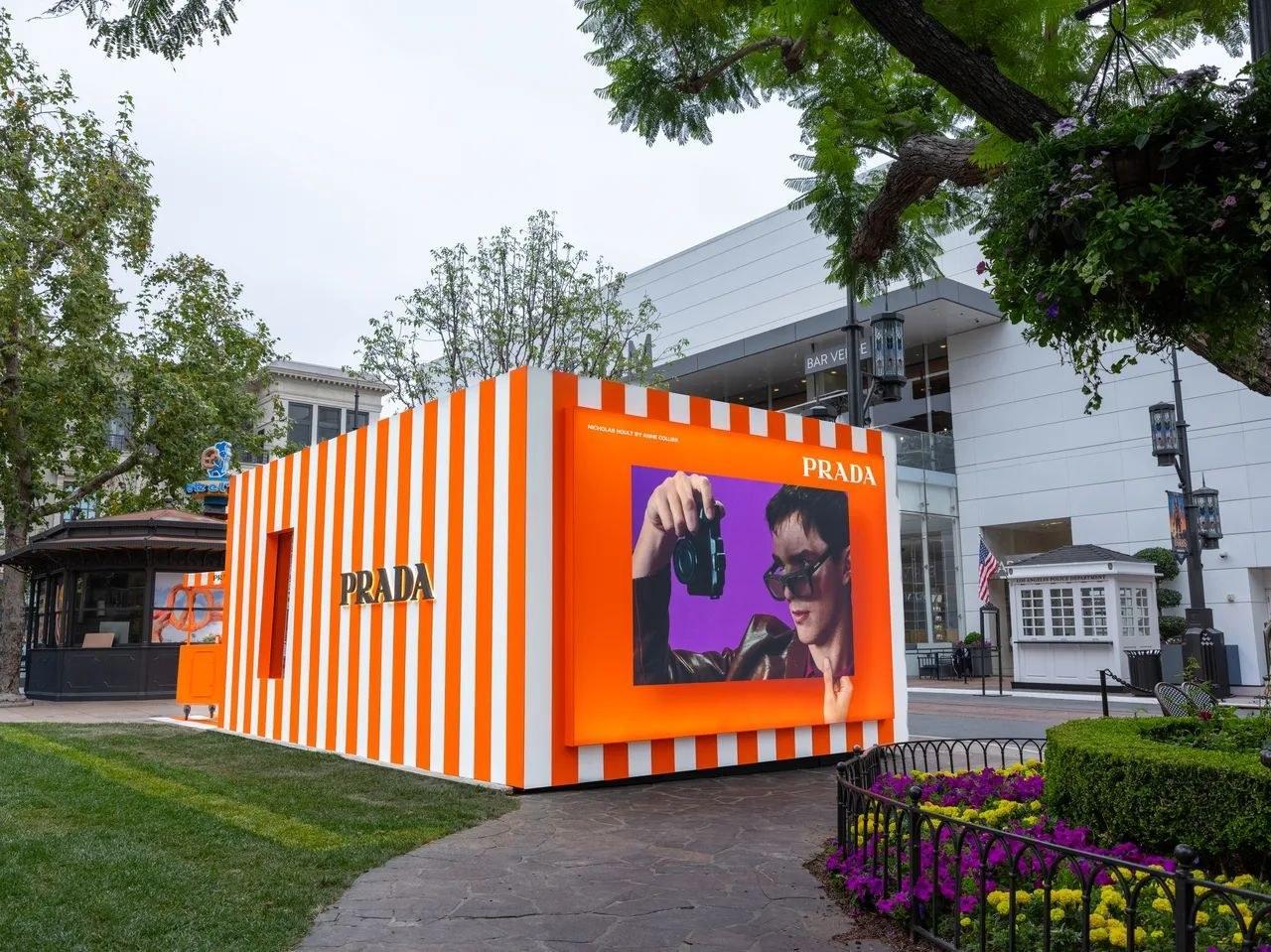
Touchable blue shag room with fashion illustrator inside the Prada Eyewear pop-up at The Grove — Photo: Courtesy of Gladiator Productions.
What this means for activation work in 2026
One: small footprint is not a small opportunity. Three hundred square feet, sequenced well, beats a large space with no rhythm. When space is tight, spend it on texture and pace, not on cramming in more product. A constrained footprint forces the kind of editing that makes a space memorable.
Two: texture is an underused tool. A wall of blue shag you are invited to touch does more than any printed graphic. Physical materials that ask to be touched create the kind of sensory memory a screen never will. In a feed full of flat images, tactility is a differentiator.
Three: design the route, not just the room. Prada built a sequence (bright, soft, open) with a deliberate change of pace in the middle. The order in which a visitor moves through a space is a design decision worth as much attention as the objects in it. A good route makes a small space feel like a journey.
If you are working on a premium retail moment and the plan is product on shelves under good lighting, the Prada pop-up is the argument for spending the budget on mood and route instead. That is what people actually remember.
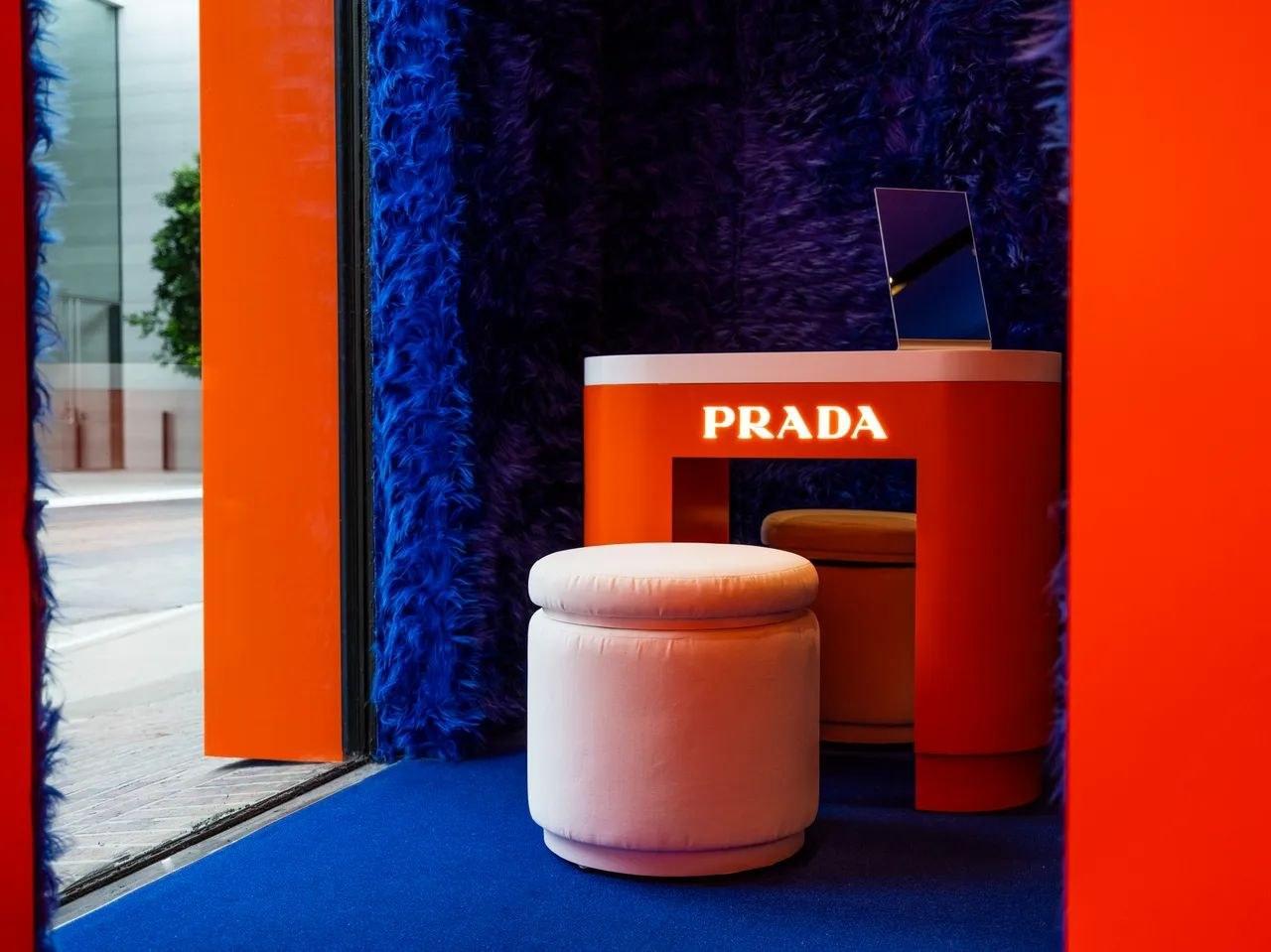
Warm orange Prada Eyewear showroom displaying the Spring Summer 2026 sunglasses collection — Photo: Courtesy of Gladiator Productions.