 Sign In
 4 min4 min read

Potato Head’s first store in Bali puts the workshop on the shop floor
Potato Head has opened the Good Times General Store at Desa Potato Head in Seminyak, Bali, its first permanent store, designed by OMA with Ade Herkarisma. Its five bays run from Indonesian-made goods and Max Lamb’s Wasted collection to a working natural dye studio and a plastic moulding workshop, inside rammed-earth walls of local clay behind an alang-alang thatch facade. The lesson for pop-ups: put the making on the floor and let documented materials tell the story.
In brief. Potato Head has opened the Good Times General Store at Desa Potato Head in Seminyak, Bali, its first permanent store, designed by OMA with Ade Herkarisma. Its five bays run from Indonesian-made goods and Max Lamb’s Wasted collection to a working natural dye studio and a plastic moulding workshop, inside rammed-earth walls of local clay behind an alang-alang thatch facade. The lesson for pop-ups: put the making on the floor and let documented materials tell the story.
Potato Head is a Balinese hospitality brand. At Desa Potato Head in Seminyak it already runs a hotel, a beach club and a nightclub, Klymax Discotheque. Its first permanent store, the Good Times General Store, works differently: designboom reports that it doubles as a craft centre, and two of its five bays are working studios rather than shelves.
OMA, which designed the hotel and the nightclub, designed the store with Ade Herkarisma, Potato Head’s group head of architecture and development. Founder Ronald Akili’s summary, as quoted by designboom: “Retail can be more than a transaction.”
 Shop Objects
 Explore our curated brand essentials
Materials that carry the brand
designboom and Wallpaper describe a palette drawn from local building traditions and from waste:
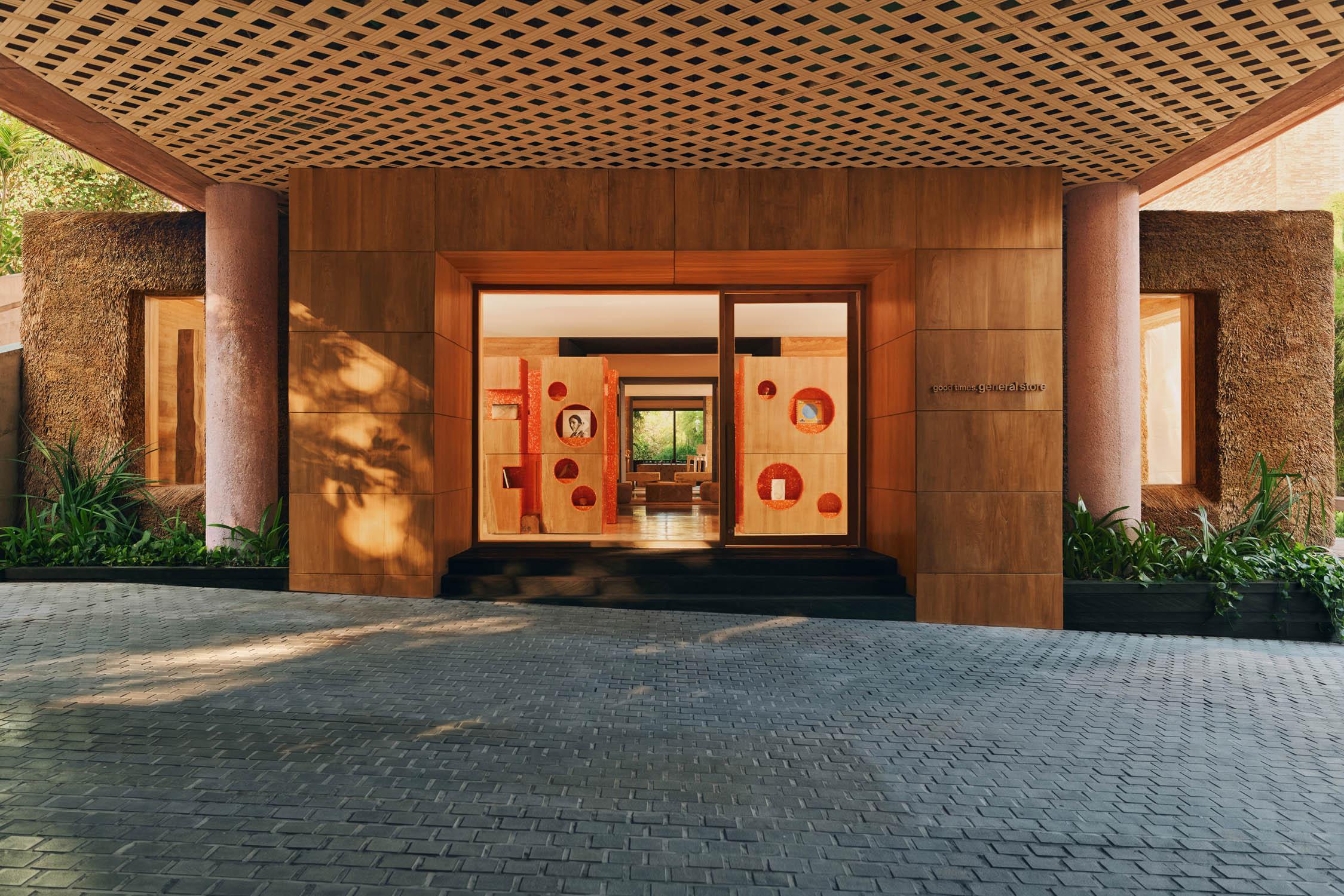
Facade: alang-alang thatch, a traditional roofing material, used here as an exterior finish.
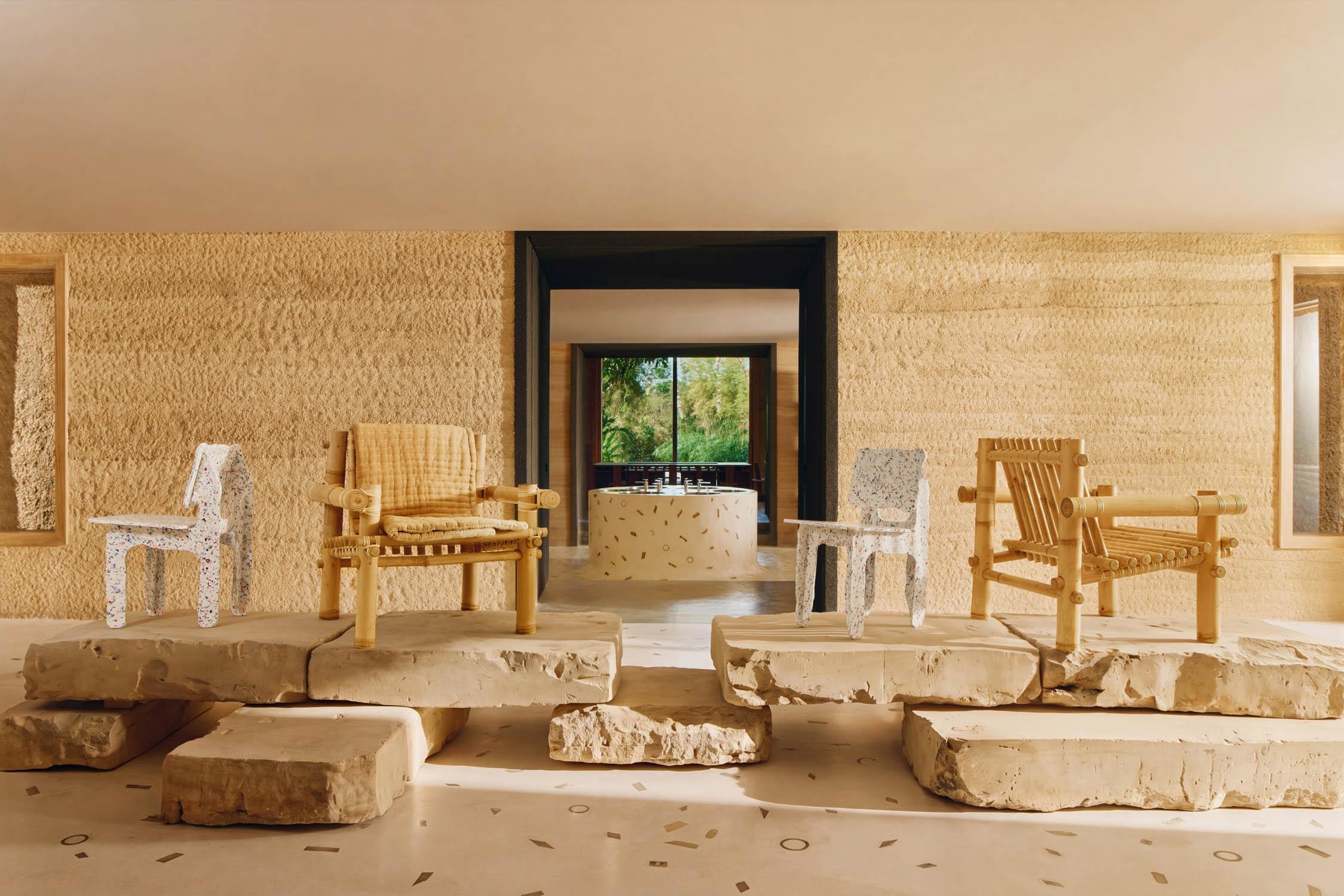
Walls: rammed earth made from local clay. Wallpaper notes smooth and bush-hammered finishes, so the raw earth shows.
Floors: terrazzo with recycled bamboo offcuts set into it.
Timber: reclaimed wood.
Plastic: a wall of shredded HDPE recovered through collectors and upcyclers in Bali and Java.
In Sharon Angelia’s photos, the earth walls are the backdrop to nearly every room, banded in some places and roughly textured in others. Products sit on slabs of rough stone or on thin shelves set between heavy timber posts, and small flecks and rings are set into the pale terrazzo throughout. Outside, thick thatch walls flank a timber-clad entrance. There’s very little signage in the shots.
Making on the shop floor
The five bays run in a line, and designboom frames them as stages in an object’s life. The first three sell: objects by independent makers, books and records; Potato Head’s own Bali-inspired clothing and travel line; and Wasted, Max Lamb’s collection of furniture and homeware made from discarded plastics and other waste.
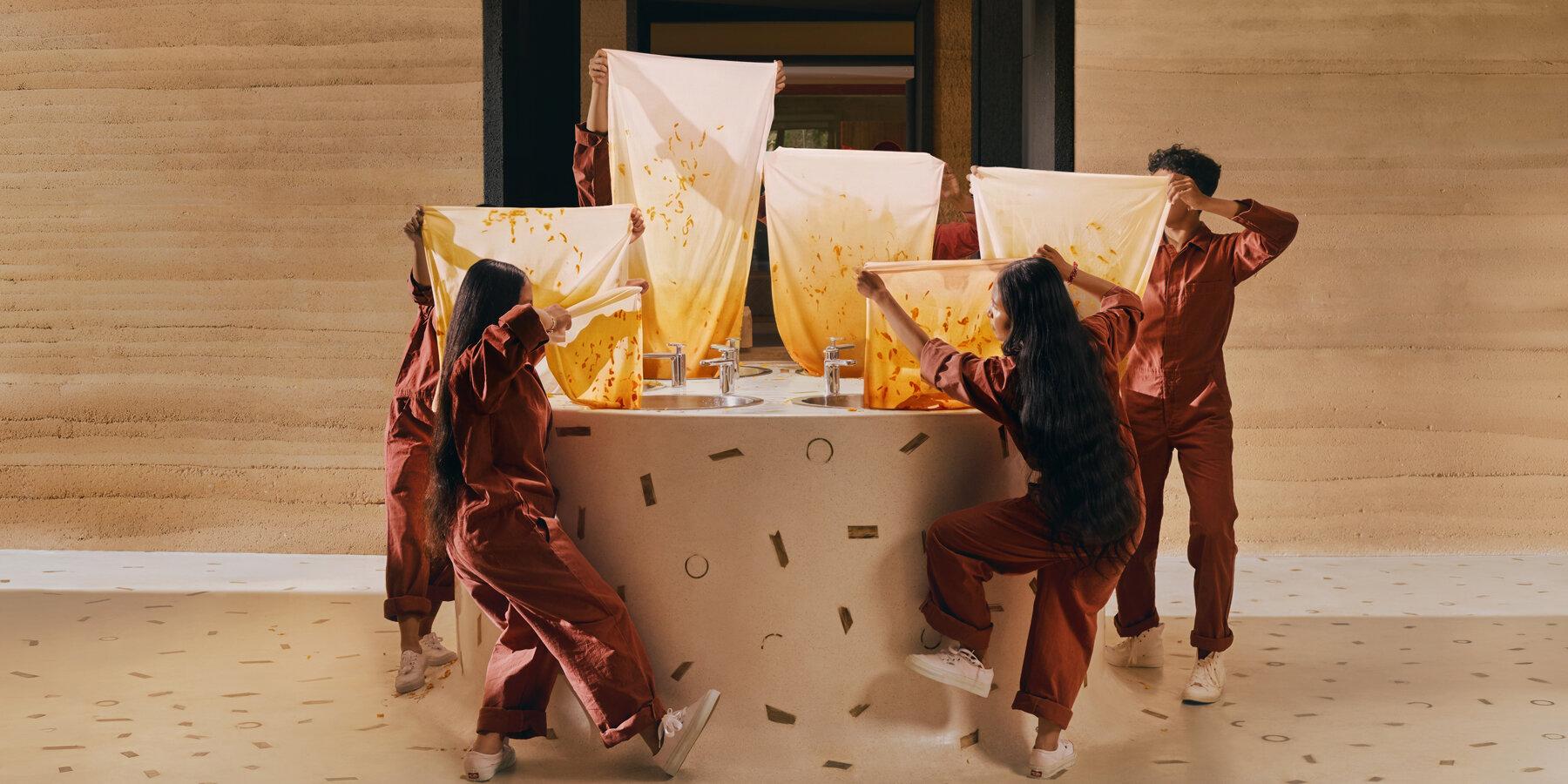
The last two make. A natural dye studio pulls pigment from plants and food waste collected around Desa Potato Head, and visitors can try dyeing, painting and pattern-making. Next door, the HDPE wall anchors a workshop for plastic moulding. In one photo, a workroom has sewing machines on timber tables that sit on casters, in front of a wall of clear boxes filled with plastic sorted by colour. Wallpaper adds that lightweight, movable elements let the interior be reconfigured, and designboom says ateliers for weaving, upcycling and sewing are planned for 2027.
Neither article gives the floor area, cost, opening date or builder.

 Get a QuoteRequest your personalized project
What a Toronto pop-up can borrow
Brience is a Toronto-based custom fabrication and experiential design studio. Few pop-ups will be built in rammed earth, but a few ideas here carry over to a GTA brief.
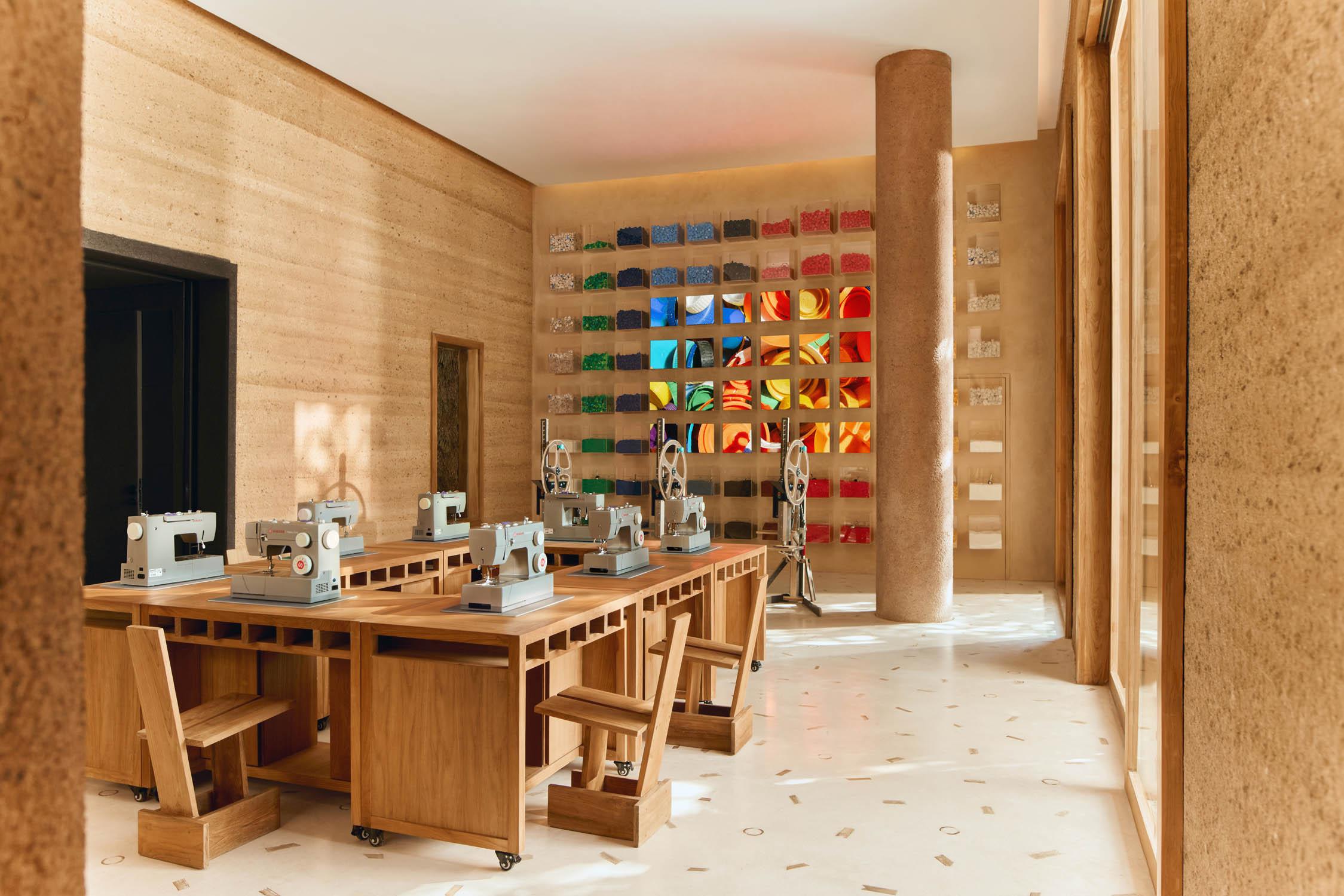
Put the making where people can see it. A live station (dyeing, printing, engraving, repair) beside the product lets visitors watch the process instead of reading about it. It needs real infrastructure: water, drainage, ventilation, power and a clear line between visitors and tools.
Let one surface carry the story. A panel of shredded plastic or reclaimed timber can tell the story without a sign, as long as you know where the material came from.
Build for change. Potato Head plans to add ateliers, and Wallpaper says the fittings are movable. A pop-up that runs for weeks can swap a demo station midway if its fixtures move from day one.
Get a QuoteRequest your personalized projectOne caution on claims. If a panel is made from recycled plastic, document the source and say exactly that. One recycled wall doesn’t make a whole build sustainable, and copy that names the material and its source is easier to stand behind than a general green label.
If you’re planning a pop-up where visitors should see something being made, let’s work out the station together.
Sources: designboom, “OMA turns potato head’s bali store into creative workshop for recycled materials and traditional craft” (October 2026); Wallpaper, “Potato Head opens the Good Times General Store by OMA” (October 2026). Photos by Sharon Angelia.