 Sign In
 4 min4 min read

2x1 built a red plinth kit for a Barragán garden in Mexico City
For Design Week Mexico 2026 (October 5 to 25), studio 2x1 displayed Creative Immersions France-Mexico 2026, work by more than 30 French and Mexican designers, in the gardens of Casa Ortega, Luis Barragán’s 1940s house in Mexico City. It made dark-red plinths with New Fibers from Polyroca, a panel made from recycled laminated cardboard waste, plus metal frames with fabric awnings. In the photos, every piece stands on its own. The lesson: for a heritage venue, we’d start with a freestanding, repeatable display kit.
In brief. For Design Week Mexico 2026 (October 5 to 25), studio 2x1 displayed Creative Immersions France-Mexico 2026, work by more than 30 French and Mexican designers, in the gardens of Casa Ortega, Luis Barragán’s 1940s house in Mexico City. It made dark-red plinths with New Fibers from Polyroca, a panel made from recycled laminated cardboard waste, plus metal frames with fabric awnings. In the photos, every piece stands on its own. The lesson: for a heritage venue, we’d start with a freestanding, repeatable display kit.
Luis Barragán designed Casa Ortega for himself between 1942 and 1947, before he built the better-known Casa Luis Barragán next door, and it’s still a private, lived-in home. The family who look after it keep visitors to a minimum, and its caretakers call it “Barragán’s best-kept secret”. For Design Week Mexico 2026, they opened the gardens.
What went into those gardens was Creative Immersions France-Mexico 2026: furniture, vessels and objects by more than 30 designers, the result of three years of residencies in which French designers worked with artisans and studios across Mexico. C Cúbica Arquitectos curated it, and it ran from October 5 to 25. The display system came from 2x1, a studio based in Paris and Mexico City, and that’s the part we want to look at.
 Shop Objects
 Explore our curated brand essentials
What 2x1 built
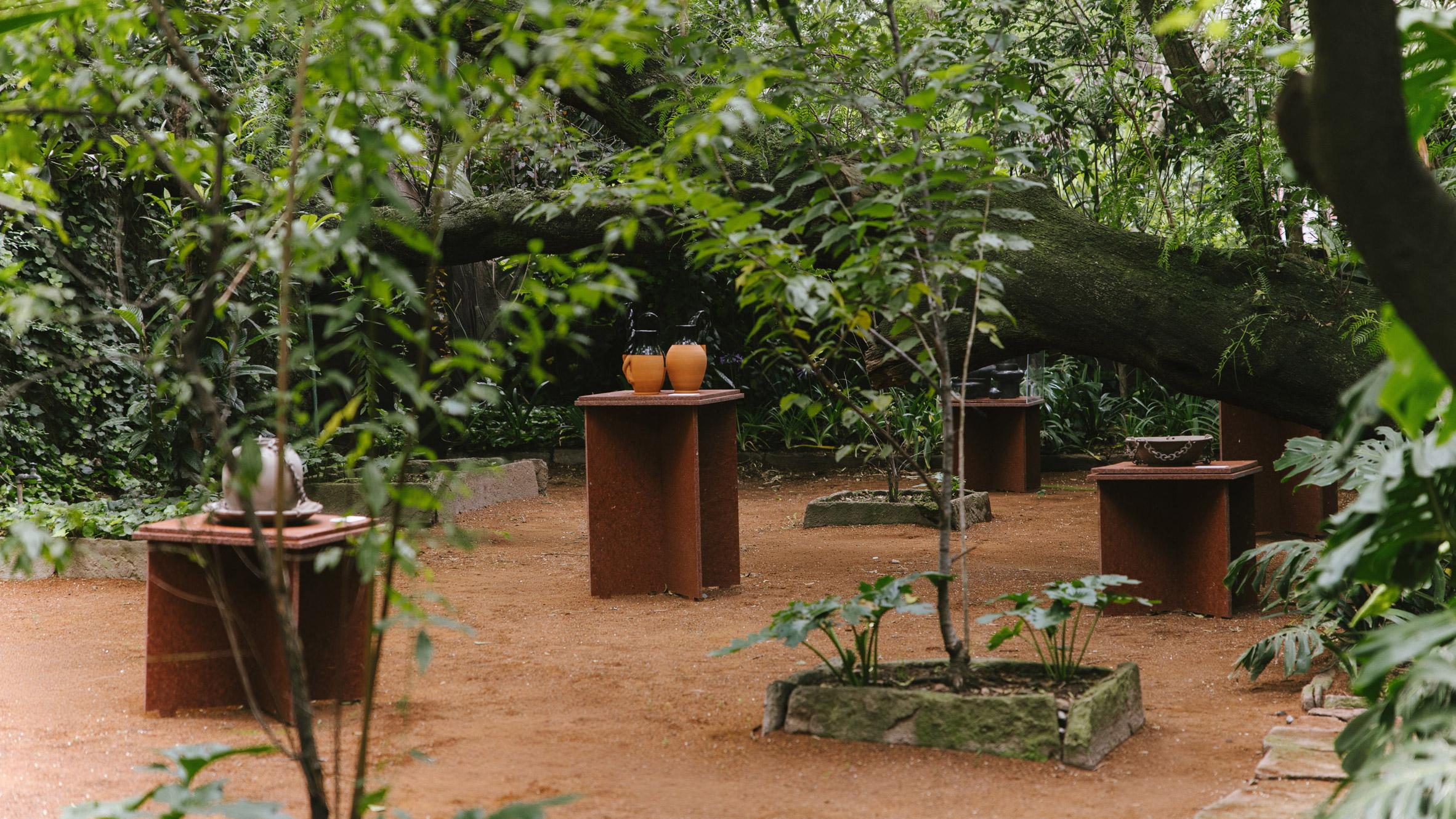
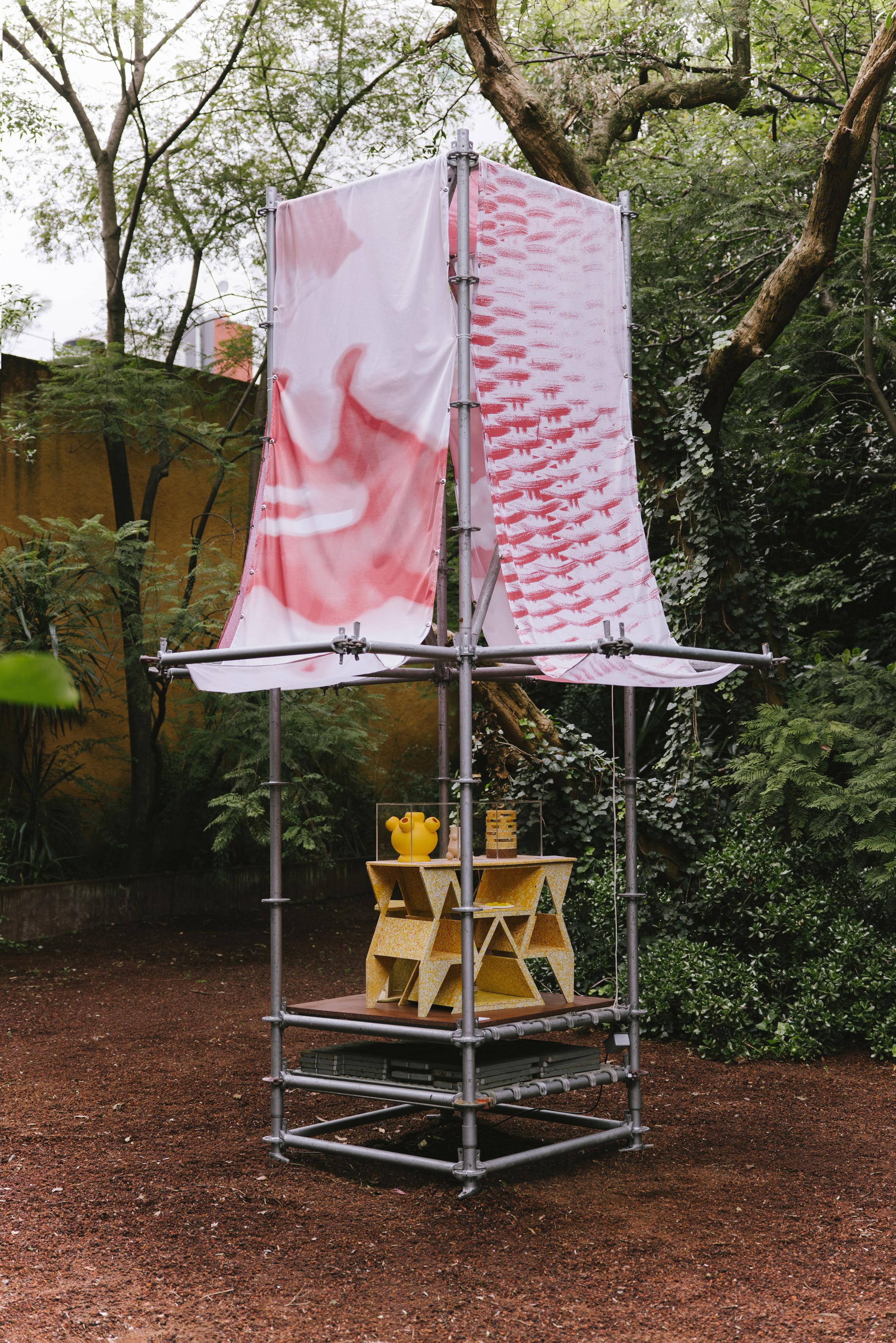
Dezeen describes two pieces of kit. The first is a family of dark-red plinths, made with Mexican materials company New Fibers from Polyroca, which Dezeen describes as a plastic panel made from recycled post-industrial laminated cardboard waste. The second is a set of larger display units: industrial metal frames carrying fabric awnings. Together they carried pieces like a stool by Fanny Serouart with Taller Maya, a group that connects Mayan artisans with global markets, and vessels by Matali Crasset with Mexican studio And Jacob.
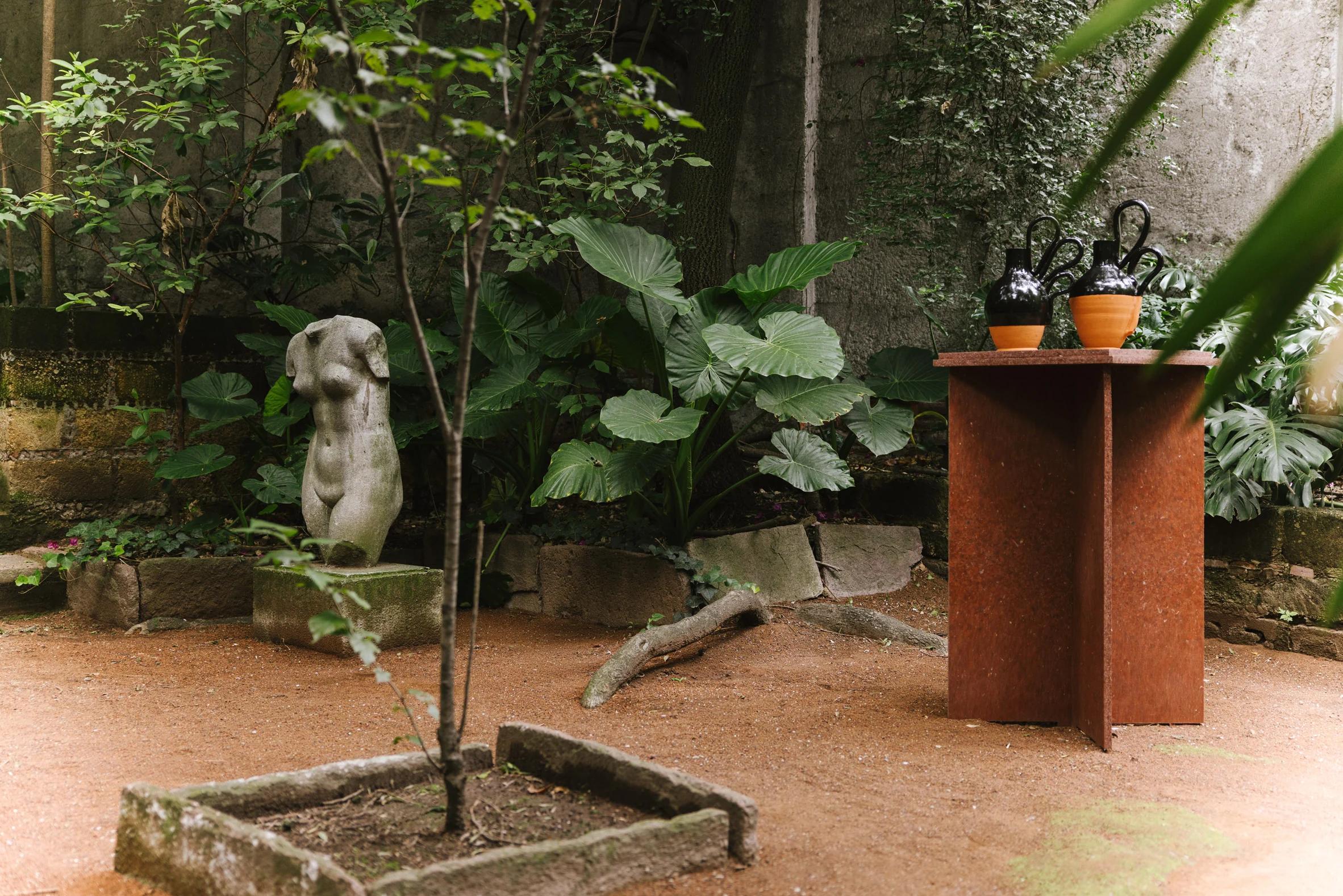
Juan Hernandez’s photos fill in the rest. The plinths look like flat panels slotted together into cross-shaped legs under a square top. They stand straight on the garden’s red earth and old paving, among trees and planting beds. A yellow metal chair by Hall Haus and Neko Design sits on a platform in a pool. The awning units are built on what looks like scaffold tube, with printed fabric draped over the top and a deck inside for smaller pieces. One carries a stack of grey blocks on its lowest level, which reads as ballast.

 Get a QuoteRequest your personalized project
Why a kit suits a house like this
Dezeen doesn’t say what rules the family set or how anything was secured. But nothing in the photos appears to be fixed to a wall, a floor or a tree. That’s the logic we’d follow in any heritage venue. If a piece can stand on its own, stay put and leave without a mark, the conversation with the venue gets a lot shorter.
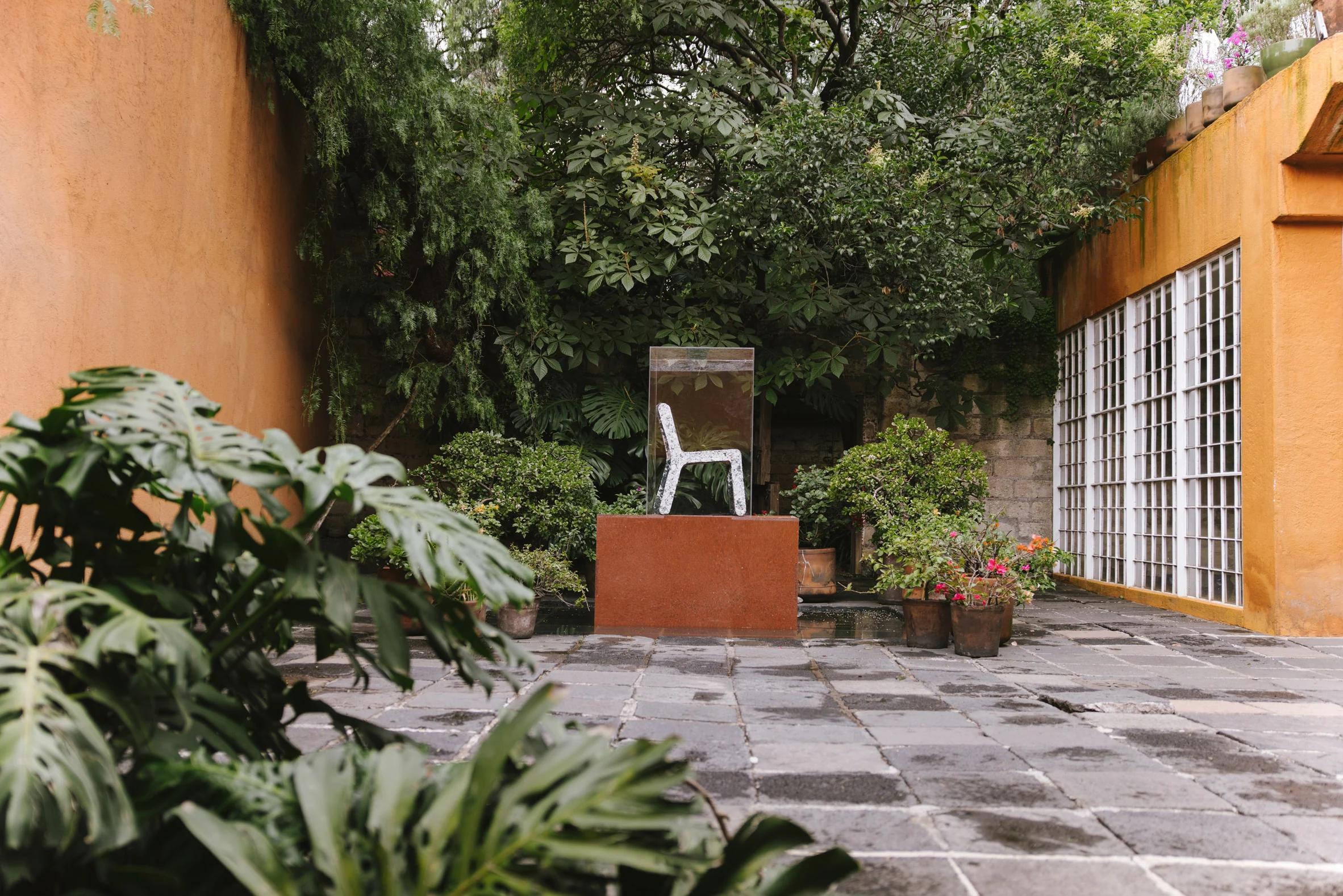
The kit does a quieter job too. To our eye, one colour and one construction method, repeated across a whole garden, help work by 30-plus designers read as one show. The dark red also sits close to the garden’s earth and the house’s warm walls.
A panel kit is also easy to think past opening day. Slotted plinths would likely pack flat, and scaffold frames come apart into tubes and fittings. Dezeen doesn’t say whether this kit will be reused, and that’s a question we’d ask before choosing any material.
Get a QuoteRequest your personalized projectThe Toronto version
Toronto has its own historic sites where a kit like this makes sense: the Distillery District’s brick lanes, Casa Loma, Fort York. Each comes with its own conditions, so check them early. Here’s what we’d want settled before anyone draws a plinth:
Fixings: what, if anything, can touch walls, floors, lawns or planting.
Ballast: how pieces stay put in wind and crowds without anchors.
Access: what fits through the gates, doors and paths you’ll carry it along.
Weather: outdoor finishes, rain on fabric and where water runs off.
Afterlife: whether the kit gets stored, reused or recycled, and who owns it.
Brience is a Toronto-based custom fabrication and experiential design studio, and freestanding kit for venues you can’t drill into is a problem we like. If you’re planning a show or a launch in a heritage space, send us the venue and the brief.
Source: Dezeen, “Recycled-plastic plinths hold furniture at ‘secret’ Barragán house in Mexico City” (October 2026).