 Sign In
 5 min5 min read

Window Wonderland 2026: briefing a shop window for passers-by and phone cameras
Window Wonderland returns to Toronto’s Junction from November 27, 2026 to January 31, 2027 for its seventh season, under the theme Movement + Glimmers. The Junction BIA and AR platform Artivive are showing 32 augmented reality artworks, 20 new storefront windows and 12 year-round murals, viewed through the free Artivive app, plus an indoor showcase at Latitude 44 Gallery. The lesson for anyone briefing a window: it has to work for the person walking past and for the phone pointed at it.
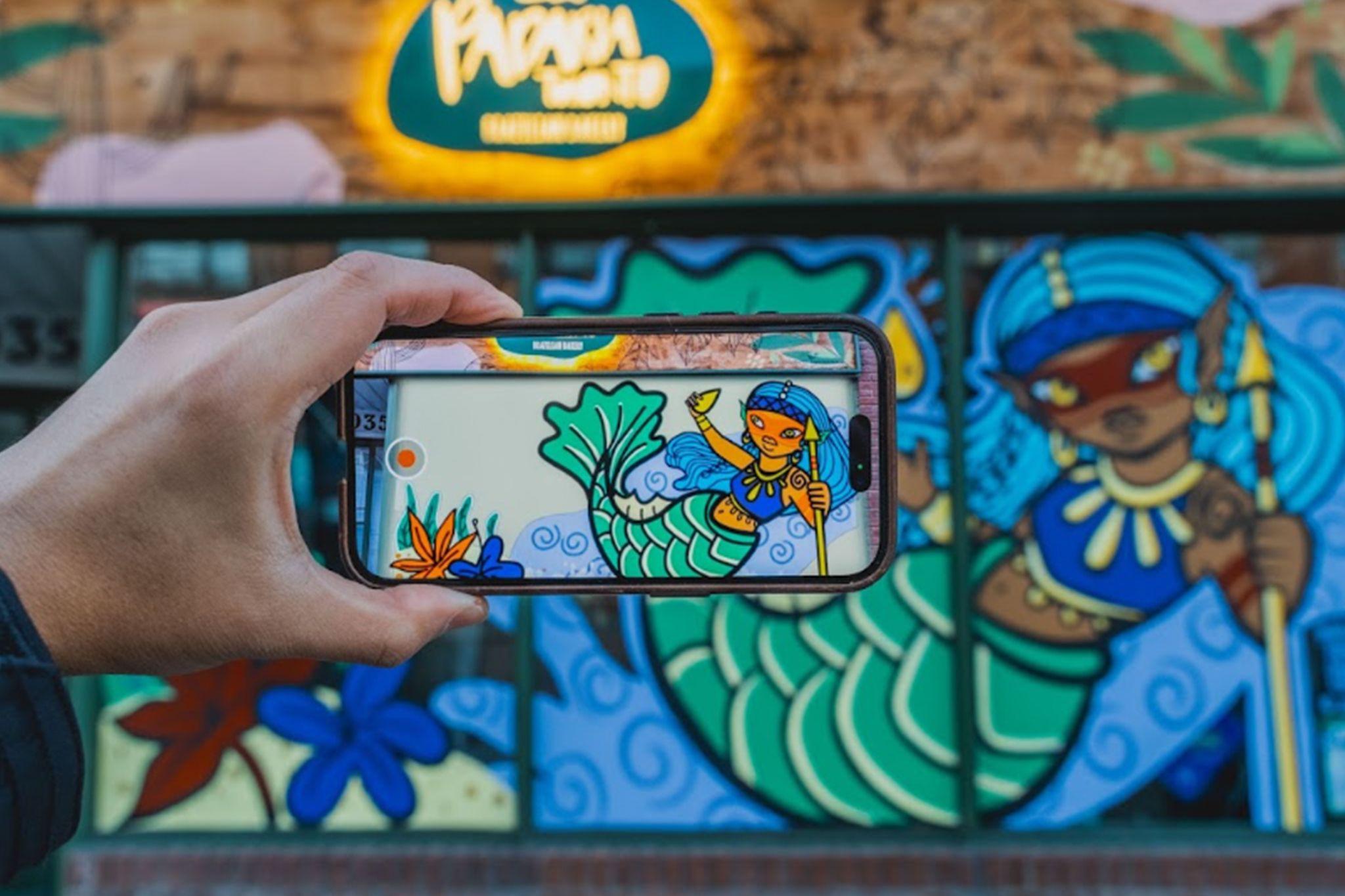
In brief. Window Wonderland returns to Toronto’s Junction from November 27, 2026 to January 31, 2027 for its seventh season, under the theme Movement + Glimmers. The Junction BIA and AR platform Artivive are showing 32 augmented reality artworks, 20 new storefront windows and 12 year-round murals, viewed through the free Artivive app, plus an indoor showcase at Latitude 44 Gallery. The lesson for anyone briefing a window: it has to work for the person walking past and for the phone pointed at it.
We’d guess most people walking along Dundas Street West this winter won’t download an app, and some will. A window in the show has to work for both.
The Junction’s Window Wonderland returns from November 27 to January 31 for its seventh season. The Junction BIA runs it in partnership with the AR platform Artivive, and this year’s edition has 32 augmented reality artworks: 20 new storefront window installations and 12 AR wall murals that stay up all year. Visitors scan them with the free Artivive app and watch the art move on their screens. The theme is Movement + Glimmers, which the BIA frames around motion, connection and small moments of joy on cold days.
Around the windows, an Indoor Artist Showcase runs at Latitude 44 Gallery, 2900 Dundas St. W., for the same dates. The McGregor Carolers and the Merry Alpine Sheep Choir return, and Santa visits on December 5 and 6. MEDS Junction Pharmacy is the presenting sponsor, with funding in part from the City of Toronto’s Cultural Festivals Funding Program. Executive director Carol Jolly told blogTO the event has always been about “finding new ways to experience art, our main street, and each other.”
 Shop Objects
 Explore our curated brand essentials
How a window gets made
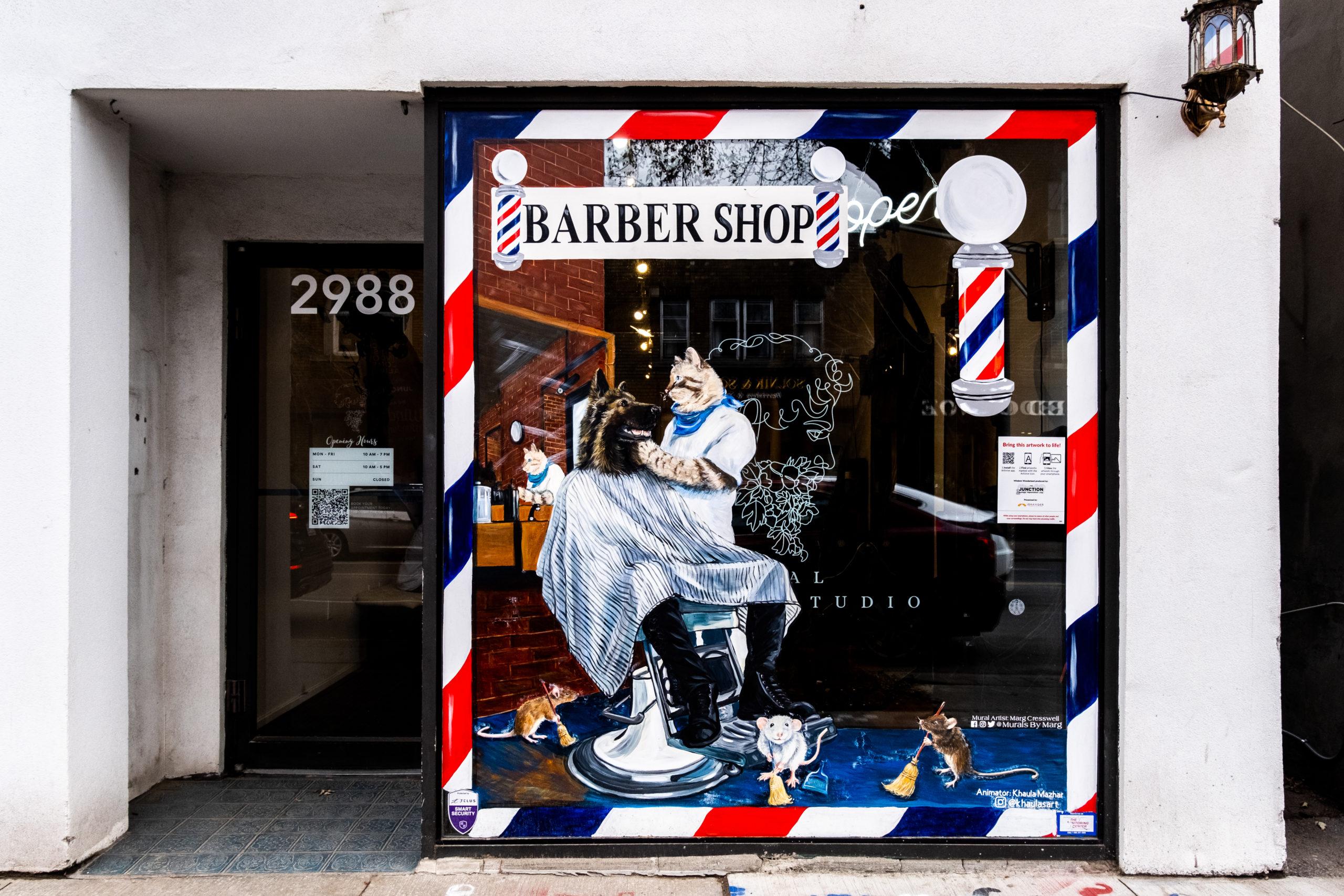
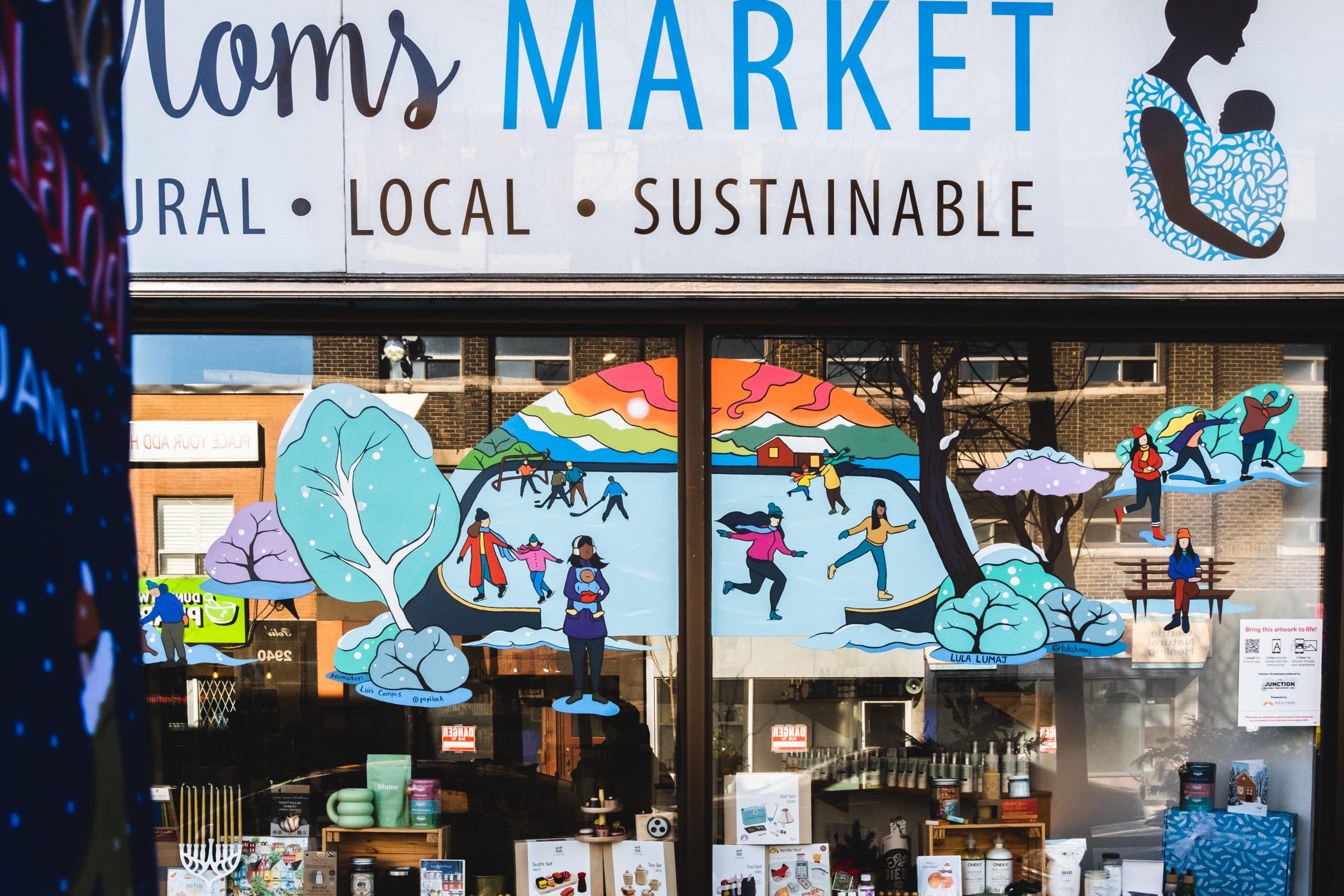
The BIA hasn’t announced the 2026 artist roster yet, but earlier editions show the model. In 2022, Streets of Toronto credited each window to three parties: the business, a muralist and an animator. On Vidal Barber Studio’s window, for example, muralist Margaret Cresswell painted a cat barber trimming a dog, and the names of both artists are painted right on the glass. As we read it, the muralist’s work sits on the window, and the animator’s work lives in the app, playing over it when you point a phone at it.
The BIA’s own numbers for last season: about 50,000 visitors and more than 60 million media impressions. Those are organizer figures, so read them that way. We can’t check either figure.
 Get a QuoteRequest your personalized project
Two audiences, one pane of glass
That model creates a brief with two audiences. Here’s what we’d ask for if we were making one of these windows:
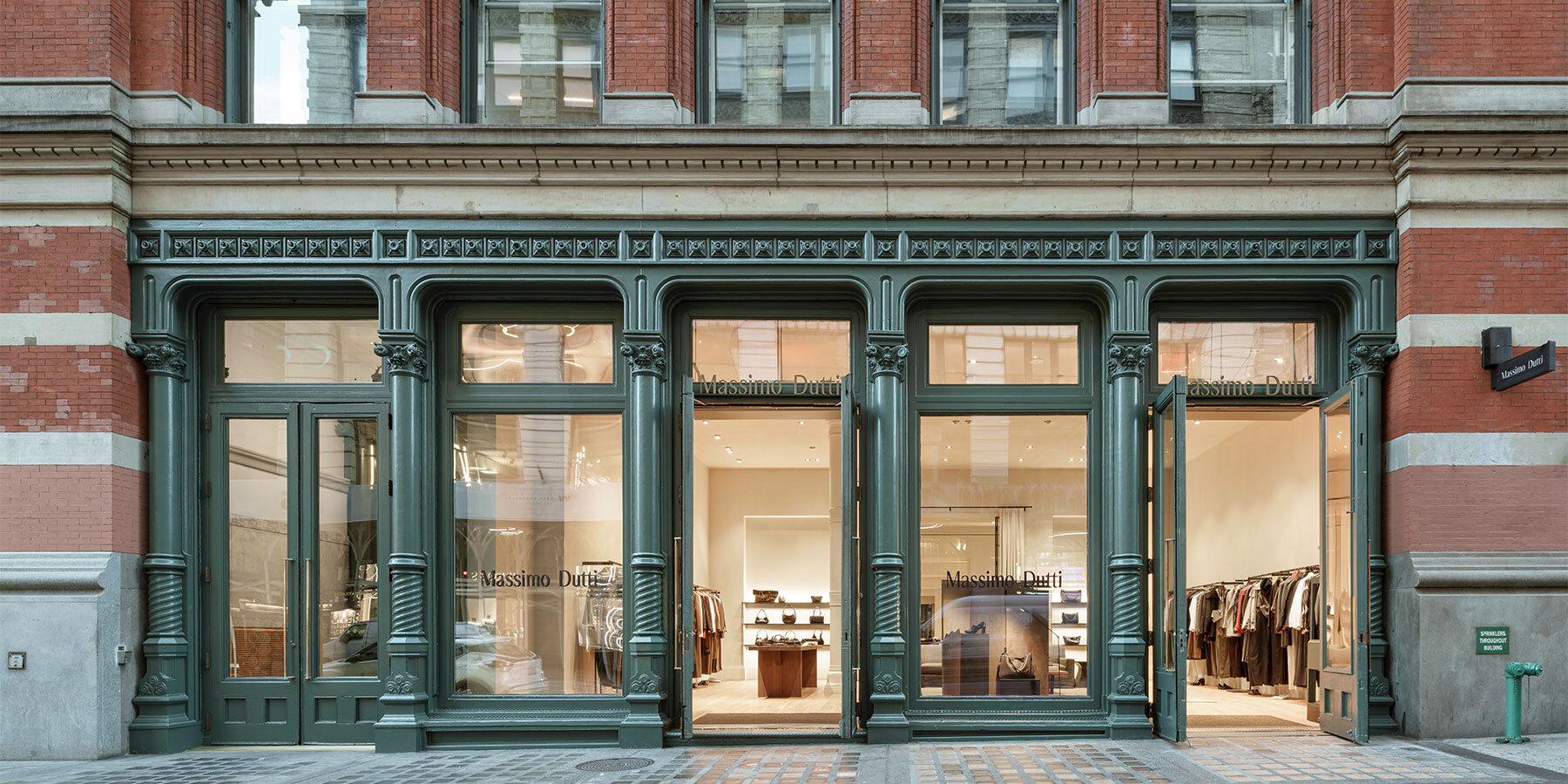
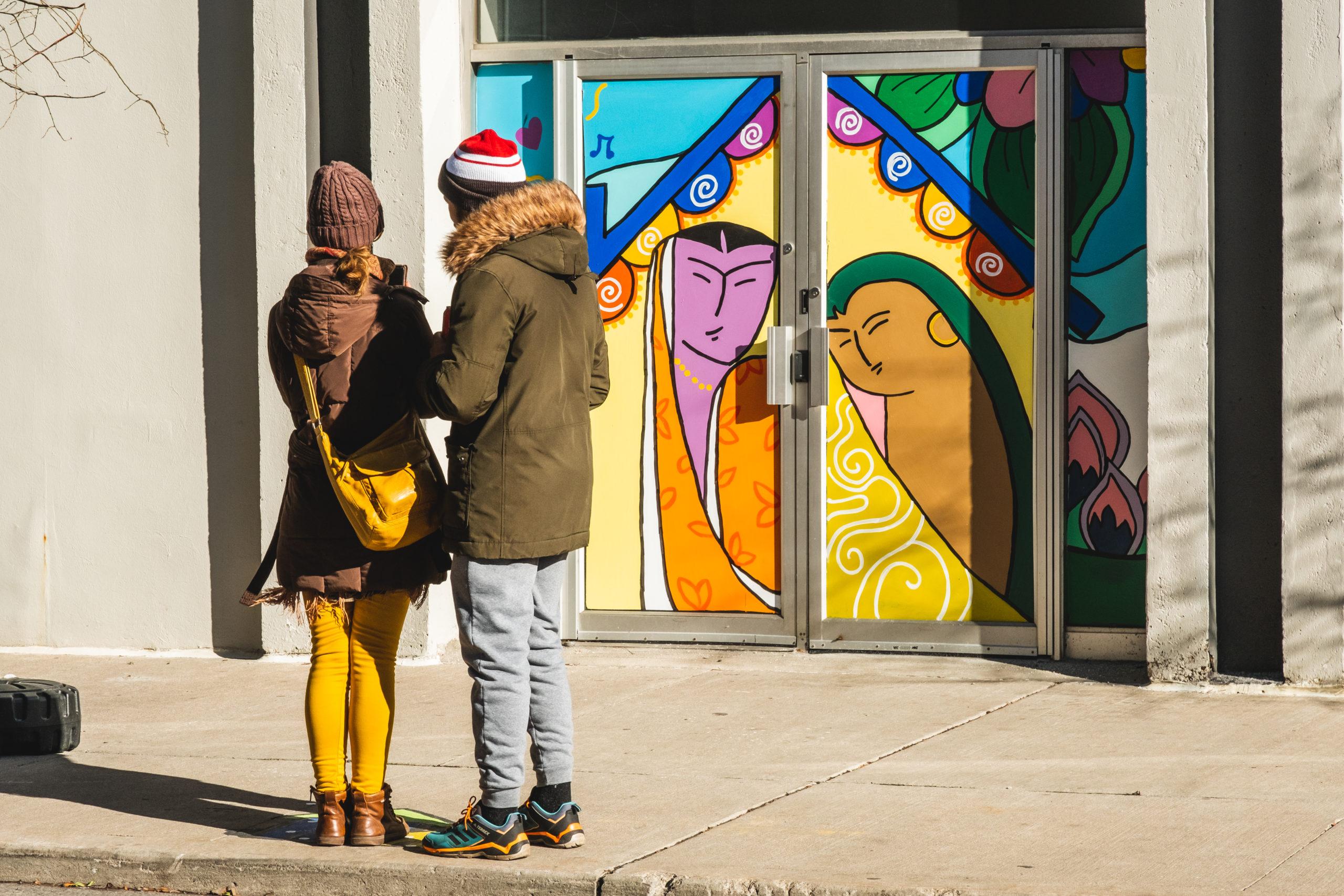
Read it from the sidewalk: most people won’t open the app, so the painting has to stand on its own, with strong shapes and a subject you can read from across the street.
Give the camera something to grip: image-tracking apps generally lock onto contrast and detail, so large flat areas of one colour make tracking harder.
Plan for the glass: reflections, frost and condensation all change what a camera sees. Test in daylight and after dark, from where people will actually stand.
Light it for 5 p.m.: it’s dark by late afternoon in a Toronto December. The window needs light on the art without glare on the glass.
Mark the spot: the 2022 windows carried a small printed card asking people to bring the artwork to life, with a QR code and three steps. We’d take a plain card over a code lost in the artwork.
Earlier editions show how much range fits inside those rules: a barber shop framed in red, white and blue stripes, a skating scene across a market’s front window, a grey robot filling a pharmacy window. To us, each one reads as a painting first.
Get a QuoteRequest your personalized projectWhy this matters past the Junction
Brience is a Toronto-based custom fabrication and experiential design studio, and holiday windows are a place where a business and an artist end up sharing the same pane of glass. Window Wonderland is a useful model for any GTA brief where a window has to earn a second look, first from a person and then from their phone.
If you’re working on a window that has to perform both ways, talk to us. We’ll start with the glass, the light and the sightlines.
Sources: blogTO, “Massive outdoor augmented reality experience to transform Toronto neighbourhood” (November 2026); The Junction BIA, “Window Wonderland 2026” (2026); Streets of Toronto, “Award-winning immersive art walk returns to The Junction” (December 2022).