 Sign In
 4 min4 min read

Coach and Spotify’s Tabby Tour runs one kit through four countries
Coach and Spotify’s Tabby Tour launched in New York on September 16, 2026, and is visiting campuses and venues across the US, the UK, Japan and South Korea until early 2027. Spotify’s AUX team produced it end to end, from the custom tour bus to every stop. Guests move through Courage Frequency, a Ticket Booth with hangtags carrying Spotify codes, a photo booth and a message board that travels with the bus. The lesson: fix the core kit, and localize the artists, playlists and community around it.
In brief. Coach and Spotify’s Tabby Tour launched in New York on September 16, 2026, and is visiting campuses and venues across the US, the UK, Japan and South Korea until early 2027. Spotify’s AUX team produced it end to end, from the custom tour bus to every stop. Guests move through Courage Frequency, a Ticket Booth with hangtags carrying Spotify codes, a photo booth and a message board that travels with the bus. The lesson: fix the core kit, and localize the artists, playlists and community around it.
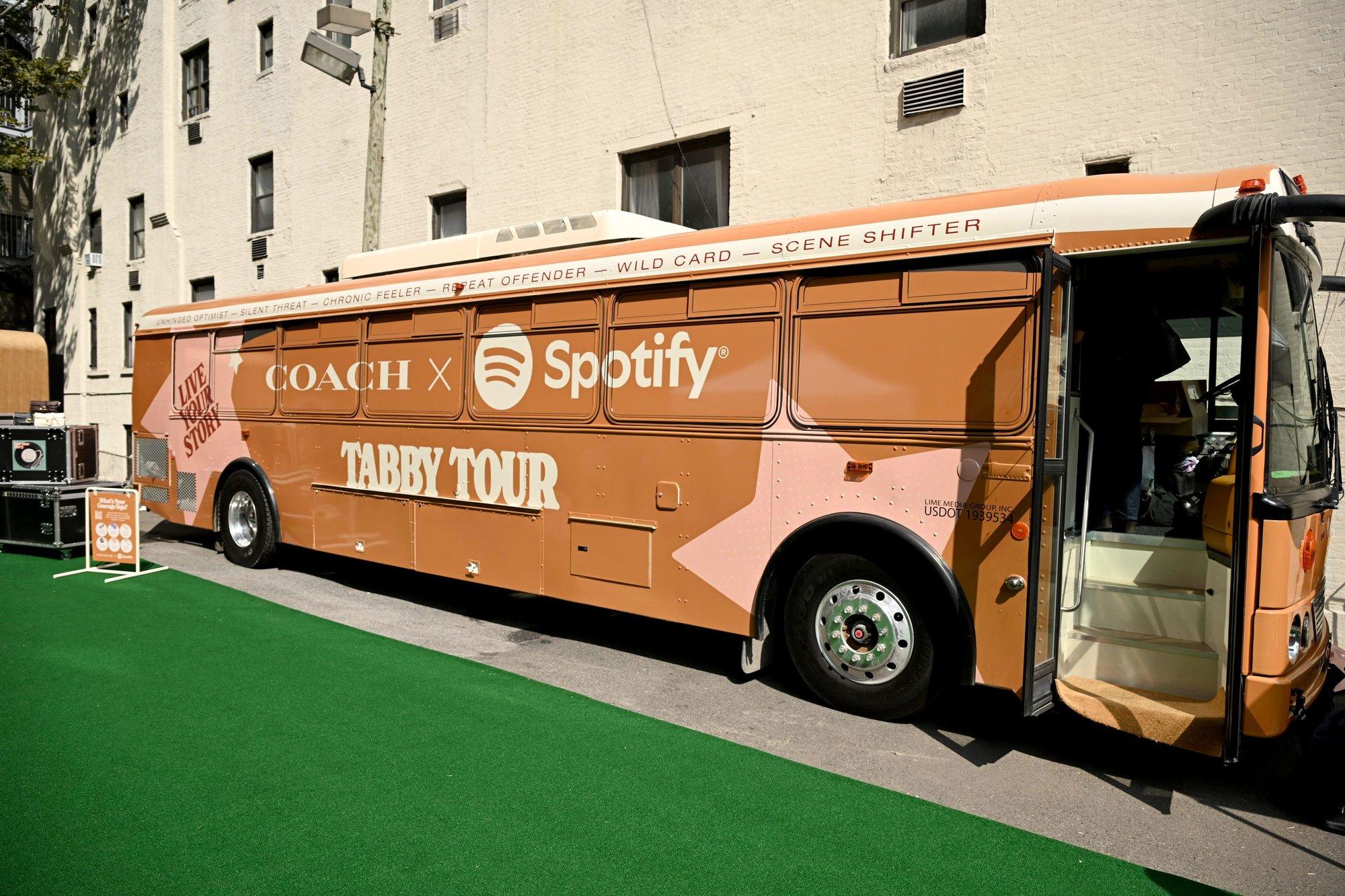
A tan-and-pink bus sits on green turf between Manhattan buildings, Coach and Spotify logos along its side. Inside are leather banquettes, record crates and listening stations. That bus anchors the Tabby Tour, and it’s built to keep moving: to college campuses and cultural venues across the US, the UK, Japan and South Korea, before the tour wraps in early 2027.
BizBash’s write-up is worth reading for anyone who’s had to make one activation work in a second city. The tour launched in New York on September 16 and builds on Coach’s spring Tabby Tour, tying Coach’s Live Your Story campaign to Spotify’s listening data. Spotify’s AUX team, which makes music and culture experiences for brands, produced it end to end, from building the custom buses to running the logistics at every stop, according to CJ Stanley, Spotify’s co-head of communications and head of global experiential.
 Shop Objects
 Explore our curated brand essentials
Four stations and a bus
The bus is modelled on the one in Coach’s fall campaign films, where Elle Fanning drives a bus to a music festival. Around it, each stop is a short sequence of things to do:
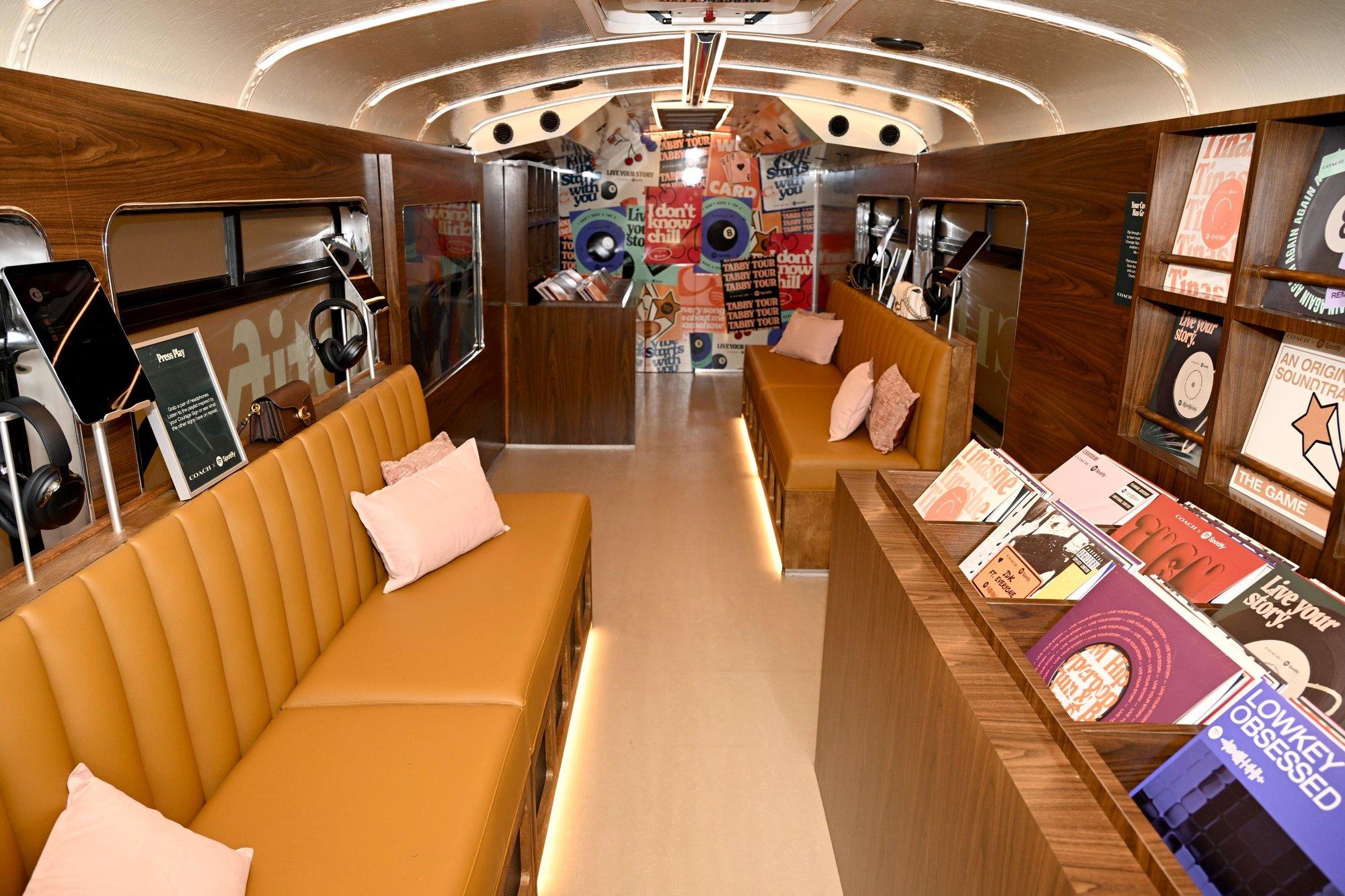
Courage Frequency: your Spotify listening data assigns you one of six Courage Signs, plus a personal playlist.
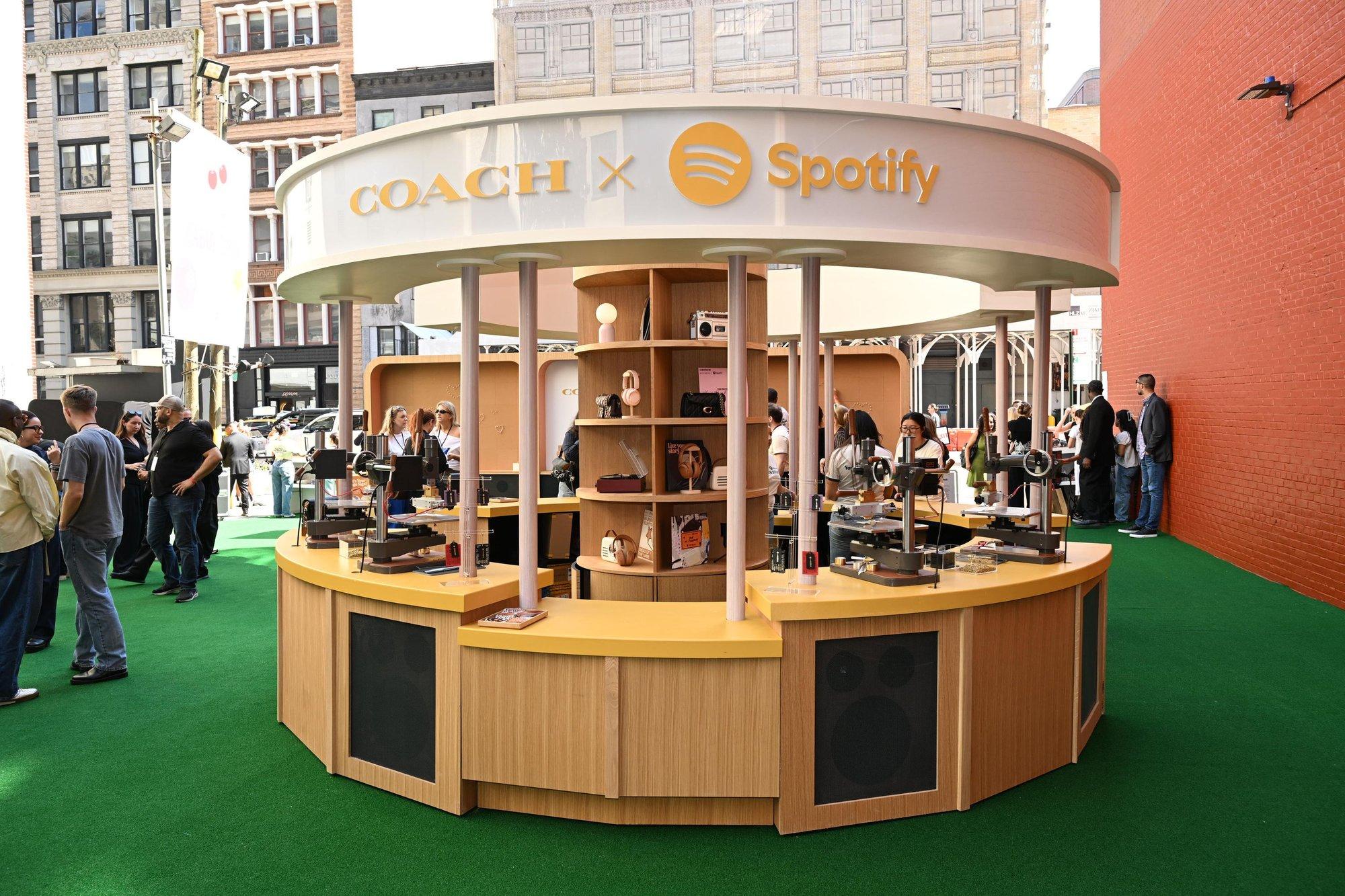
Ticket Booth: special-edition Tabby bags, and hangtags you customize with a Spotify code that links to a playlist.
Self-Expression Photo Booth: prints a personalized concert ticket.
Messages on the Board: visitors leave notes that travel with the bus to the next stop.
Select stops add live sets and talks, with artists including Tinashe and Rachel Chinouriri. Stanley’s summary of the brief: “Every piece gives people something to do, not something to walk past.”
The detail we like most is the board. Notes travel from stop to stop, so each city adds to it.

 Get a QuoteRequest your personalized project
The core travels, the rest is local
Stanley described the challenge to BizBash as four countries, a different venue setup at every stop, and a need for all of it to feel like one experience. Her answer: keep the core the same everywhere and localize what surrounds it, meaning the artists, the campus communities and the playlists. China gets its own version, with Coach working alongside QQ Music on a November 6 festival in Chengdu and further stops in Shenzhen and Nanjing.
That split is the useful part for anyone planning a multi-stop run. Decide early what’s fixed and what changes. The fixed kit has to survive a lot of loading docks. The local layer has to be quick and cheap to change.
BizBash doesn’t publish attendance, budget or who fabricated the bus and booths. Stanley says dwell time and participation show it’s working, but that’s the brand’s own read, and no numbers were shared.
Get a QuoteRequest your personalized projectBuilding a kit that survives the tour
Here’s what we’d plan for on a touring build like this, based on the photos and on how these runs usually go.
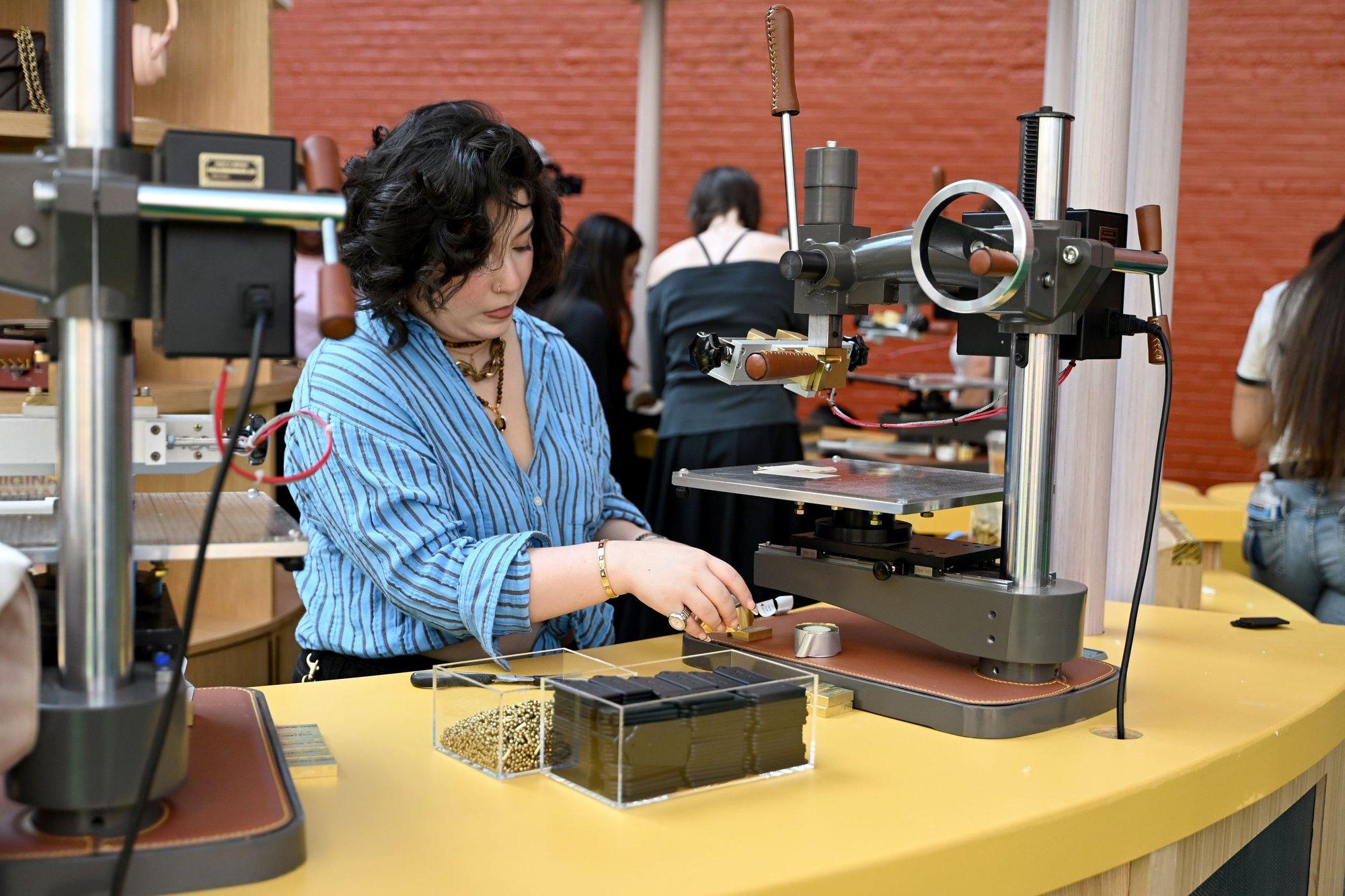
The bus does the heavy lifting. It arrives as a finished room, so each stop would mostly be booths and turf around it. The round customization booth and the speaker-wall stage look modular in the photos, which matters when stop three has half the footprint of stop one. Then there’s stock. Hangtags, tickets and bags are the keepsakes, and running out of them mid-tour is a bigger problem than a scuffed counter.
A hands-on station like this is simple to run once. A tour has to deliver it over and over, in rooms you haven’t seen yet.
Brience is a Toronto-based custom fabrication and experiential design studio. If you’re planning a run across Ontario campuses or GTA venues and want help splitting the fixed kit from the local layer, let’s talk.
Source: BizBash, “How Coach and Spotify Designed a Global Tour Built for Participation” (November 2026).