Comic-Con’s real show floor was downtown San Diego
At San Diego Comic-Con 2026 (July 23 to 26), the most competitive brand environments were offsite activations across downtown San Diego, open without a badge: Hulu’s Animayhem scene recreations, Maruchan’s MaruMart convenience store with Demon Slayer, DC’s Lanterns Training Headquarters, Disney+’s Percy Jackson Camp Half-Blood, and Paramount+’s The Lodge, a roughly 50-minute multi-room experience with personalized souvenirs. The differentiator among them was world-building depth: builds that behaved like places, not photo sets.
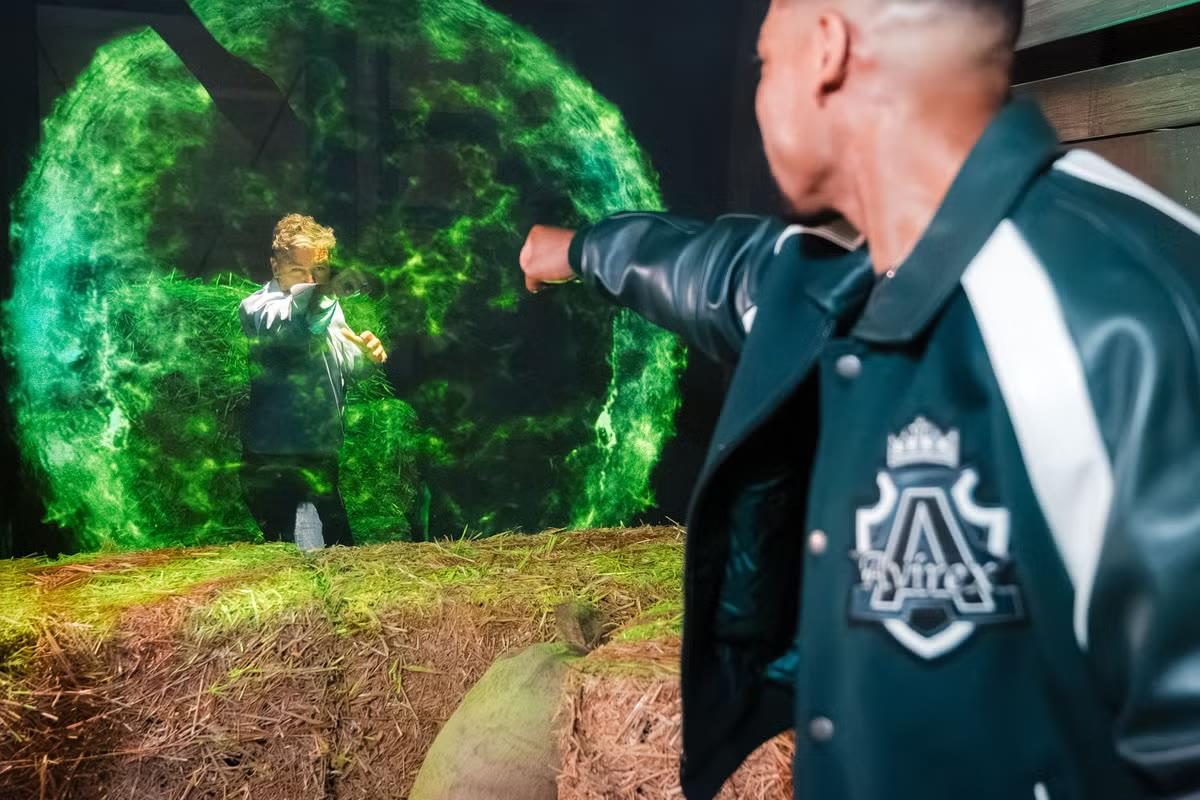
In brief. At San Diego Comic-Con 2026 (July 23 to 26), the most competitive brand environments were offsite activations across downtown San Diego, open without a badge: Hulu’s Animayhem scene recreations, Maruchan’s MaruMart convenience store with Demon Slayer, DC’s Lanterns Training Headquarters, Disney+’s Percy Jackson Camp Half-Blood, and Paramount+’s The Lodge, a roughly 50-minute multi-room experience with personalized souvenirs. The differentiator among them was world-building depth: builds that behaved like places, not photo sets.
For four days in late July, the most contested real estate in experiential marketing wasn’t inside the San Diego Convention Center. It was the Gaslamp Quarter, where studios and brands built an entire district of temporary worlds, most of them open to anyone, no badge required. Event Marketer’s field coverage counted the heavyweights: Hulu dropped visitors into scenes from Futurama and King of the Hill at its Animayhem Fandom Fuel Up. Maruchan rebuilt its MaruMart, a Japanese convenience store first seen at Coachella, this time with Demon Slayer. DC ran a Lanterns Training Headquarters so oversubscribed it stopped admitting walk-ups. Disney+ staged Camp Half-Blood, where an interactive experience told you which Olympian god had claimed you.
Comic-Con offsites are the hardest brief in activation. The audience is maximally literate: these are people who notice a wrong prop, a thin wall, a shortcut. And the competitive density is absurd, with dozens of builds fighting for the same four days and the same feeds. It’s a compressed version of the problem every brand faces everywhere: attention is finite and the neighbors are loud.
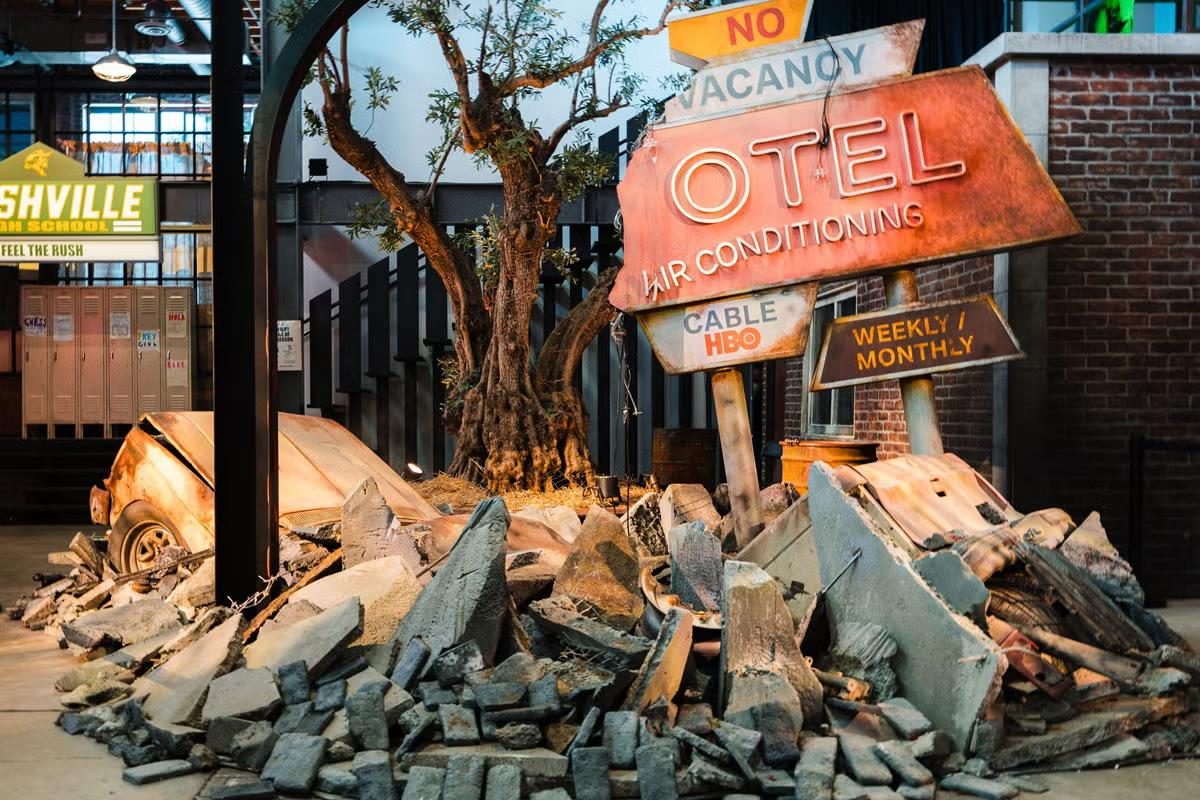
Set dressing at Lanterns HQ: a full wrecked-motel diorama, built to be believed. Photo: Event Marketer.
What separated the winners, reading across the coverage, was depth of world rather than size of footprint. Paramount+’s The Lodge ran visitors through a sequence of distinct themed rooms over roughly 50 minutes, with live entertainment, customizable keepsakes, and a DJ finale. Attendee accounts kept landing on the same point: every room felt different, and there was always another surprise. That’s spatial pacing, the same discipline a good exhibition designer uses, applied to a marketing build.
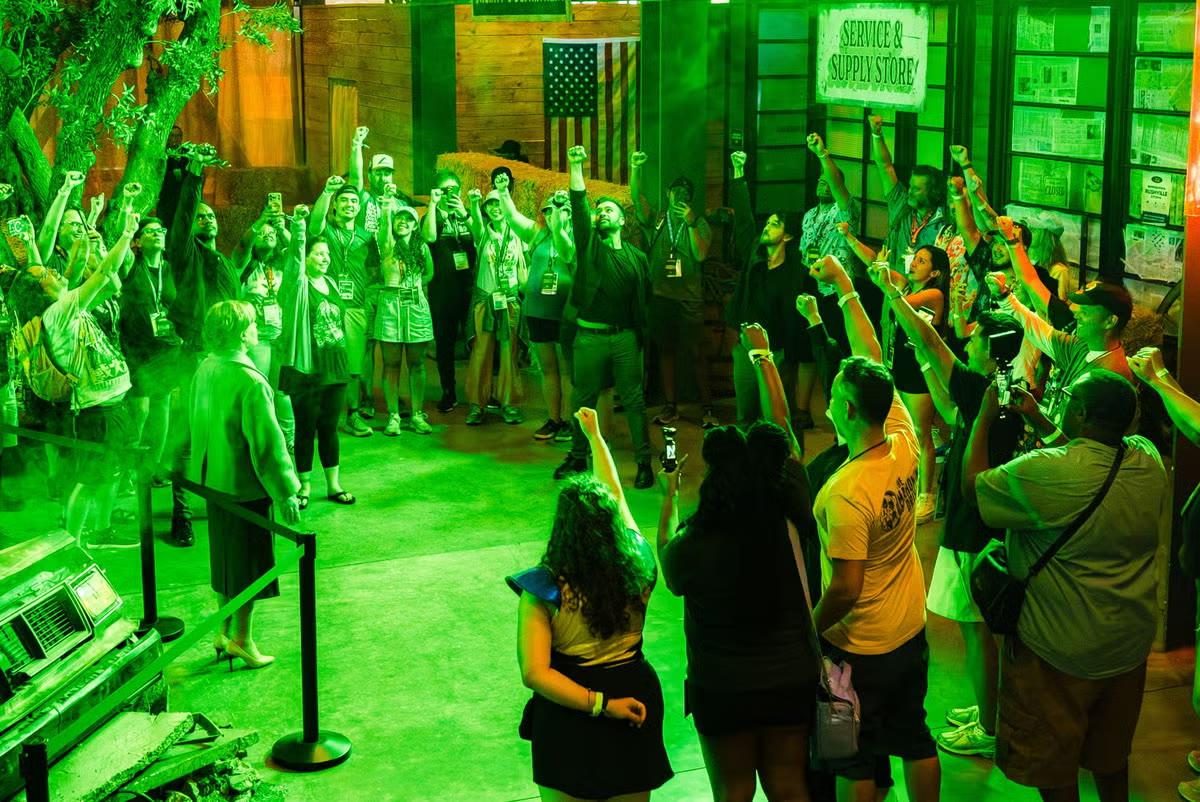
Training drills under green light inside Lanterns HQ. Photo: Event Marketer.
The other pattern: participation stacked on top of scenery. Camp Half-Blood didn’t just look like the books; it sorted you into the story. MaruMart let you shop a fiction. The photo op was the byproduct, not the point. Builds that were only backdrops read as thin in a district full of places you could actually do something in.
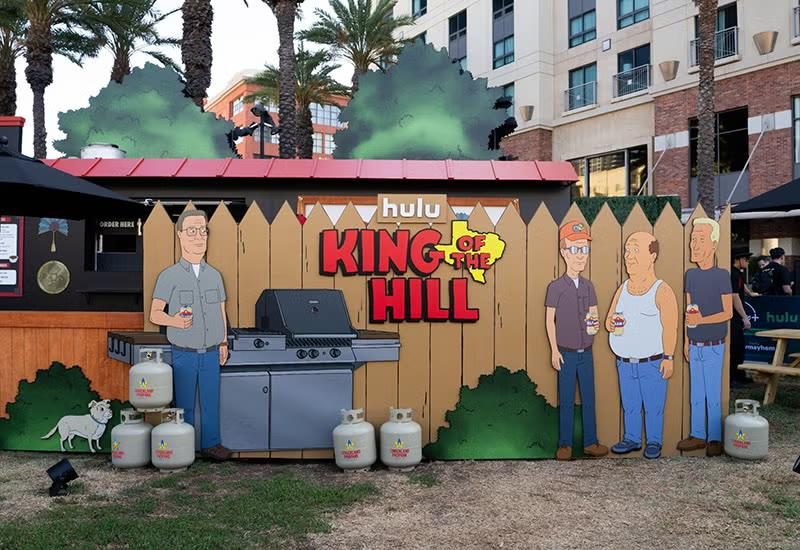
Hulu’s Animayhem: the King of the Hill backyard, propane tanks and all. Photo: Event Marketer.
The fabrication read is about survivability under fandom. Four days of costumed crowds in July heat, many of them queuing for hours, is a stress test most retail builds never face. Camera-ready from every angle, durable at every touchpoint, and operable at real throughput. The gap between a rendered offsite and one that holds up on day four is the same gap we talk about in every build: engineering.
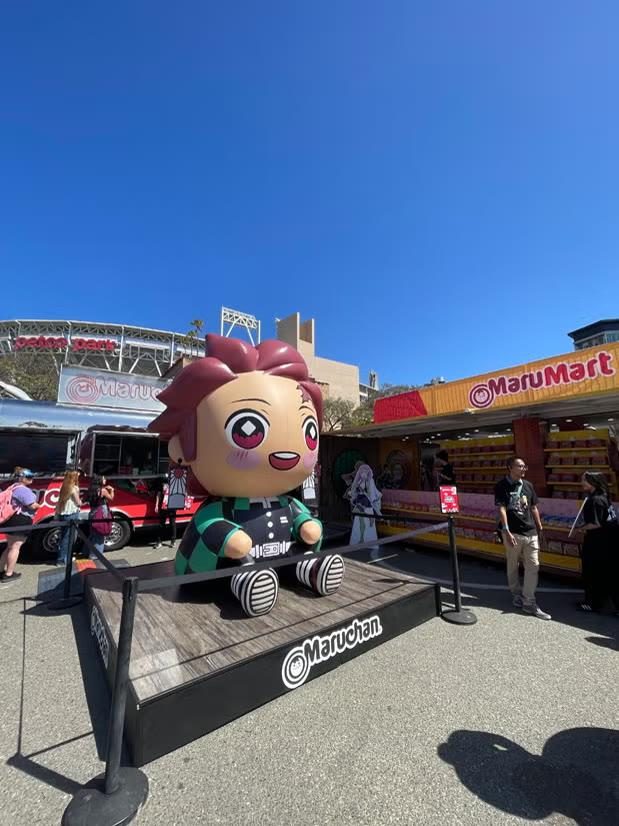
MaruMart at Petco Park: Demon Slayer scale outside the store. Photo: Event Marketer.
For brand and agency teams in the GTA, the transferable lesson is that fan-facing builds are graded by the most detail-obsessed audience alive, and they reward depth over spectacle. Fan Expo Toronto and Toronto Comicon run on the same energy at smaller scale, and almost nobody here is building at this standard for them yet. That’s open ground.
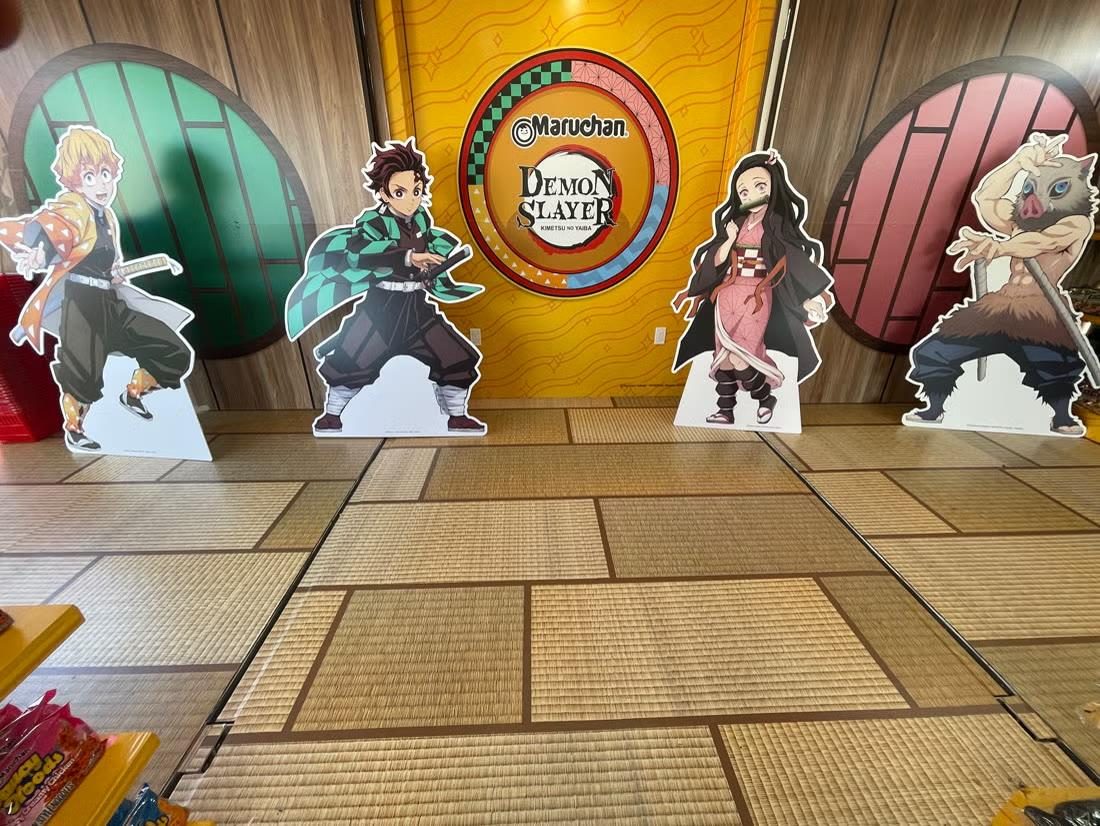
Inside MaruMart: a tatami room built for the Demon Slayer collab. Photo: Event Marketer.
If there’s a fandom-adjacent audience in your 2026-27 plan, the bar is now "a place, not a set." Brience is a Toronto-based custom fabrication and experiential design studio, and building places that survive their audience is the job description. Worth a conversation before the next convention window.
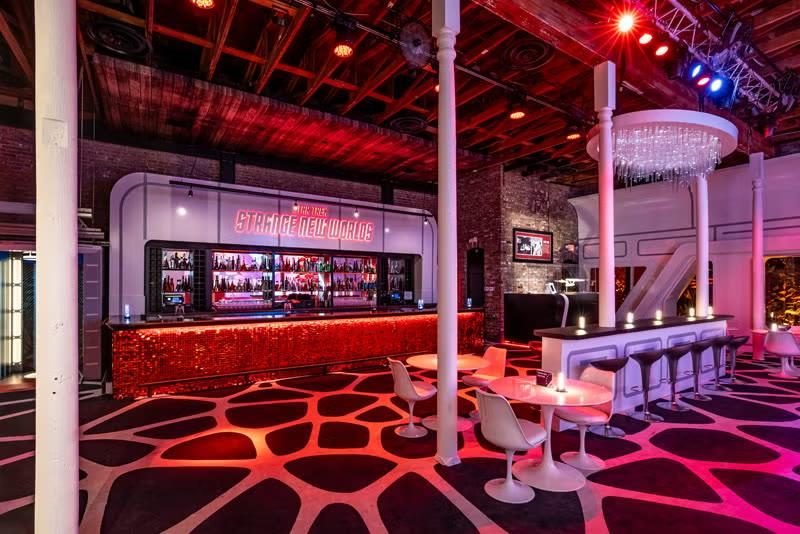
Paramount+’s The Lodge: one of the themed rooms on the 50-minute route. Photo: Event Marketer.
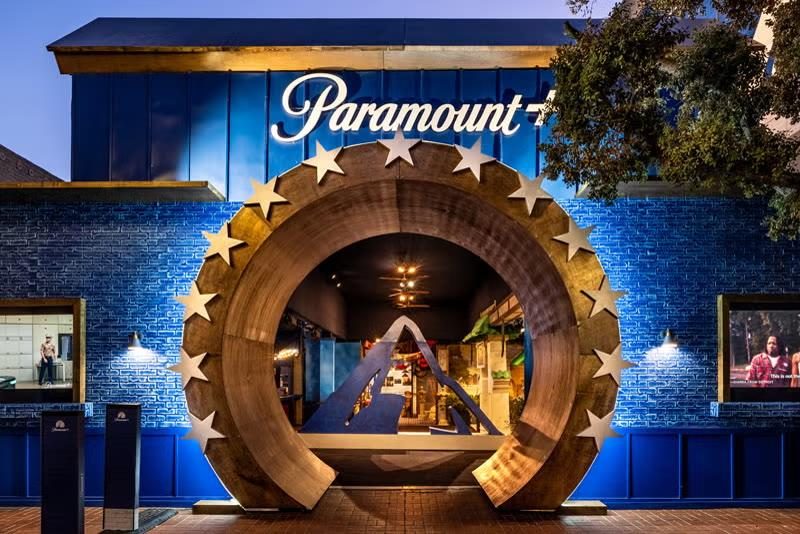
The Lodge’s entrance portal on the block. Photo: Event Marketer.
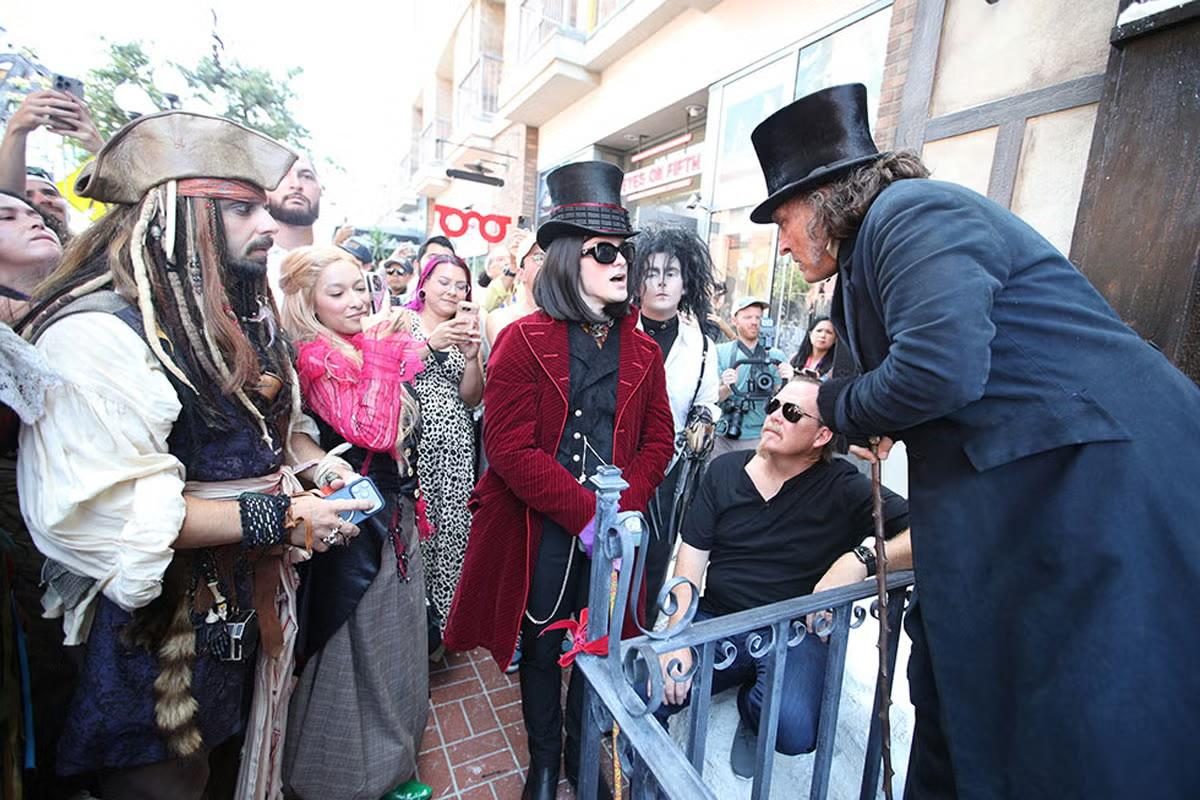
Paramount Pictures’ Ebenezer characters working the street outside. Photo: Event Marketer.
Sources: Event Marketer, "Comic-Con 2026, Part 1: How 10 Brands Activated" (late July 2026); Fox 5 San Diego offsite guides (July 2026). SDCC ran July 23 to 26.