 Sign In
 4 min4 min read

Outcast’s 20-by-20-foot corner store at Portola let the packaging do the work
At the Portola Music Festival in San Francisco (Pier 80, September 26 to 27), Australian brand Outcast Clothing ran The Inconvenience Store by Outcast in the VIP area: a 20-by-20-foot bodega with a corrugated chrome exterior and a red interior, produced by Fluff Studios. A floor-to-ceiling shelf held custom-branded snacks and drinks, a prop fridge hid a camera, and the counter handed out small branded extras. The lesson: in a small footprint, custom packaging on a shelf can carry the whole idea.
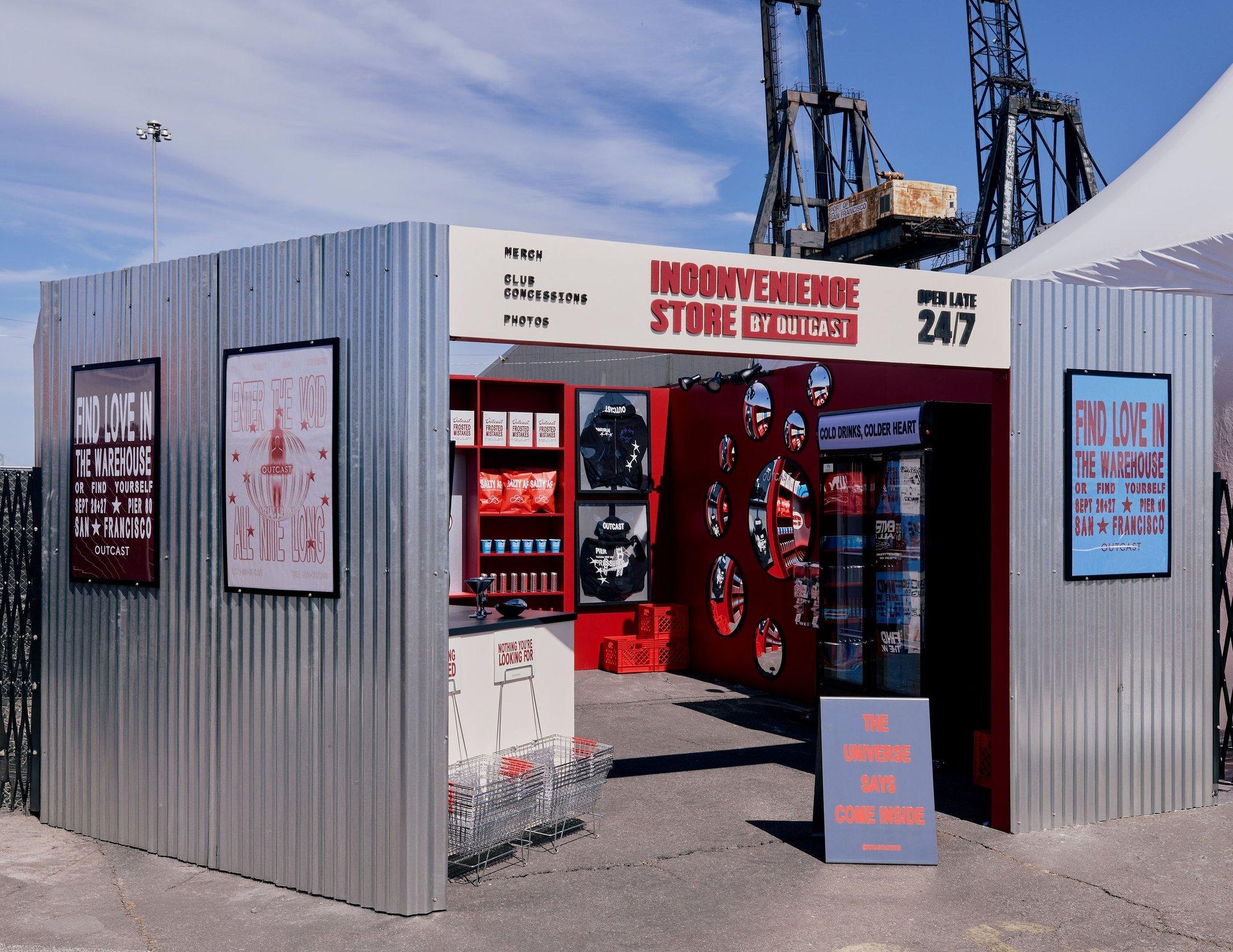
In brief. At the Portola Music Festival in San Francisco (Pier 80, September 26 to 27), Australian brand Outcast Clothing ran The Inconvenience Store by Outcast in the VIP area: a 20-by-20-foot bodega with a corrugated chrome exterior and a red interior, produced by Fluff Studios. A floor-to-ceiling shelf held custom-branded snacks and drinks, a prop fridge hid a camera, and the counter handed out small branded extras. The lesson: in a small footprint, custom packaging on a shelf can carry the whole idea.
A festival VIP area is a small stage for a brand, and 20 by 20 feet doesn’t give you much to work with. Outcast Clothing’s answer at Portola was a corner store you could walk around in under a minute.
BizBash reports that the Australian clothing brand opened The Inconvenience Store by Outcast in the VIP area of the Portola Music Festival, held September 26 to 27 at Pier 80 in San Francisco. Fluff Studios handled production for the 20-by-20-foot activation. It was Outcast’s second festival activation in three months, part of a partnership with Goldenvoice that began with Le Club Outcast at Splash House in Palm Springs in August.
What fits in 400 square feet
A corner store is a format everyone already knows, so the build only had to get a few signals right. Here’s how the space came together, from BizBash and the photos:
The shell: a corrugated chrome exterior with an “Open Late 24/7” sign band and framed rave posters.
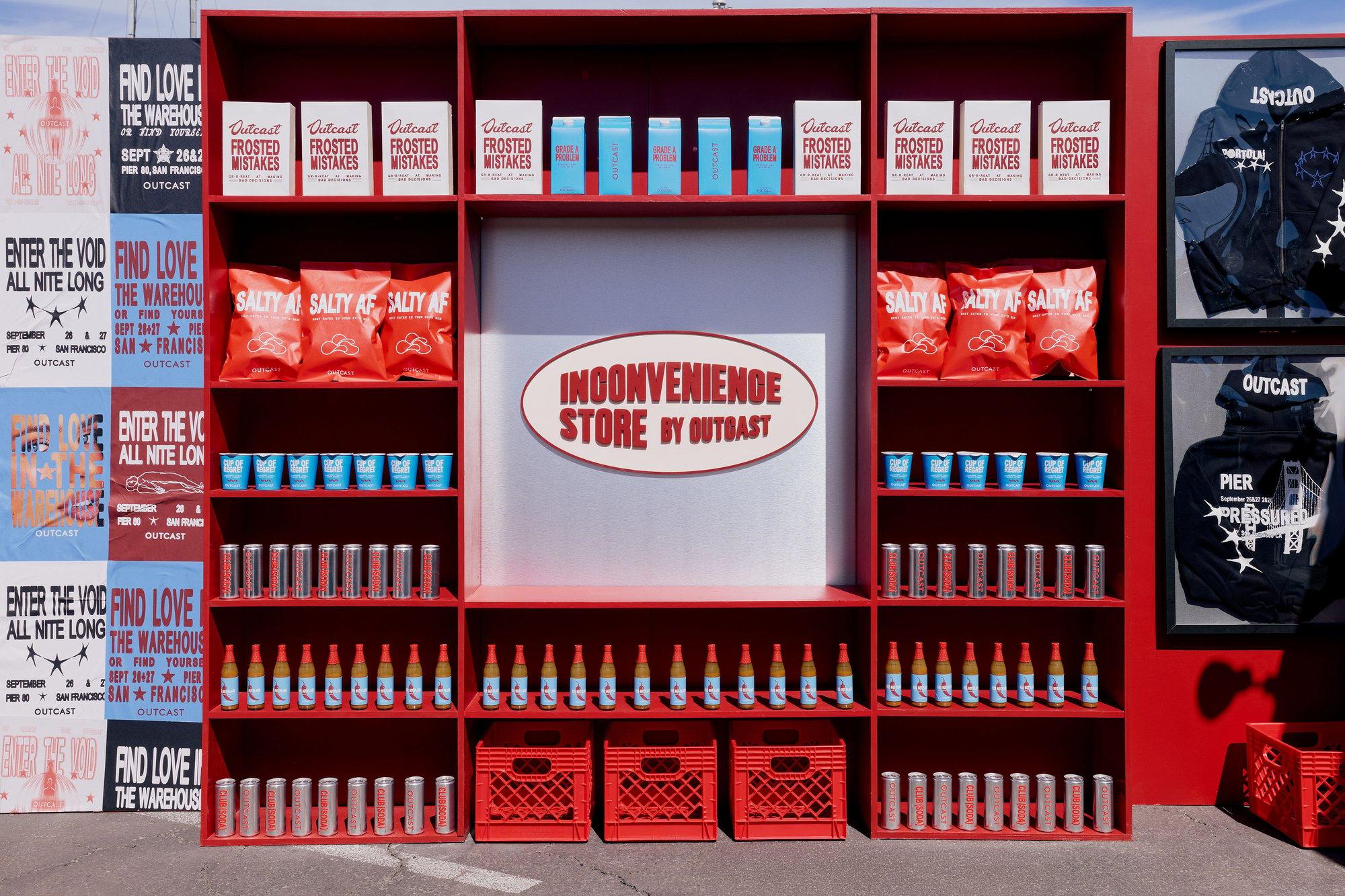
The hero wall: a red floor-to-ceiling shelf of custom-branded snacks and drinks, with a “Frosted Mistakes” cereal among the names, above red milk crates.
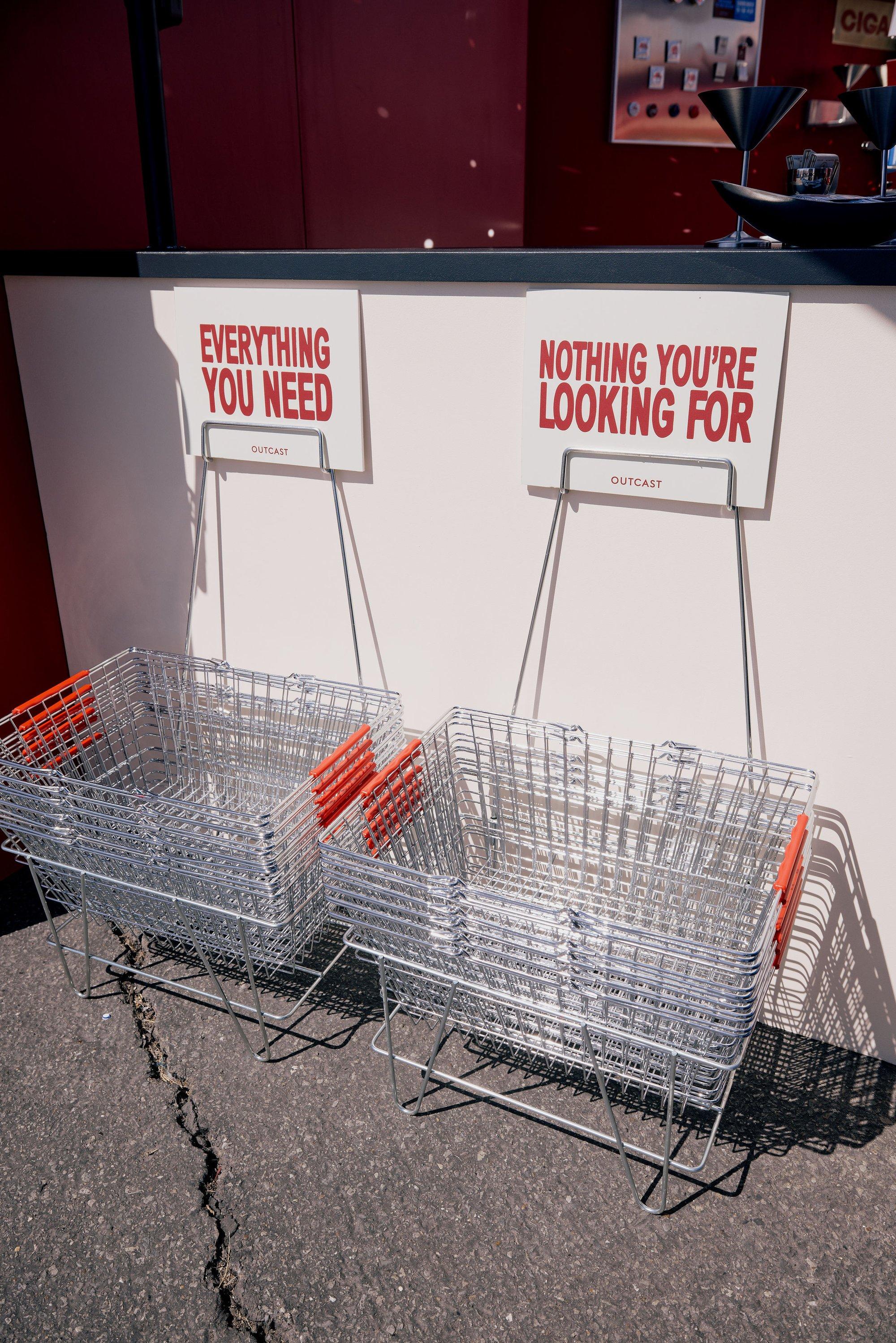
The counter: chrome lighter covers, pill boxes, matchbooks, buttons and festival bingo cards for guests to pick from.
The fridge: a glass-door drink fridge stocked with disco balls, chrome martini glasses and the brand’s boots and Blair Bag. BizBash says a hidden fisheye camera in the faux fridge recorded a four-second clip guests could get on their phones.
The photo wall: wheat-pasted Outcast rave flyers, with a printed “receipt” carrying each guest’s photo.
 Shop Objects
 Explore our curated brand essentials
The packaging is the build
The best-looking part of this store is mostly print. Cereal boxes, milk cartons, chip bags and soda cans are graphic design plus short-run packaging, and in the photos they do more than any piece of joinery. The names are funny and on-brand, and they’re worth a second look in the photos.
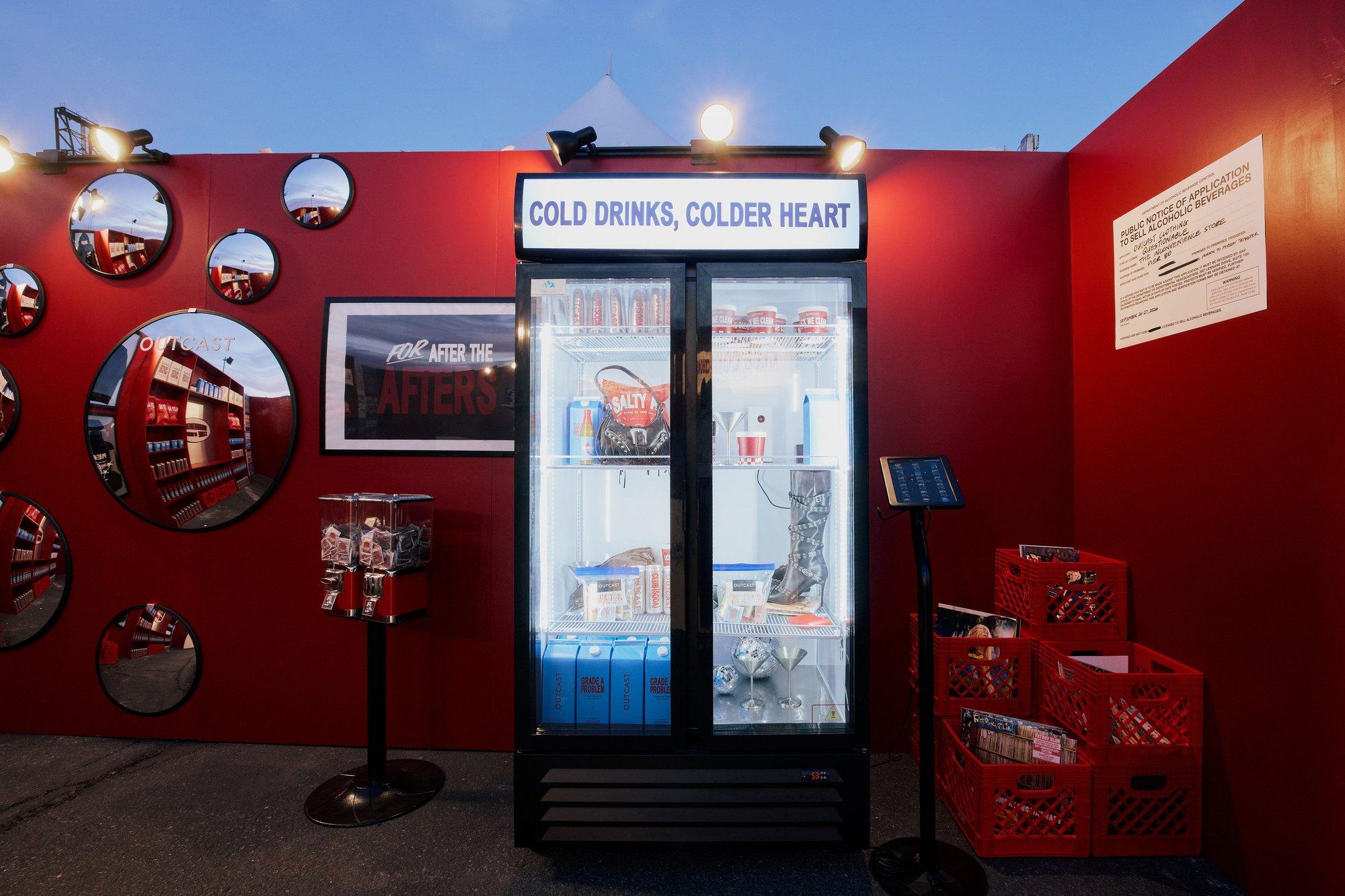
The structure behind them looks simple: a painted shelving unit, a counter and a corrugated shell. BizBash doesn’t break down what was custom and what was sourced, so that’s our read. The fridge in particular looks like a standard glass-door merchandiser, which would be the right call. People know what it is, and it gives the camera somewhere to hide without a screen in sight.
Outcast CMO Christina McGonagle told BizBash that experiential marketing “should contribute to the atmosphere rather than interrupt it.” A corner store in a VIP area fits that brief. In the photos it reads as part of the night.
She also said the brand doesn’t want to repeat one formula at every festival. At Splash House in August, Outcast built a cabana lounge with metallic bikinis, branded popsicles and beer pong instead. For a brand working that way, we’d argue for a simple shell and lighting kit that can be reused, with the packaging, props and graphics rebuilt for each city.

 Get a QuoteRequest your personalized project
What we’d take into a festival brief
Brience is a Toronto-based custom fabrication and experiential design studio, and small festival footprints are where we’d apply this thinking. With 20 by 20 feet, we’d spend on the shell and one hero wall, then let printed packaging and small takeaways do the storytelling.
Hiding the tech inside a familiar object is a move we like, because people deal with the object and the device stays out of the way. Outcast’s fridge camera follows that idea.
Get a QuoteRequest your personalized projectIf you’re planning a festival or VIP activation in the GTA and want to work out where the budget should sit, let’s talk.
Source: BizBash, “Party Girl Pop-Up: See Inside This Clothing Brand’s Cheeky Convenience Store” (October 2026). Photos courtesy of Outcast Clothing.