One sphere, four tubes: what a concept car teaches spatial designers about reduction
The Audi ZERØ is an independent electric-vehicle design study by designer Wini Camacho (not an official Audi project) that builds an entire car from five primary volumes: a spherical passenger cell and four tubes housing the wheel pods and the tapering front and rear. At 3.1 meters long, it demonstrates a design philosophy of pure reduction, where identity comes from geometry rather than styling, a principle that transfers directly to installations and spatial design.
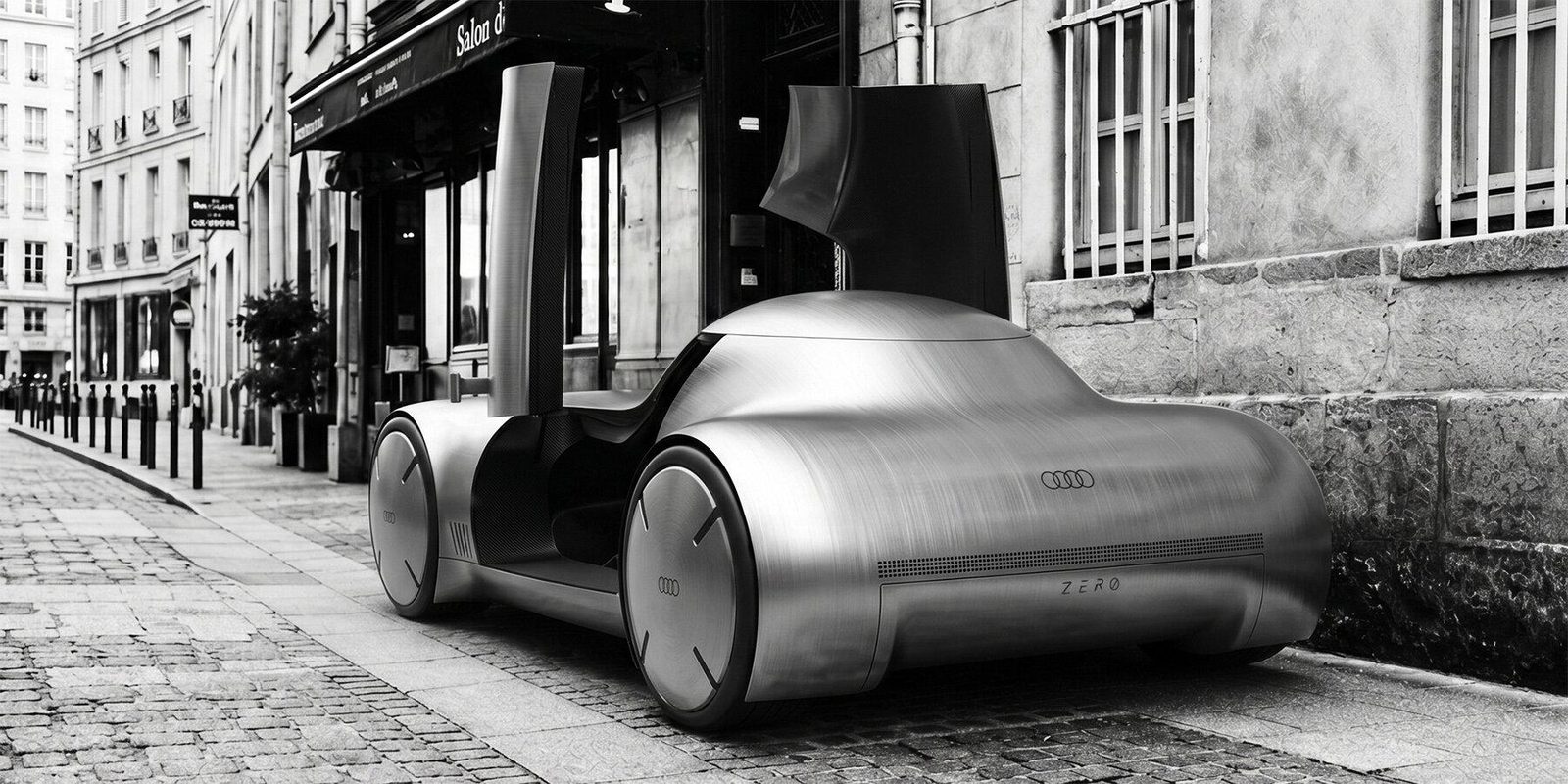
In brief. The Audi ZERØ is an independent electric-vehicle design study by designer Wini Camacho (not an official Audi project) that builds an entire car from five primary volumes: a spherical passenger cell and four tubes housing the wheel pods and the tapering front and rear. At 3.1 meters long, it demonstrates a design philosophy of pure reduction, where identity comes from geometry rather than styling, a principle that transfers directly to installations and spatial design.
The design story making the rounds this month is a car that is barely a car. The Audi ZERØ, an independent study by designer Wini Camacho carrying the brand’s name but not its blessing, constructs an entire electric vehicle from five primary volumes: one sphere and four tubes. The sphere is the passenger cell. Two tubes hold the wheel pods; two more taper into the front and rear. That’s the whole formal vocabulary, at 3.1 meters long and 1.85 wide, rendered as an enclosed CØupé and an open RØadster.
It’s worth being precise about what this is: a speculative exercise, not a product. But designboom put it in front of a few hundred thousand readers for a reason, and the reason is the discipline on display. Camacho’s stated philosophy is reduction: remove everything that isn’t structural or functional, and let identity come from geometry itself. No creases, no decorative surfacing, no styling doing work that form should do. Five shapes, total.
Strip away the automotive context and you’re looking at a spatial design lesson we relearn on every project. The strongest installations are almost always describable in one sentence of geometry. A cube of repeated tubes (Lancelin in Singapore). A pair of monumental goals (Miami Beach). A yacht (Chelsea Piers). When the form is that legible, everything downstream gets easier: the silhouette reads from distance, the photo composes itself, the fabrication drawings simplify, and the audience can retell the idea to someone who wasn’t there. "It was a giant sphere held by four tubes" survives the retelling. Most designs don’t.
Reduction is also an economic strategy, not just an aesthetic one. Fewer primary forms means fewer custom parts, fewer joints, fewer failure points, and a budget that concentrates on executing a small number of elements beautifully instead of many elements adequately. The discipline is in the subtraction: every element that survives must earn its structure. That’s harder than adding, which is why maximalist builds are usually the insecure ones.
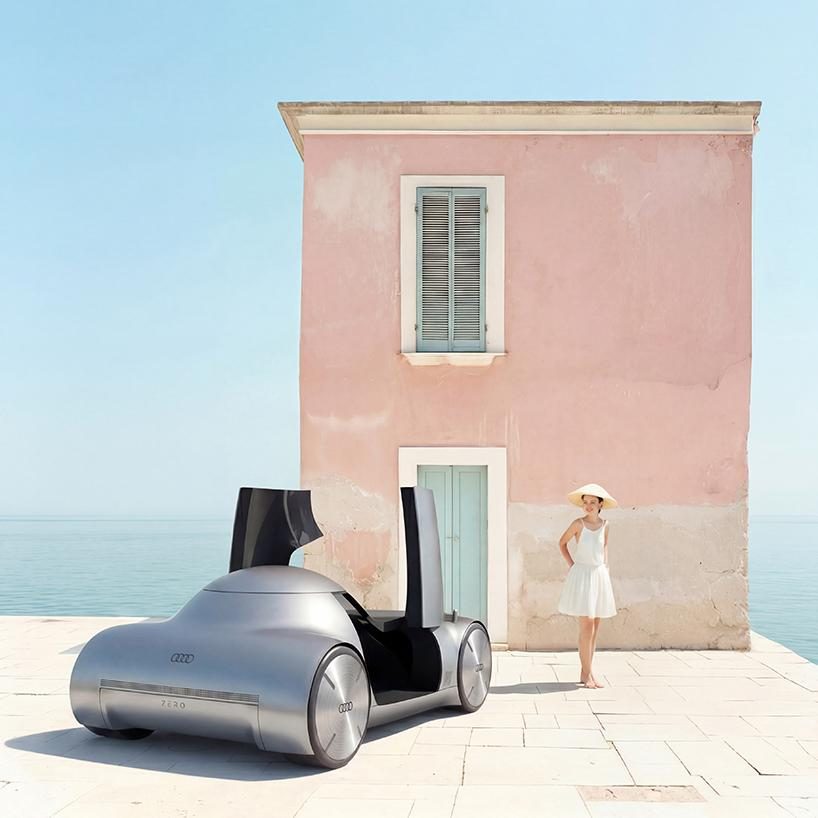
The RØadster, doors up: geometry as the whole identity. Image: Wini Camacho.
There’s a caution in the ZERØ too. Pure geometry risks pure coldness; the concept works partly because automotive lighting and stance humanize it. In physical space, reduction needs a warmth channel: material (wood against steel), light, or a human-scaled detail that lets people connect. Reduce the forms, not the feeling.
The exercise we’d steal for any activation brief: describe your build in five volumes or fewer. If you can’t, the concept isn’t finished. If you can, you probably have something people will remember and a budget that will behave. Brience is a Toronto-based custom fabrication and experiential design studio, and geometry-first concepting is exactly how we like to start a build conversation.
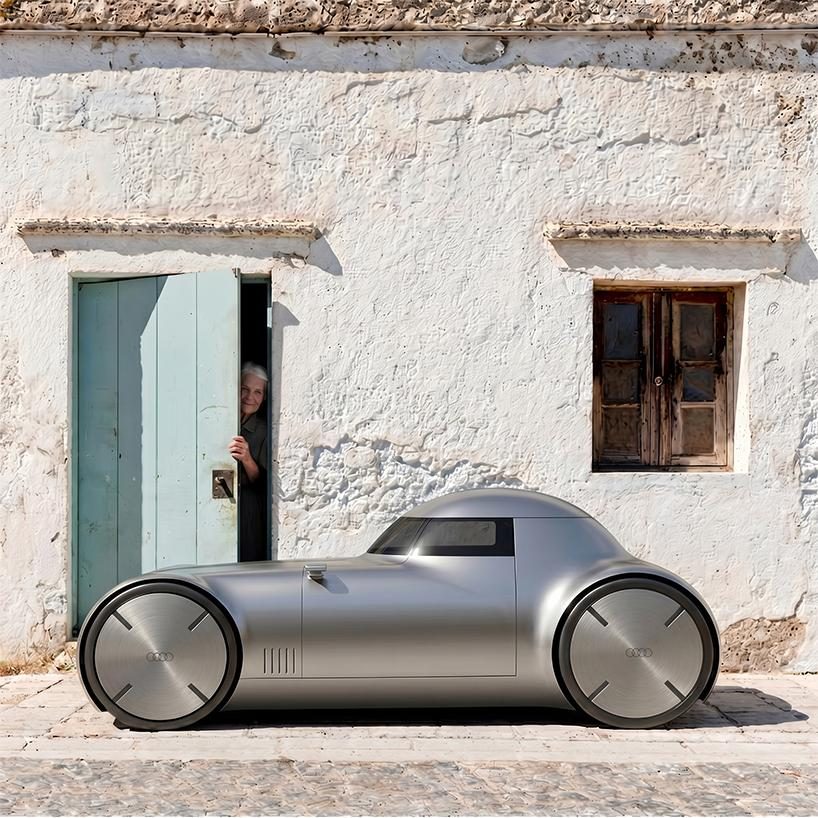
Rear view on the street: the silhouette survives retelling. Image: Wini Camacho.
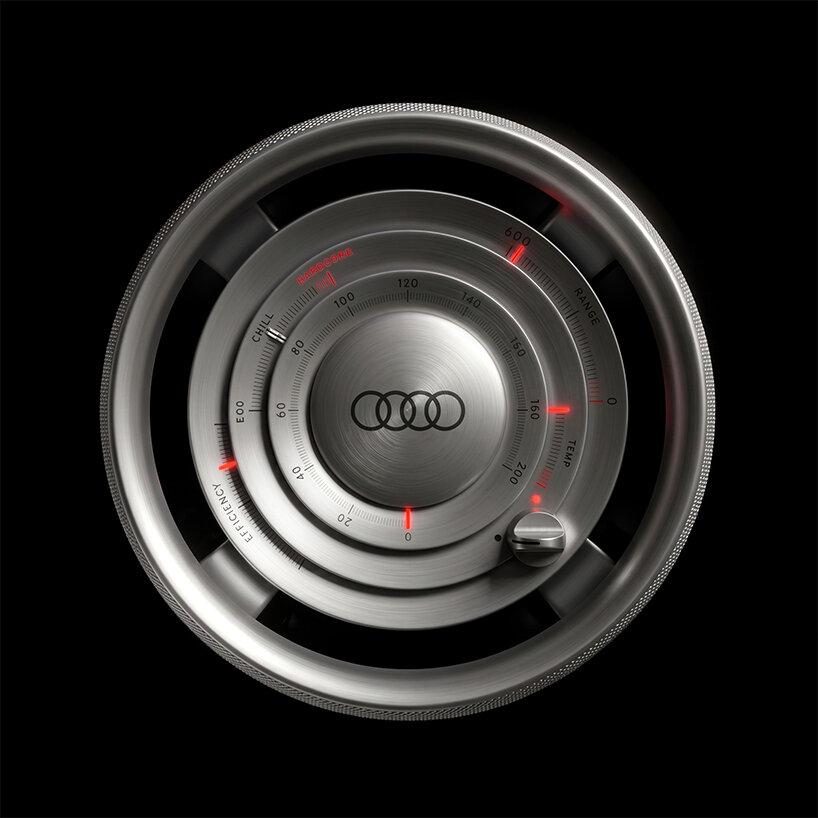
Reduction inside too: the concentric dial interface. Image: Wini Camacho.
Source: designboom (mid-July 2026). Audi ZERØ, an independent design study by Wini Camacho (not an official Audi project). Images by Wini Camacho.