 Sign In
 5 min5 min read

Cava shipped a 3D-printed goddess across the country for one day on a plaza
On October 17, Cava staged a one-day launch for its Greek Goddess dressing on New York’s Flatiron Plaza, built around a giant stone-look goddess on a throne. Conscious Minds led the concept, Vision Scenery fabricated it in Los Angeles and Dollhouse installed it. The goddess was 3D printed in pieces and finished by artists, the arches were timber coated to look like granite, and a plywood Cava bag hid the set first. The lesson: match the build method to each object’s job.
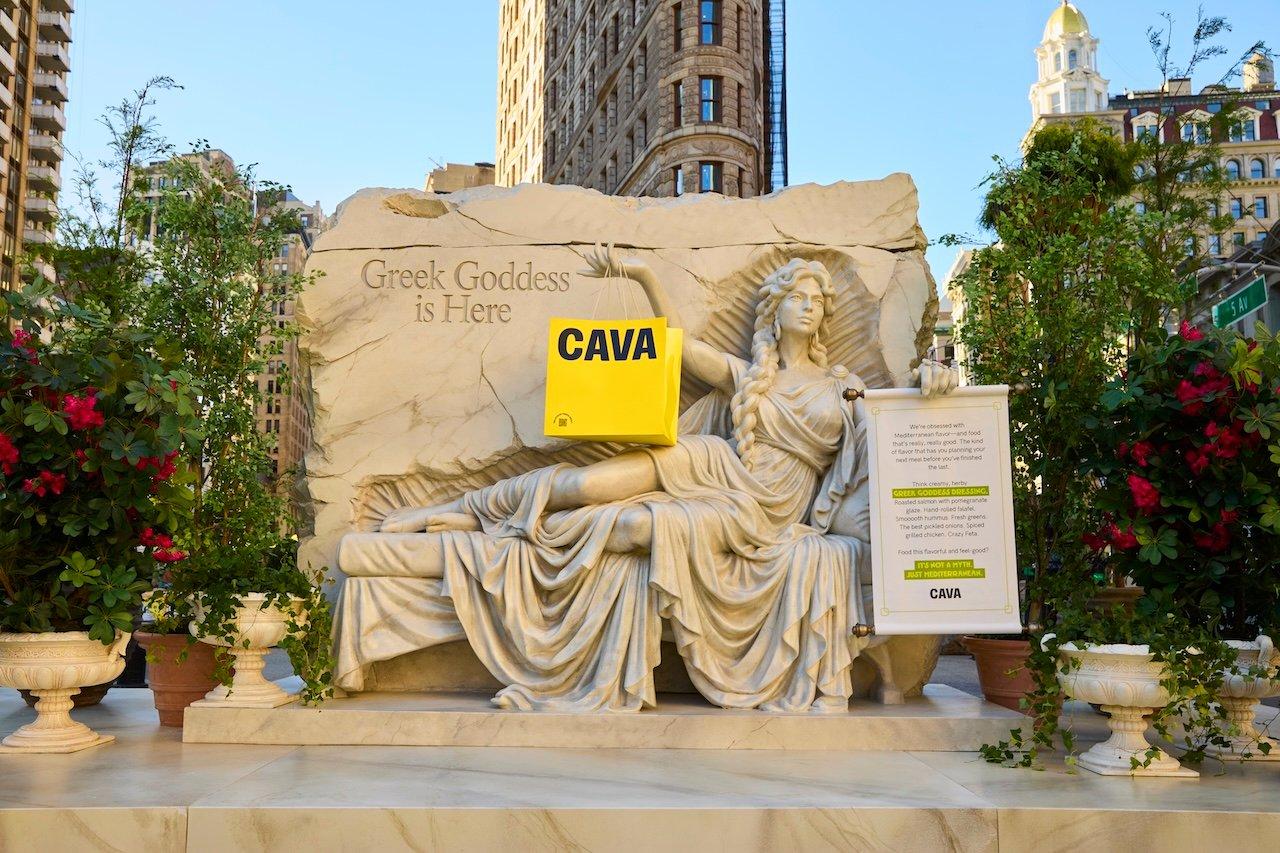
In brief. On October 17, Cava staged a one-day launch for its Greek Goddess dressing on New York’s Flatiron Plaza, built around a giant stone-look goddess on a throne. Conscious Minds led the concept, Vision Scenery fabricated it in Los Angeles and Dollhouse installed it. The goddess was 3D printed in pieces and finished by artists, the arches were timber coated to look like granite, and a plywood Cava bag hid the set first. The lesson: match the build method to each object’s job.
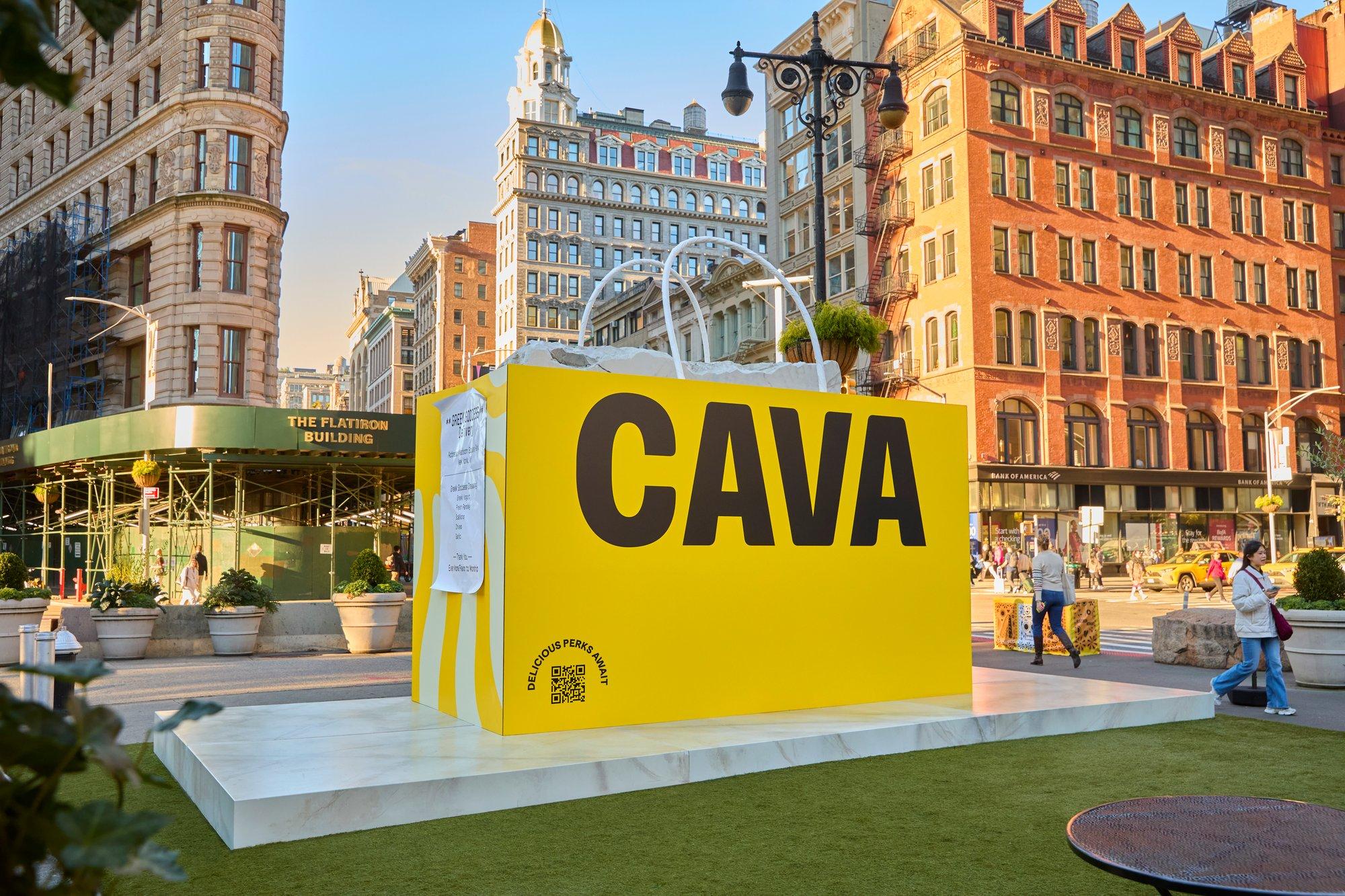
The first thing people saw on Flatiron Plaza wasn’t a goddess. It was a yellow Cava takeout bag big enough to hide one, with a delivery slip on its side. Then the bag came off, and a stone goddess was lounging on a throne in front of the Flatiron Building, with a Cava bag of her own hanging from one hand.
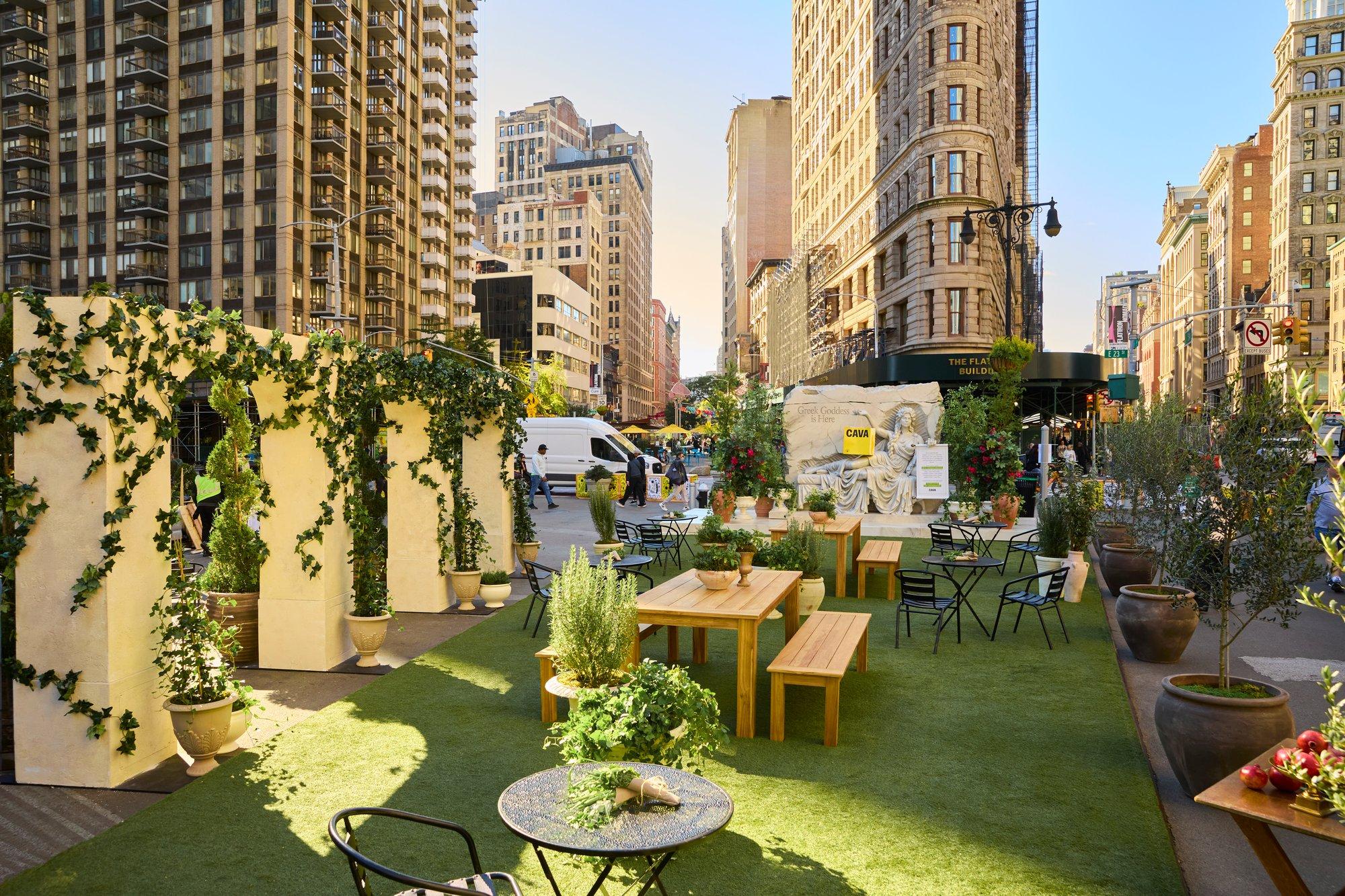
BizBash’s write-up has the details. The October 17 activation launched Cava’s Greek Goddess dressing, two new bowls and a seasonal Pomegranate Apple drink. Conscious Minds, an independent agency based in Los Angeles and Portland, developed it. Vision Scenery fabricated it, Dollhouse installed it, and for one day the plaza became a Greek-inspired picnic spot with turf, tables, and samples of pita chips and dressing.
If you’ve priced a hero object for a one-day activation, you know the argument that follows. It has to hold up in every phone shot, survive the truck, and come down fast. This team split the problem by object.
Three objects, three build methods
The goddess and her facade: 3D printed in pieces, then assembled by a team of artists who weatherproofed the structure and worked in the texture of carved stone.
The arches: framed in wooden beams, then wrapped and coated to resemble granite.
The bag: wooden beams and plywood sheeting, a 1:1 replica of a real Cava bag except for its proportions, stretched horizontally to fit the goddess.
Nobody printed an arch. Printing went where the form was hard: drapery, fingers, a braid running down her shoulder. Everything boxy went to simpler shop methods. That split is the decision worth stealing.
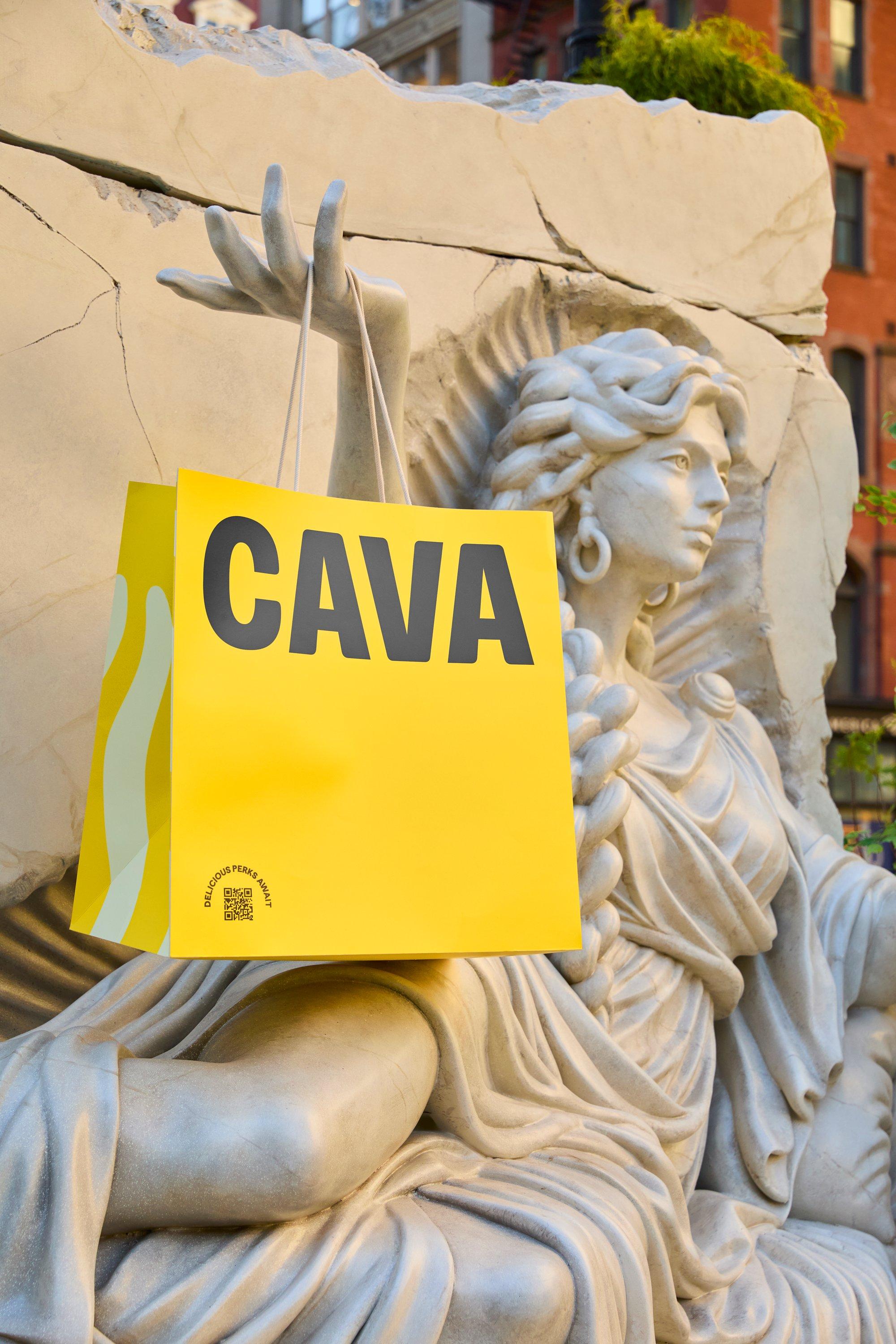
Printing in pieces means seams, so the finish has to hide them. The photos show how much the finish is doing. Veining, cracks and chipped edges run across the facade, so the eye has no clean line to catch. BizBash doesn’t say what material was printed, how many sections there were, or what any of it cost, so treat those as questions for your own quote rather than benchmarks.
The packaging did the teasing
The bag is the smart part. Cava’s real bag is already in customers’ hands, so a giant one needs no explaining. Covering the set with it gave one build two moments: a mystery delivery, then a reveal. The slip read like an order ticket, addressed to Madison Square Park and listing the dressing’s ingredients, and a QR code sat low on the front.
It likely helped on the ground too. Creative director JK Lyons told BizBash the set was built in a Los Angeles shop, shipped to New York and unloaded directly onto the plaza. Anything arriving in pieces looks messy until it’s finished, and a cover that doubles as the teaser hides that.
Lyons also laid out why the Flatiron won: foot traffic, a backdrop that photographs itself, easy access for media, and a Cava location nearby. The nearby restaurant matters: a sample on a plaza is worth more when lunch is a short walk away.
What to take into your next brief
Brience is a Toronto-based custom fabrication and experiential design studio, so here’s how we’d use this on a plaza in the GTA. Before anyone picks a material, sort the objects by what each one has to do. Which piece gets touched? Which one carries the photo? Which one only has to read from across the square? Spend the specialized process on the first two, then build the rest with honest shop methods and a very good finish.
Then ask whether something the customer already recognizes can do the teasing: a bag, a receipt, a cup, a box. The scale here is big, but the logic scales down. If you’re scoping a hero object and want to talk through where the budget should land, let’s talk.
Source: BizBash, “See How This Restaurant Chain Brought a Giant Greek Goddess to NYC” (October 2026). The activation ran October 17 at Flatiron Plaza, New York.