 Sign In
 12 min12 min read

Hiring a fabricator in Toronto: what to send, what to ask, and what the venue will check
A custom build in the GTA can go wrong before anything is cut: a brief without the venue's limits, a quote that can't be compared, a schedule with no room for approvals, a venue rule found at load-in, or a finish nobody saw until install. Here's what to send a fabricator, how to read a quote line by line, how long builds take, what the Enercare Centre and MTCC enforce, when powered builds need ESA permission, and how to make sure the build matches the render.
In brief. A custom build in the GTA can go wrong before anything is cut: a brief without the venue's limits, a quote that can't be compared, a schedule with no room for approvals, a venue rule found at load-in, or a finish nobody saw until install. Here's what to send a fabricator, how to read a quote line by line, how long builds take, what the Enercare Centre and MTCC enforce, when powered builds need ESA permission, and how to make sure the build matches the render.
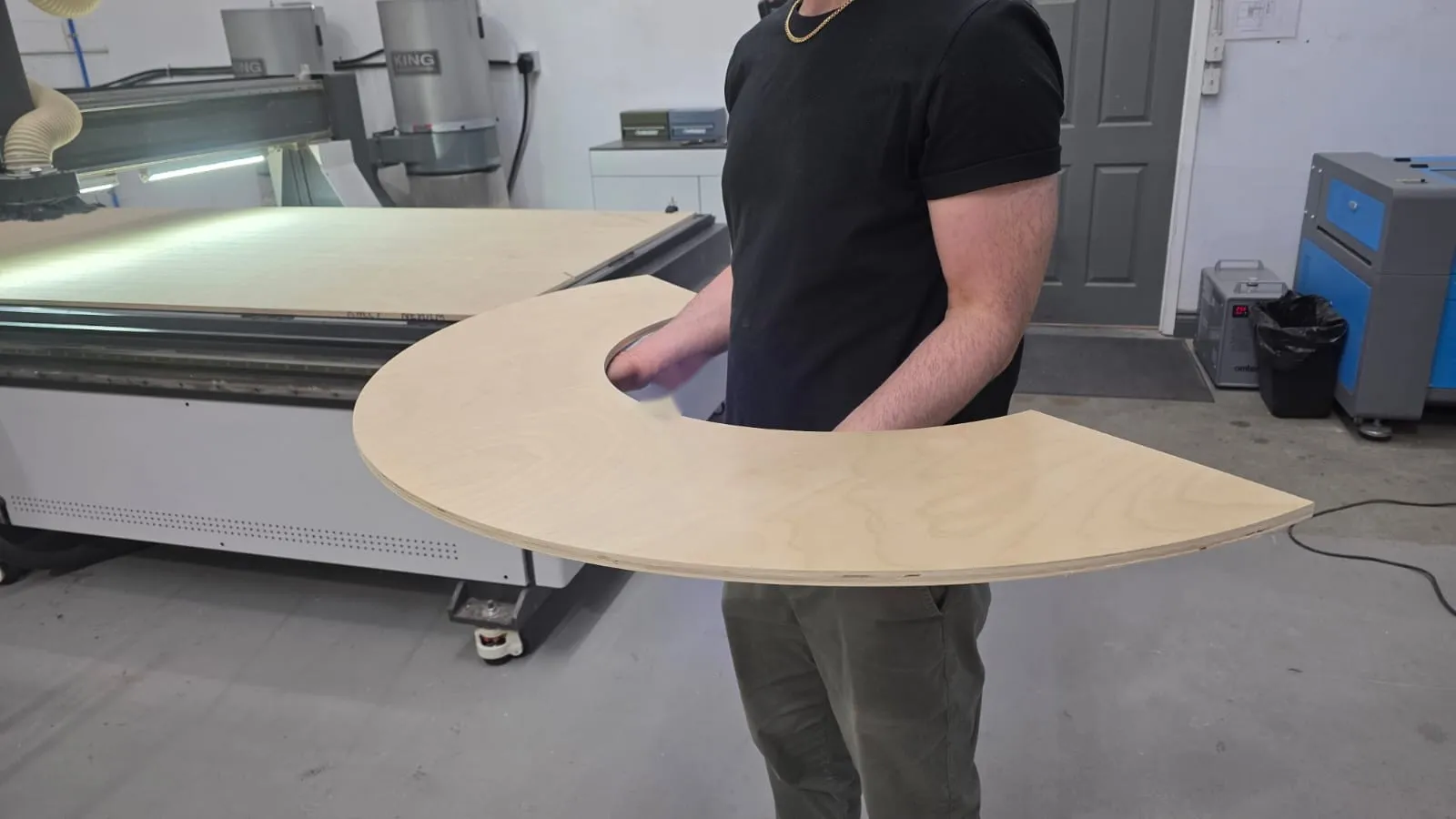
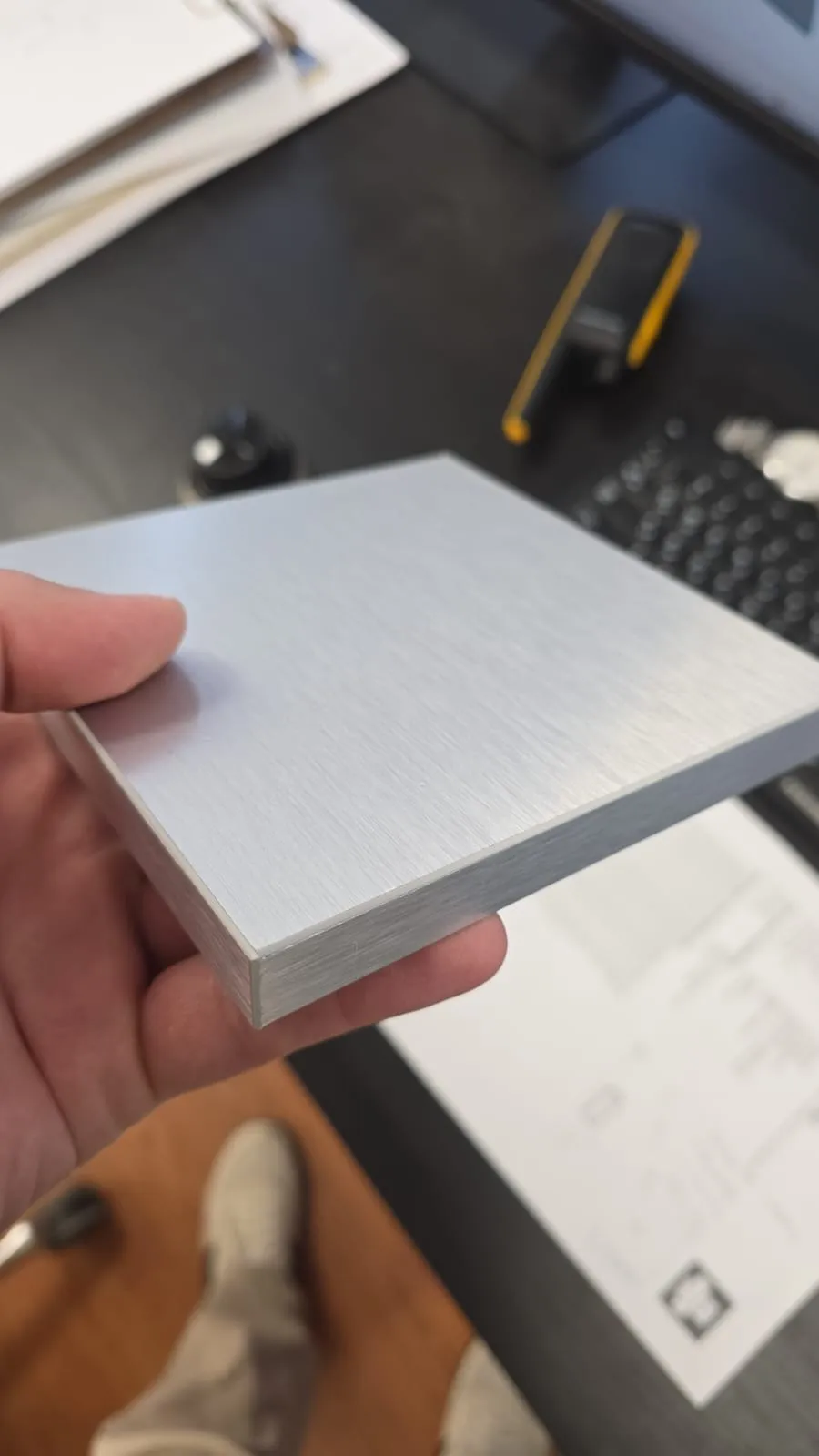
Elucid Studio designed the opening reception for Yorkville Murals in Toronto and needed six serving trays. They had to look like brushed steel, stay light enough for servers to carry for hours, and line up into one serpentine curve when the six servers stood side by side. There were four weeks between approval and the event. Before the trays were built, two checks happened within days: a hand-sized sample of brushed aluminium composite went into the designer's hand, and a full-size plywood tray went around a person's waist.
Those checks answer the two questions to ask of any custom build: will it look like what I approved, and will it work when people use it? The rest of this guide is what we'd tell anyone hiring a fabricator in Toronto for a pop-up or retail fixture, a trade show booth or a brand activation. Brience is a Toronto-based custom fabrication and experiential design studio with a shop in Concord, about 25 km north of downtown. The examples below are our own projects; the rules come from GTA venues and regulators.
Agency or fabricator: who are you hiring?
An agency sells and runs the idea: strategy, creative, staffing and the client relationship. A fabricator builds it. Some studios do both, and plenty of agencies hire a fabricator behind the scenes. Which one you need depends on what you already have.
Build-only fits when you have a locked design, drawings or detailed renders, and a designer who will answer the shop's questions.
Design-and-build fits when you have a sketch, a mood board or a launch toolkit from head office, and need someone to make it buildable: dimensions, materials, joins and power.
Either way, ask one question early: who draws the shop drawings, and who signs them off? If the answer is vague, the gap between your render and the build gets filled by whoever is cutting the material.
Your search will turn up film scenic shops, exhibit houses and sign and print shops. A brand activation often needs a bit of each, plus a finish you'd accept in a store, so ask to visit the shop and ask what is made in-house and what is bought out (metal, print, lighting, AV).
What to send before you ask for a price
A fabricator can only price what it can see. These are the details that move the number most:
The space. Venue and address, the footprint (a 10x20 booth, a mall unit, one corner of a ballroom), ceiling height, the floor, and the size of every door and elevator on the way in.
The dates. Event dates plus the install window and the strike deadline. Overnight installs and loading dock bookings change labour costs.
What you have. An idea, a sketch, renders or drawings, plus brand guidelines and photos of finishes you like. A mood board shows a feeling. A finish reference shows a material.
How long it lives. One night, two weeks in a mall, or twenty stops on a tour. Something set up once is built differently from something set up twenty times.
Power and tech. Screens, lighting, sensors, tablets, sound, and anything that needs the internet.
People. Who touches it (guests, staff, a street team), what gets stored inside it, and what has to be accessible.
Approvals. Who signs off (your client, head office, the venue) and how long each round really takes.
After the event. Reuse, storage or disposal.
A budget range. A range tells the shop whether to price brushed metal or a laminate that reads as brushed metal. Without one, you get a quote for something you didn't picture.
How to read a fabrication quote
Compare quotes line by line, not total by total. A lower number that leaves out crating, install or venue power isn't lower. A useful quote separates:
Design development and shop drawings, and how many revision rounds are included.
Materials, by name. "3 mm brushed aluminium composite panel" can be compared. "Metal finish" can't.
Finishing: paint, laminate, edge banding and graphics.
Shop labour: cutting, assembly, wiring and the test fit.
Lighting, AV and tech, including software setup and testing time.
Crating and transport, both ways.
Install and strike labour, and who pays for overtime if load-in slips.
Exclusions: venue services you order separately (power, rigging, material handling), permits, insurance certificates and storage after the event.
Validity and changes: how long the price holds, and how a change is priced once fabrication starts.
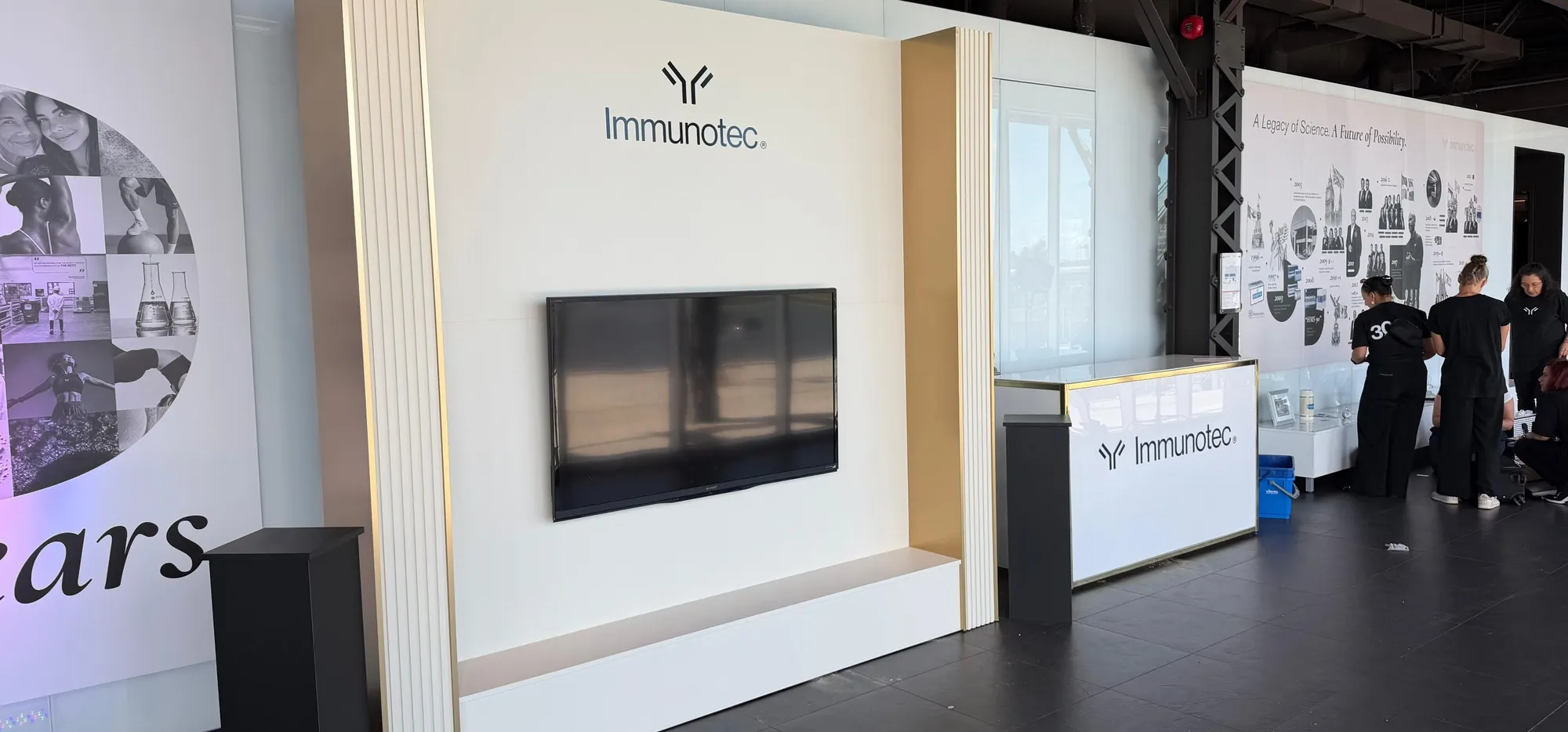
Expect the scope to move. For The Anniversary Walls, built for Immunotec's 30th anniversary gala in Montreal, pieces were added, dropped and resized as the client refined the event, while the date stayed fixed. Every change touched dimensions, materials and the cut list. What kept it on schedule was re-planning each revision against the same date instead of resetting the clock, giving ground where it helped the event and holding firm on finish.
How long does a custom build take in the GTA?
Our own planning numbers: most modular builds leave our shop four to six weeks after a signed scope. Larger custom structures and multi-zone activations take about eight to twelve weeks. Faster is possible: the Serpentine Trays went from approval to event in four weeks.
Work backwards from the event date. The list runs last step first:
Install. The Anniversary Walls took two days on site: walls up the night before, and the gala day for final assembly and detailing.
Transport, including the venue's dock schedule.
Fabrication and finishing, including a dry fit in the shop.
Shop drawing sign-off. Fabrication starts when drawings are signed, not when the concept is approved.
Your approvals. Add every round your client or head office needs, at the speed they actually reply.
Some paperwork has its own lead time. The City of Toronto's sidewalk sale permit, for example, asks for at least eight weeks' notice. Powered equipment at a trade show may need ESA permission in advance (more on that below).
How to make sure it looks like the render
A render shows an intention. The build follows the shop drawing, so that's the document to sign. For The Anniversary Walls, every wall had a plan, elevation and section, dimensioned for the build and for the venue, with materials and finishes called out on the drawing.
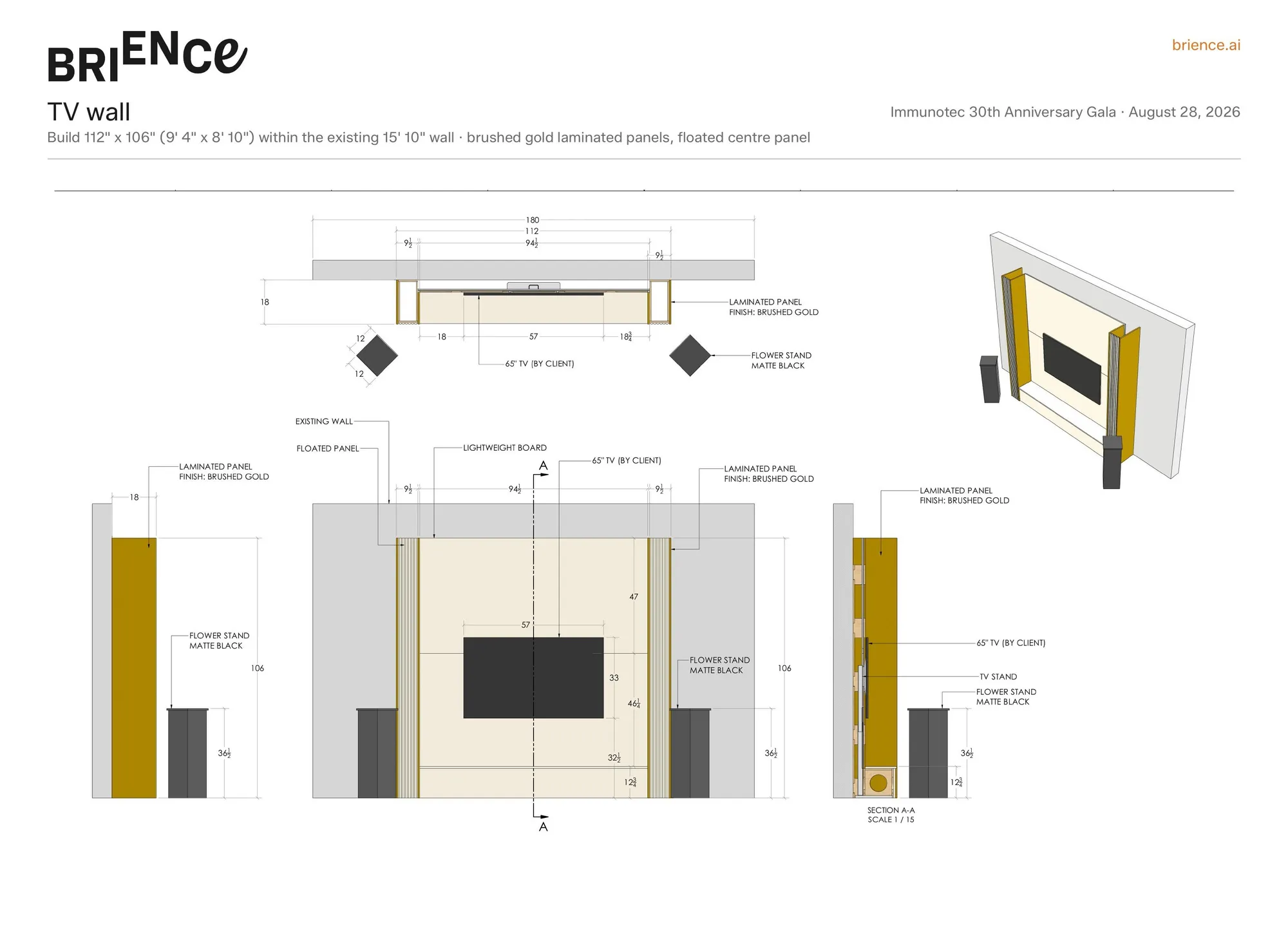
Sign shop drawings, not renders. If a material or finish isn't named on the drawing, it hasn't been decided.
Hold the material. A sample in your hand, under light like the venue's, settles more than a call does.
Test the part people touch at full size. The plywood Serpentine tray checked the proportions against a real body before the six real trays were made.
Agree substitutions up front. The brushed gold on The Anniversary Walls is a laminate, chosen for a consistent metallic finish without the cost or weight of real metal. That was a design decision made on paper. The problem is a swap nobody mentions until install.
Ask for a dry fit. Every Anniversary wall was dry-fit and finished in our shop, with seam alignment, the floated-panel reveal and the finish checked under light, before it shipped.
See it halfway. A shop visit or photos mid-build is a cheap way to catch a problem.
Check it through a phone. If the build will be photographed more than it's seen, look at finishes on camera: gloss shows reflections and fingerprints, and lighting changes how brand colours read.
What will the venue check?
Every show publishes an exhibitor manual, and the rules change by show and by year. Read it before the design is final, not after. A few Toronto examples:
Exhibition Place (Enercare Centre) is a City-owned, unionized facility. One 2025 show handbook required booth labour through a contractor affiliated with Local 506 (the labourers' union) and said non-union companies were not permitted, with an exception for simple marketing pop-up displays.
Metro Toronto Convention Centre (MTCC): electrical services and rigging attached to the building go through Showtech, the venue's exclusive supplier.
Outside contractors: The Buildings Show 2026 at MTCC bars exhibitor-appointed contractors from overhead rigging, electrical, plumbing and lift operation, and asks them for $5 million in liability coverage with the show organizer and the MTCC named as additional insured.
Fire safety: MTCC's 2023-24 fire regulations prohibit Styrofoam, foam core, gatorboard and corrugated plastic. Fabrics should meet CAN/ULC-S109, corrugated cardboard is allowed only if it was fire-retardant treated at the factory, decorative plastics need the fire safety officer's approval, and so do two-storey or roofed booths. The IDS Toronto exhibitor kit puts it plainly: foam core and Styrofoam are forbidden in any form.
Ask your fabricator which of these they've worked under, which items are on their side of the quote, and which are on yours.
Anything with a plug needs a plan
Ontario's Electrical Safety Code bars displaying or using electrical equipment that isn't approved. Approved means it carries a recognized certification or field evaluation mark. At trade shows, the Electrical Safety Authority (ESA) makes room for unapproved equipment only with written permission: a Permission to Show (on display, not powered) or a Permission to Energize (powered for demonstration, with a notice on it). ESA lists both as trade shows only, not consumer shows. For a consumer show, a mall pop-up or a store, plan the build around approved components from the start.
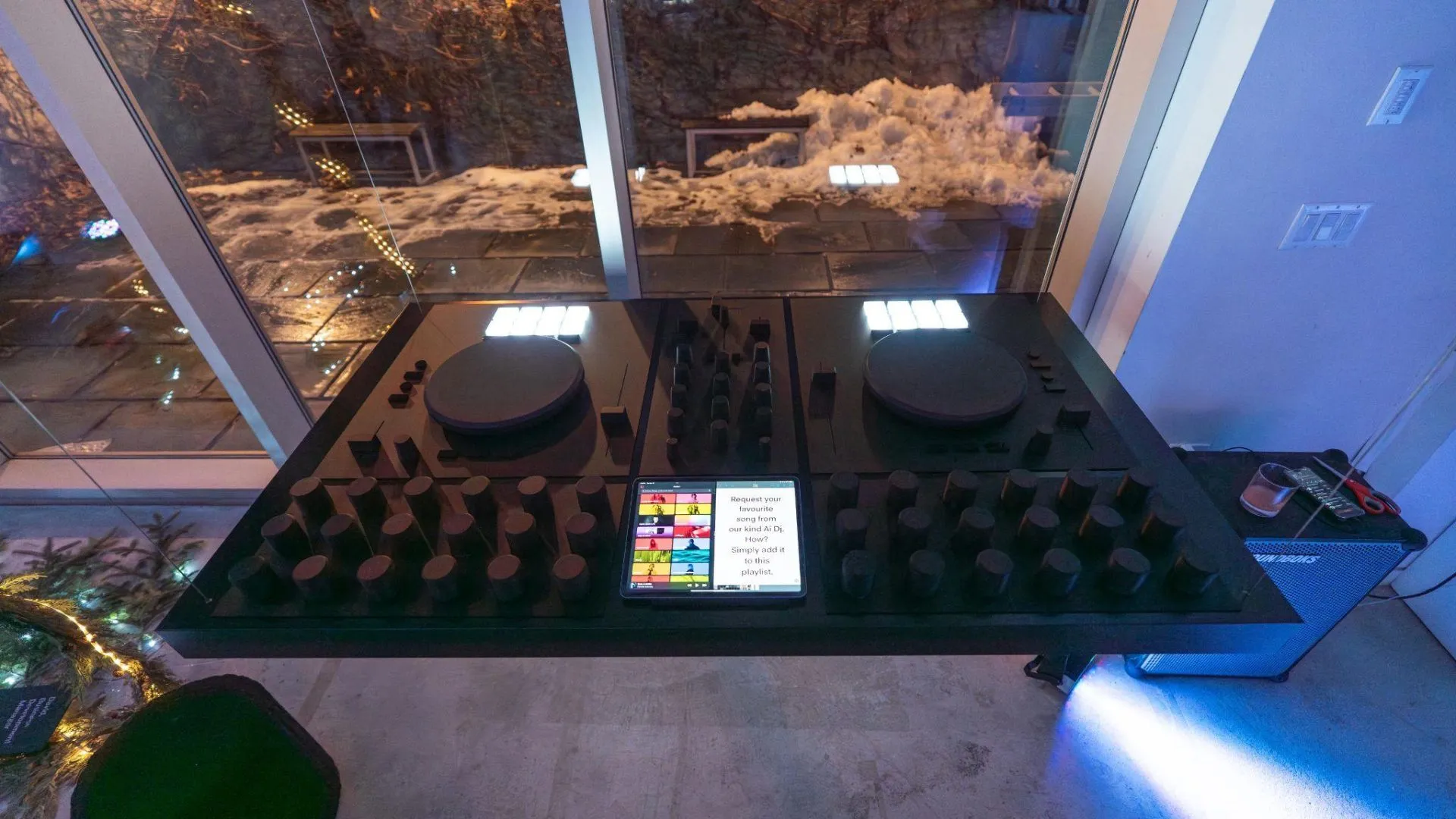
Then test it the way the event will use it. Our AI DJ console, built in our shop with an iPad where guests request songs and AI software builds the playlist live, was stress-tested before the party for hours of continuous play and dozens of simultaneous guest interactions. Test on the network you'll have on site, with the content you'll run, for as long as the event lasts, and decide in advance what happens if it fails.
Install, strike and what happens after
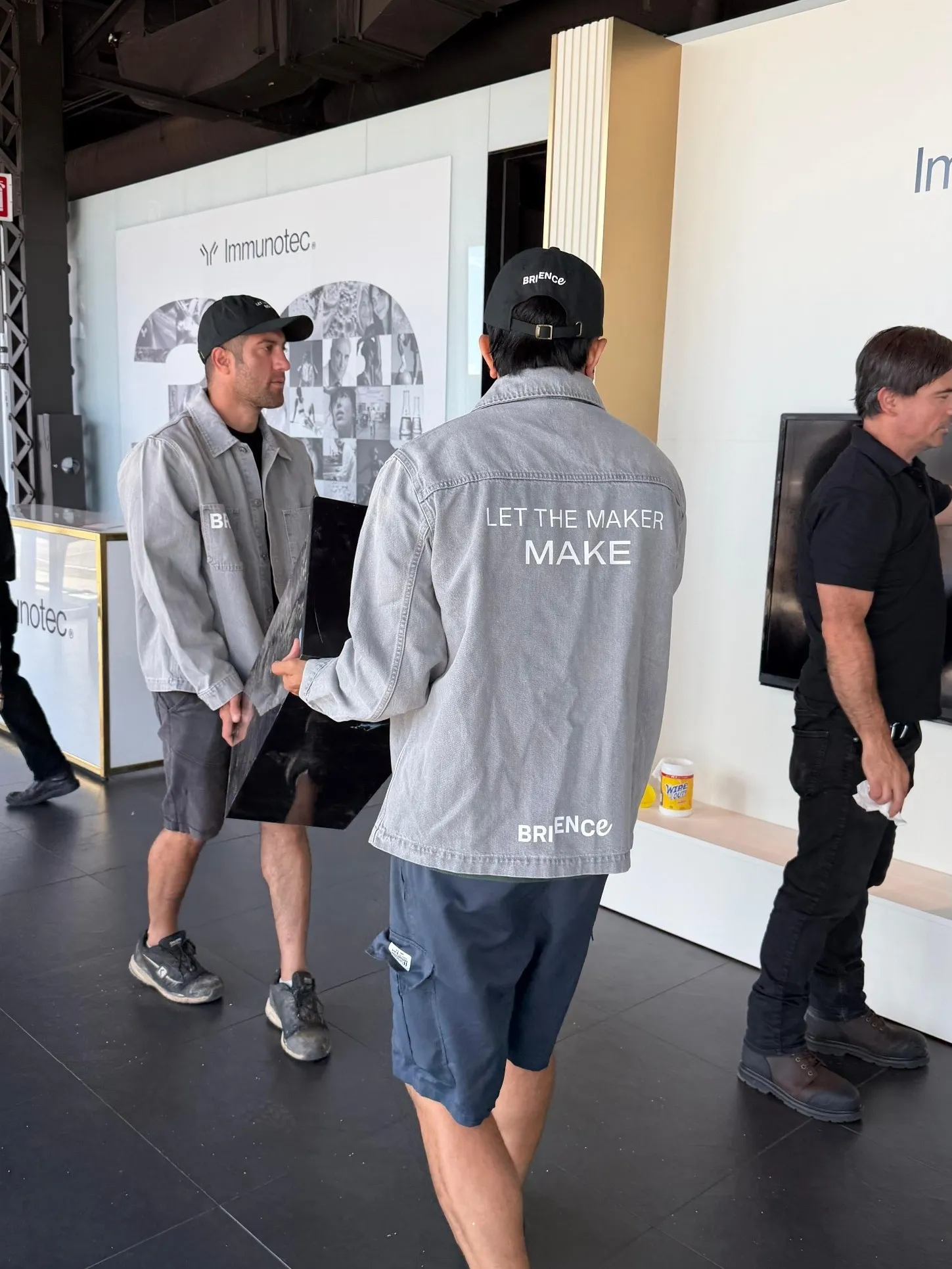
The Anniversary Walls travelled from our Toronto shop to Montreal as labelled modular panels, shipped flat. Labels matter in a venue you don't control: the crew builds from the labels, not from memory. Ask who installs. In Montreal, the walls went up with our own crew, the same team that drew and built them.
Strike has a deadline set by the venue, and someone has to be there for it. Put it in the quote.
Reuse changes the build: modular joins, edges that survive handling, crates, labels and spare parts. Say so in the brief. The Serpentine Trays were built to stay usable after the event.
Storage: ask where the build lives between uses, who pays, and what condition it comes back in.
Crossing the border: if a build tours into the US or comes into Canada for a show, ask about an ATA Carnet, the customs document for goods that enter a country temporarily for shows and exhibitions.
If you're an agency: settle these before you send the brief
Agencies hiring a fabricator for a client should agree five things in writing before the brief goes over:
Whose name is on it: crew clothing, drawings and delivery paperwork.
Confidentiality: an NDA, signed before the client's brief is shared.
Client contact: the fabricator talks to your client only if you bring them in.
Credit: whether and when the fabricator can show the work.
Pitch pricing: how fast you get a ballpark at pitch stage, and how it turns into a real quote.
Our agency page sets out how we handle the first and the third.
Ten questions to ask any fabricator
What will you make in your own shop, and what will you buy out?
Can I visit the shop during the build?
Who draws the shop drawings, and what exactly will I sign?
Which materials and finishes are named in the quote, and what would you substitute if one isn't available?
Will I see a material sample, and will you test the hardest detail at full size?
What's excluded: venue services, permits, insurance certificates, storage?
Which Toronto venues have you installed in, and what do you arrange with their exclusive suppliers?
Does anything powered need ESA approval, and who arranges it?
Who installs and strikes, and what happens if load-in runs late?
What happens to the build afterwards: reuse, storage or disposal?
If you're planning a pop-up, booth, retail fixture or brand activation in the GTA and want a second read of your brief, email it to us at Hey@brience.ai or send it through our quote form. The drawings and builds behind this guide are on our projects page.
Source: Brience project records for the Serpentine Trays, The Anniversary Walls and the AI DJ Installation; Exhibition Place exhibitor handbook (TCS Toronto Waterfront Marathon Expo 2025); MTCC fire regulations and rigging policy; The Buildings Show 2026 contractor form; IDS Toronto exhibitor kit; Electrical Safety Authority; City of Toronto; Canada Border Services Agency.