 Sign In
 5 min5 min read

Nintendo’s first North American store-within-a-store is on Yonge Street. Look at the millwork.
On October 17, Nintendo opened its first store-within-a-store in North America: a permanent 1,500-square-foot space inside the EB Games flagship at 267 Yonge Street, Toronto. EB Games gave up nearly half of its footprint for it, per iPhone in Canada. The build is simple to read: one saturated red, lit shelf walls, a Mario statue in a green pipe and playable stations. For GTA brands, it’s a reminder that a shop-in-shop is a fixture and finish problem before it’s a tech problem.
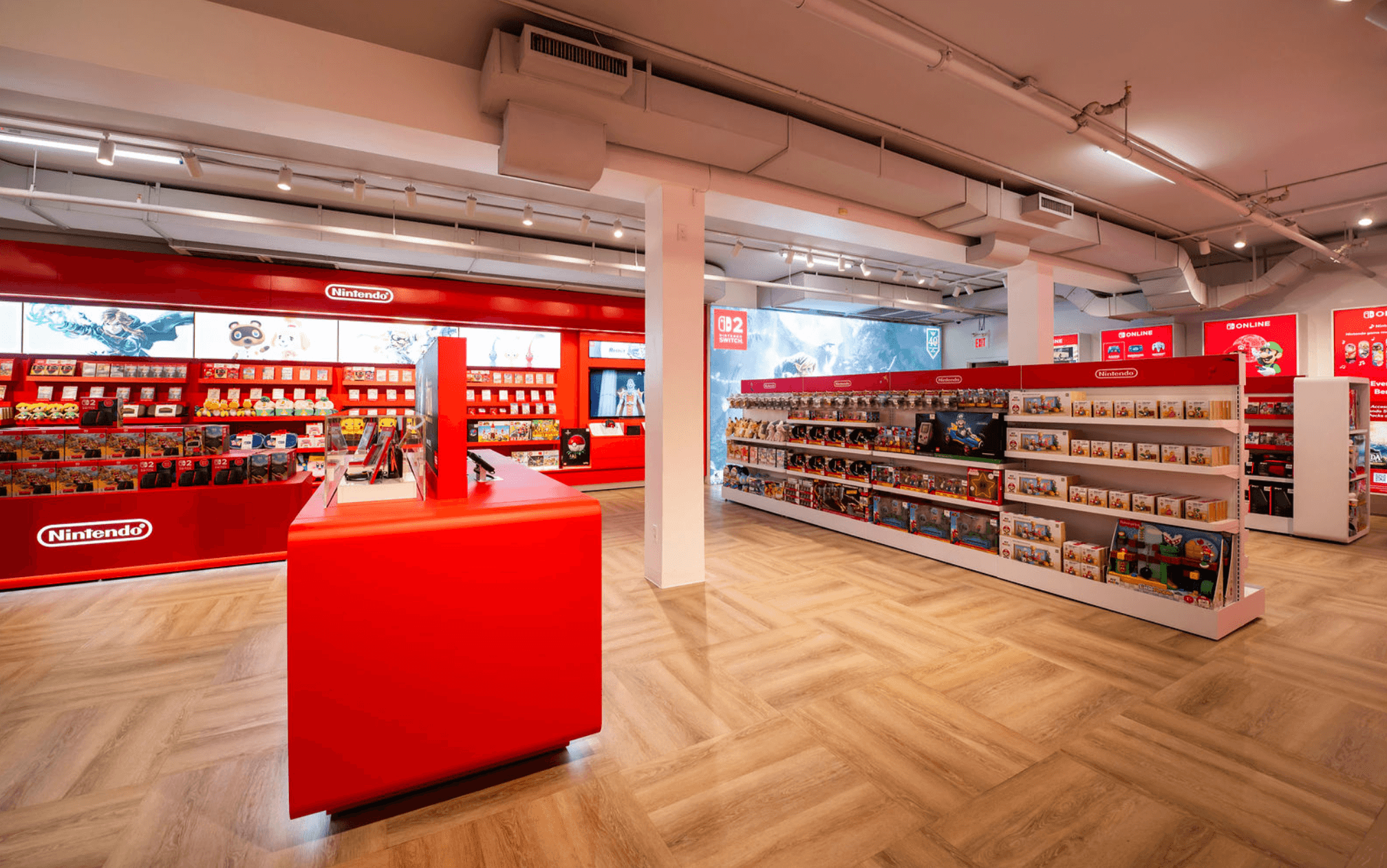
In brief. On October 17, Nintendo opened its first store-within-a-store in North America: a permanent 1,500-square-foot space inside the EB Games flagship at 267 Yonge Street, Toronto. EB Games gave up nearly half of its footprint for it, per iPhone in Canada. The build is simple to read: one saturated red, lit shelf walls, a Mario statue in a green pipe and playable stations. For GTA brands, it’s a reminder that a shop-in-shop is a fixture and finish problem before it’s a tech problem.
Across from the Eaton Centre, a life-size Mario now leans out of a green pipe inside a video game store. He’s part of Nintendo’s first store-within-a-store in North America, a permanent 1,500-square-foot space that opened October 17 inside the EB Games flagship at 267 Yonge Street.
Nintendo already runs standalone stores at Rockefeller Plaza and in San Francisco. In Toronto it took a different format: a branded space inside a retailer it has worked with for years. For EB Games, which returned to Canadian ownership in 2025, that’s a big commitment of floor. iPhone in Canada’s hands-on says the flagship retrofitted nearly half of its existing footprint.
Neither company has disclosed the investment, the commercial terms or any sales targets, so there’s no return to quote. What we can read is the build, and for anyone selling shop-in-shops to brands and retailers, that’s the useful part.
What’s actually built
No designer or fabricator is named in the coverage, so this is our read of the published photos.
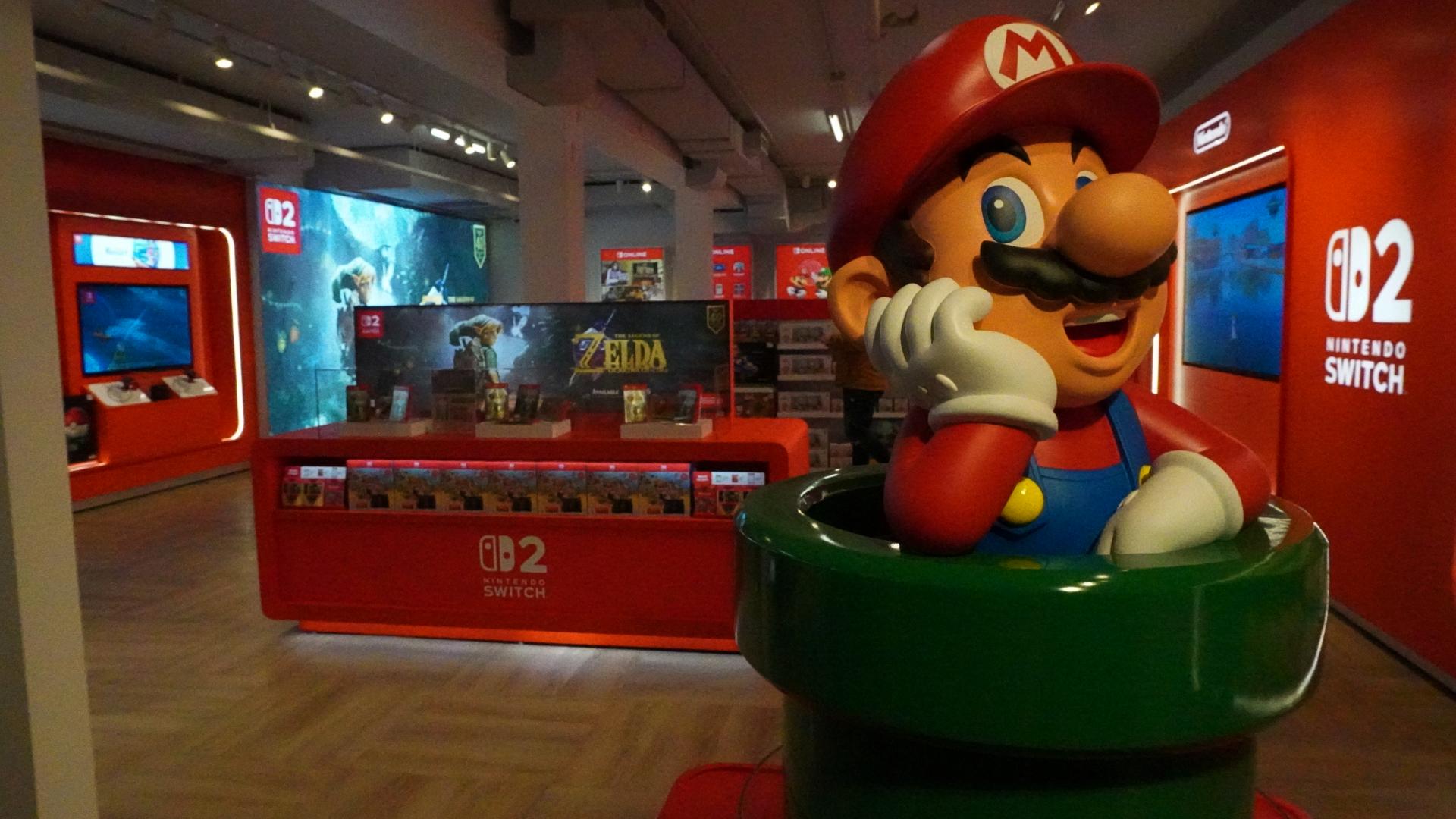
One colour, used hard: saturated red on the walls, counters and shelving. White gondolas and a wood-look herringbone floor keep it from tipping into a toy aisle.
Lit niches: shelf walls and screens sit inside rounded recesses traced with a line of light, so the eye reads one architectural gesture instead of a wall of boxes.
A hero object: Mario in the pipe, the obvious photo.
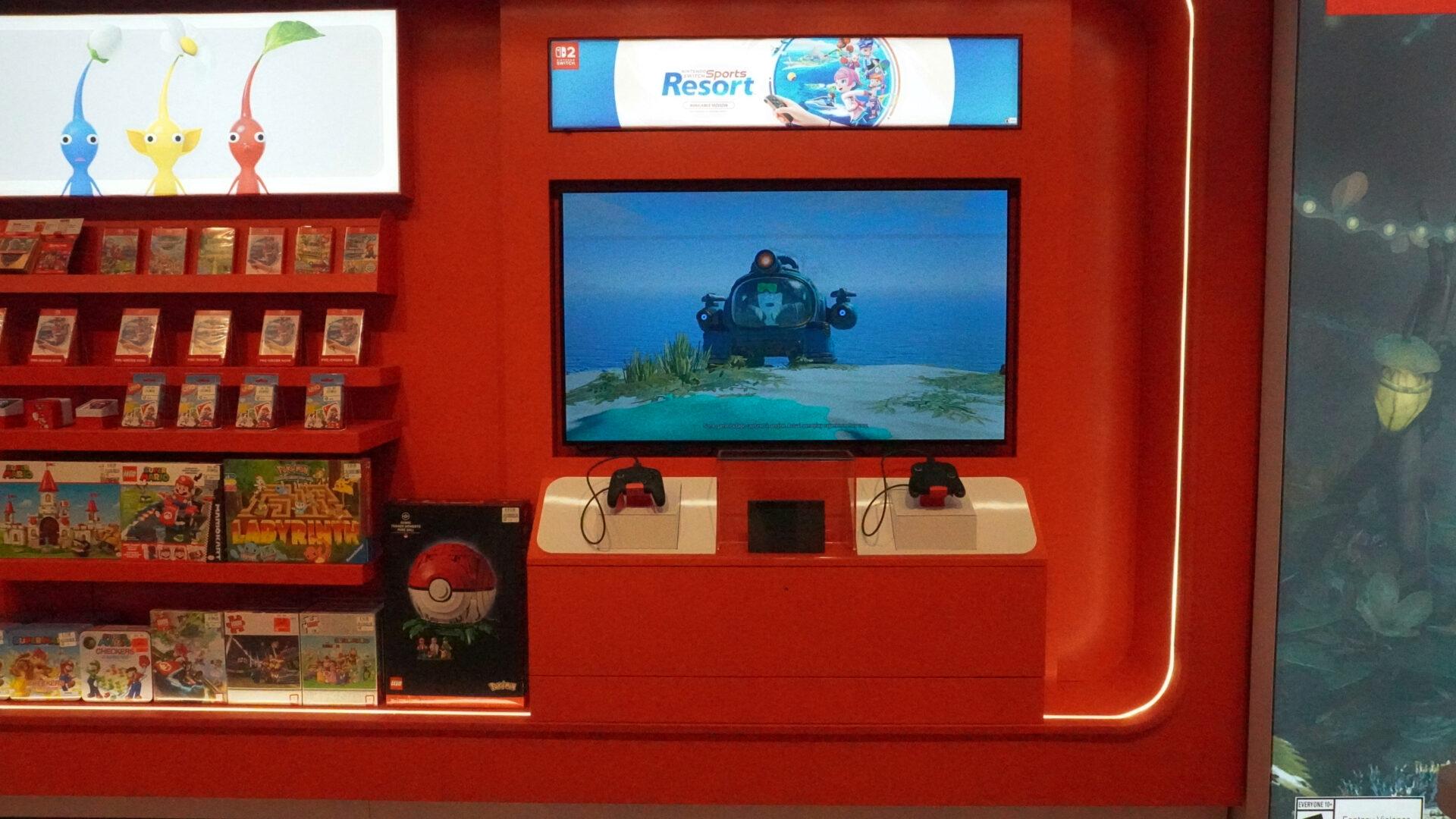
Hands-on stations: playable consoles set into the red walls, with controllers on white mounts, plus handhelds on a red counter.
A ceiling left alone: ducts, pipes and track lights stay exposed.
That last line is the one we’d point a client to. The detail sits where eyes and hands land, at wall height and counter height, and the old ceiling stays as it is. A shop-in-shop has to coexist with its host’s building, and this one doesn’t pretend otherwise. It’s a fixture and finish job before it’s a tech job. The screens look ordinary in the photos. The red millwork carries the brand.
The format is the pitch
Nintendo of Canada’s Susan Pennefather told Retail Insider, “Physical retail offers something different from simply purchasing online.” The more useful detail is how this space is set up to keep changing. Retail Insider notes it’s designed to take new games and merchandise as they’re released, and the backlit panels above the shelves look built to swap. At opening, iPhone in Canada found no apparel and no Amiibo, which suggests the mix is still moving.
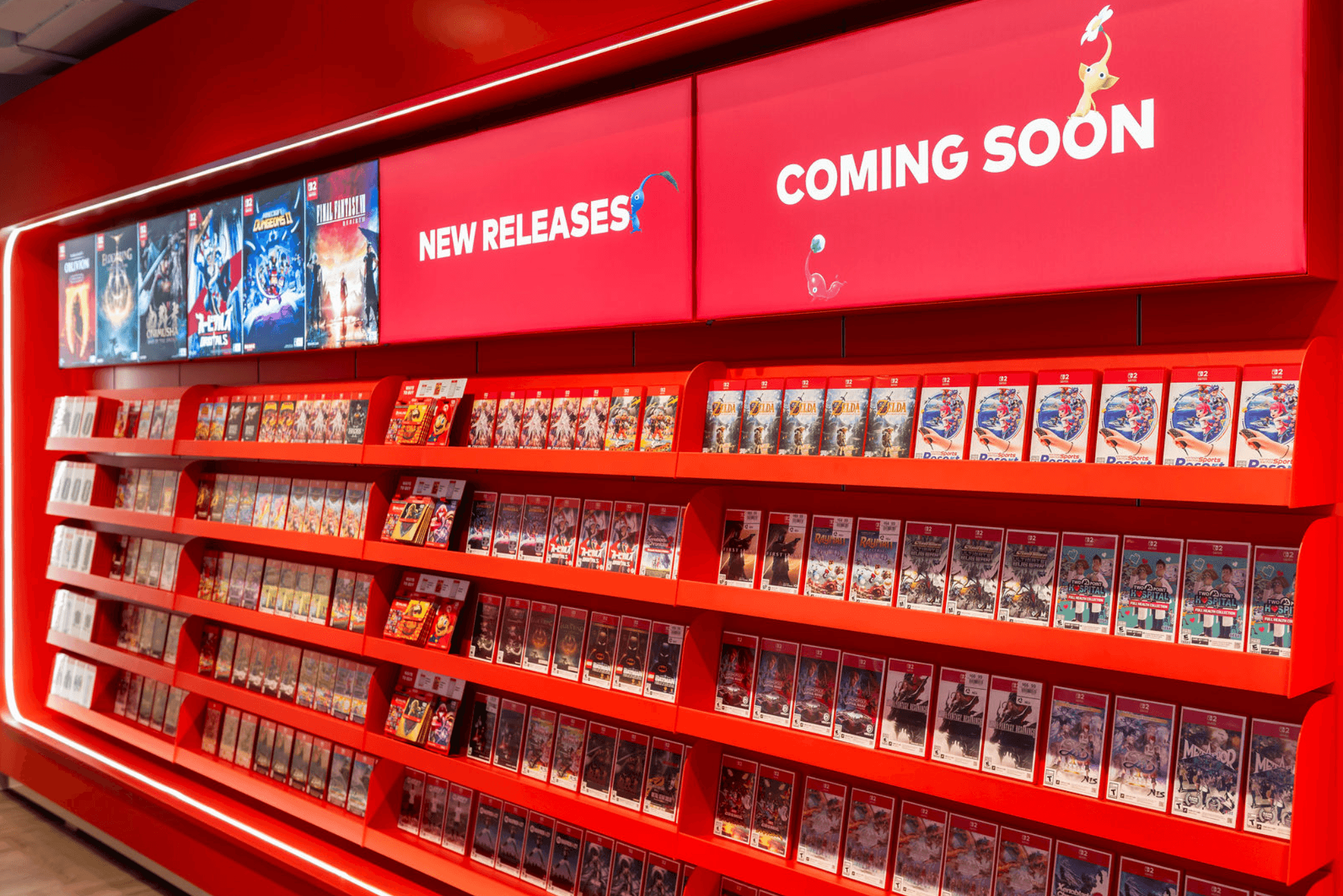
That’s the real brief for a permanent branded fixture. The product will change every few months, and the millwork has to outlast it. EB Games president Jim Tyo framed success to Retail Insider around repeat visits, and no traffic or sales data has been released, so it’s too early to call this a proven model.
What to bring into the room
It’s still worth a look for GTA agencies. A global brand put its North American first inside a Toronto retailer rather than opening its own store here. If you’ve got a brand client with no appetite for a flagship, and a retail partner with floor space to spare, this is the reference to bring to the table.
Three questions to settle early: who pays for the build, who owns the fixtures when the deal ends, and which elements can change without a contractor. Nintendo and EB Games haven’t shared their answers, so you’ll be working yours out from scratch.
Brience is a Toronto-based custom fabrication and experiential design studio, and this kind of work sits right in our shop: hero objects and fixtures built to live inside someone else’s space. If you’re pricing a shop-in-shop, start by deciding what stays permanent and what has to swap out. Talk it through with us.
Sources: Retail Insider, “Nintendo And EB Games Detail Strategy Behind Toronto Store-Within-A-Store” (October 2026); iPhone in Canada, hands-on first look (October 2026).