 Sign In
 5 min5 min read

A barn two people can carry: what DOBEDO STUDIO’s EHHO!² teaches touring builds
EHHO!² is a portable pavilion by Japanese practice DOBEDO STUDIO, built from the salvaged parts of an agricultural barn in Gunma Prefecture and carried by two people like a traditional kago palanquin. Its rusted corrugated iron roof keeps its weathering, its hinged side panels fold down into benches, and small branches serve as latch pins that, the studio says, a fallen twig can replace. The lesson for touring activations: size the build to the crew, and use fasteners anyone can replace on site.
In brief. EHHO!² is a portable pavilion by Japanese practice DOBEDO STUDIO, built from the salvaged parts of an agricultural barn in Gunma Prefecture and carried by two people like a traditional kago palanquin. Its rusted corrugated iron roof keeps its weathering, its hinged side panels fold down into benches, and small branches serve as latch pins that, the studio says, a fallen twig can replace. The lesson for touring activations: size the build to the crew, and use fasteners anyone can replace on site.
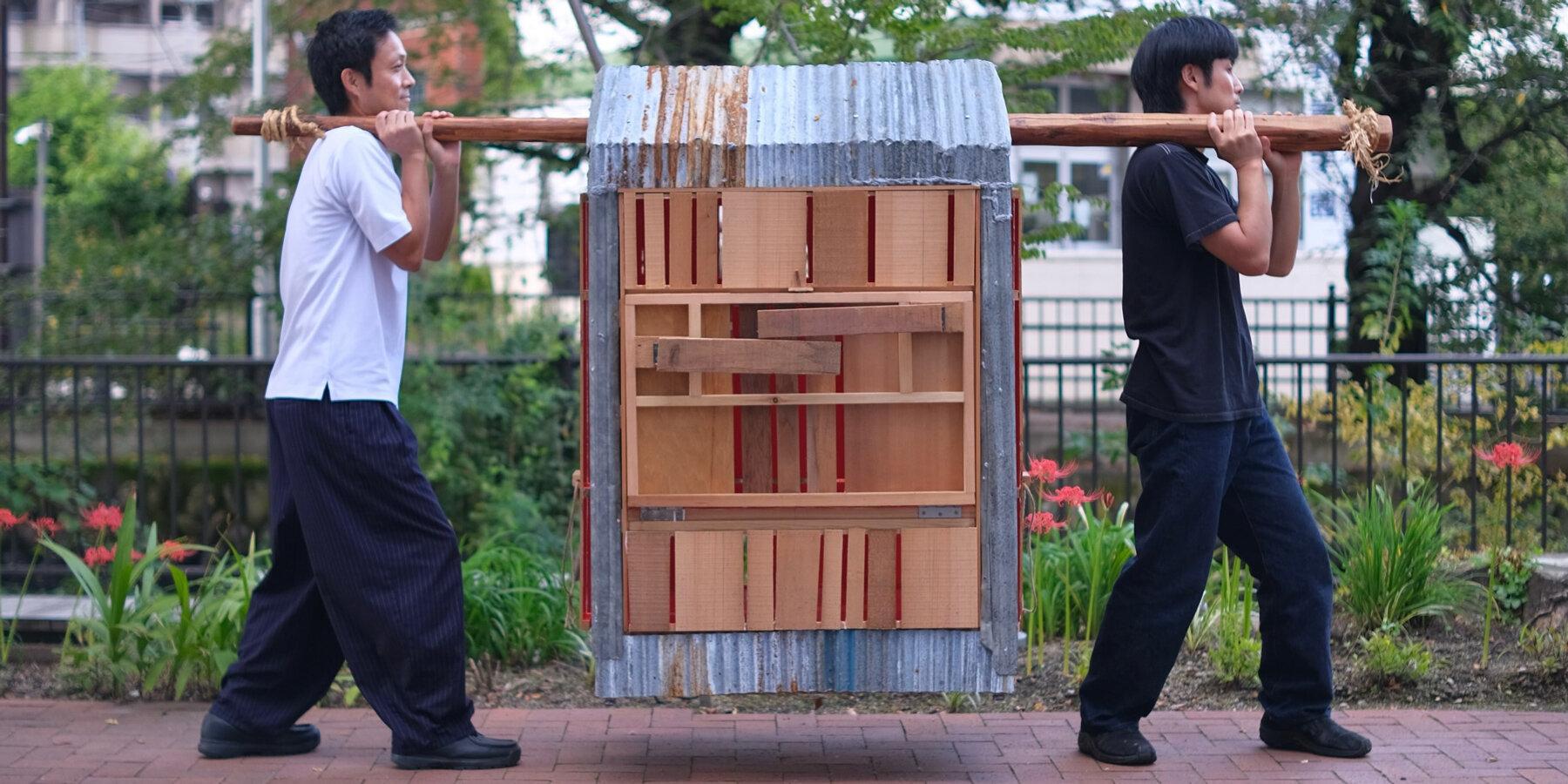
Two people, one pole on their shoulders, and a small barn hanging between them. That’s how EHHO!², a portable pavilion by Japanese practice DOBEDO STUDIO, travels in the photos the studio sent to designboom.
designboom published it on October 27 as a reader submission, so the description below is the studio’s own. No weights or dimensions are given.
How it’s put together, as described
The studio says EHHO!² reworks the kago, the traditional Japanese palanquin carried by two people, and that its materials came out of an agricultural barn in Gunma Prefecture that was being taken down:
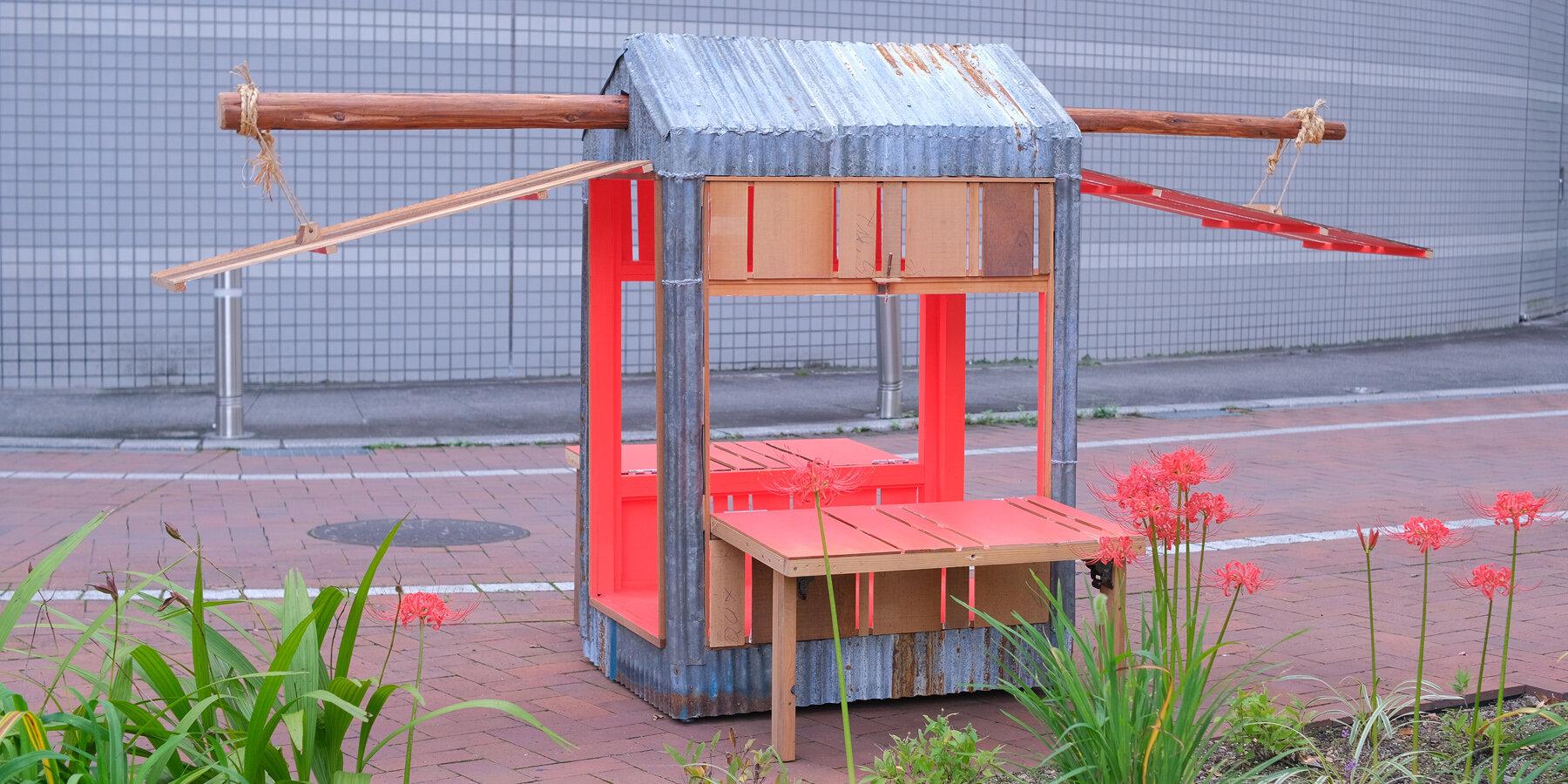
Roof: rusted corrugated iron sheets, bent into a curve. The weathering is kept as the finish.
Structure: structural logs and reclaimed timber boards from the barn, plus hand-woven rope.
Sides: hinged timber panels that fold down on arrival and become benches.
Interior: painted crimson, after the red spider lilies (higanbana) that bloom locally, and hidden while the unit is closed.
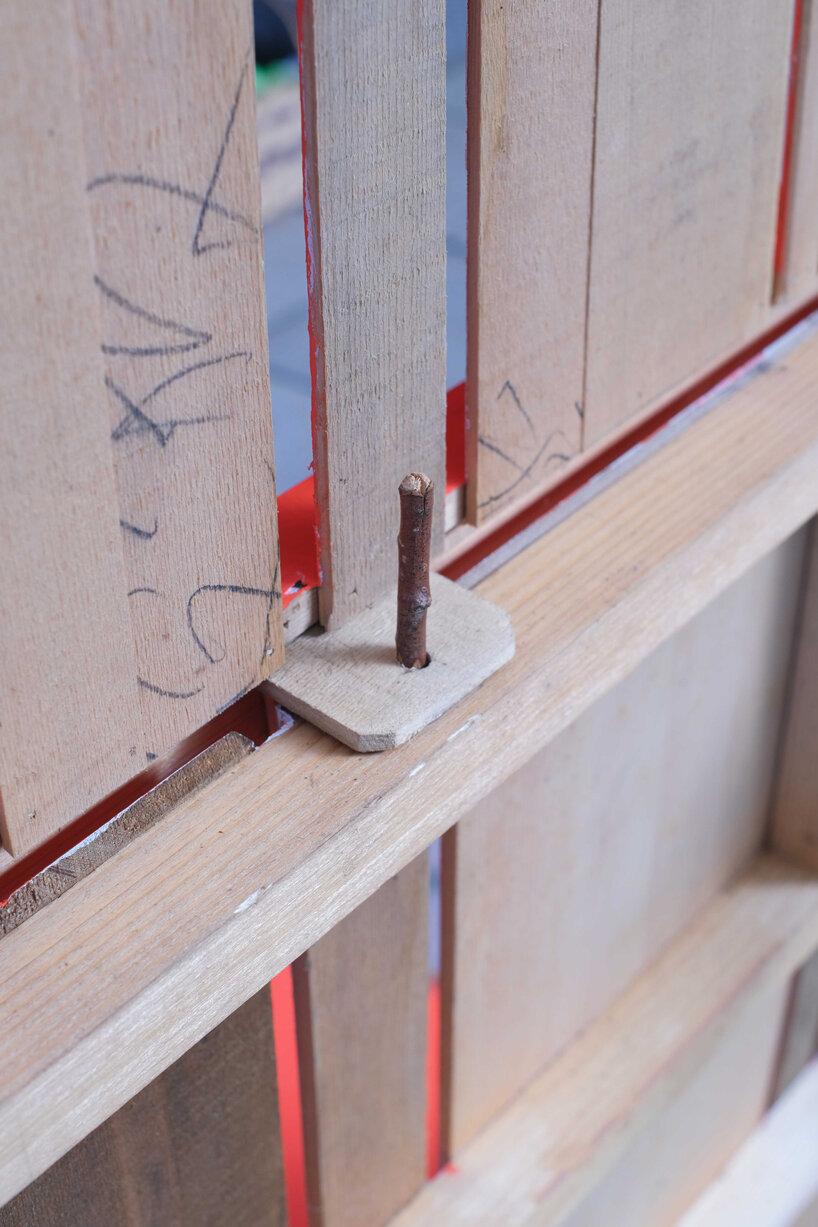
Latches: small wooden branches used as pins to hold the benches shut in transit. If one goes missing, the studio says a fallen twig from a nearby tree will do.
 Shop Objects
 Explore our curated brand essentials
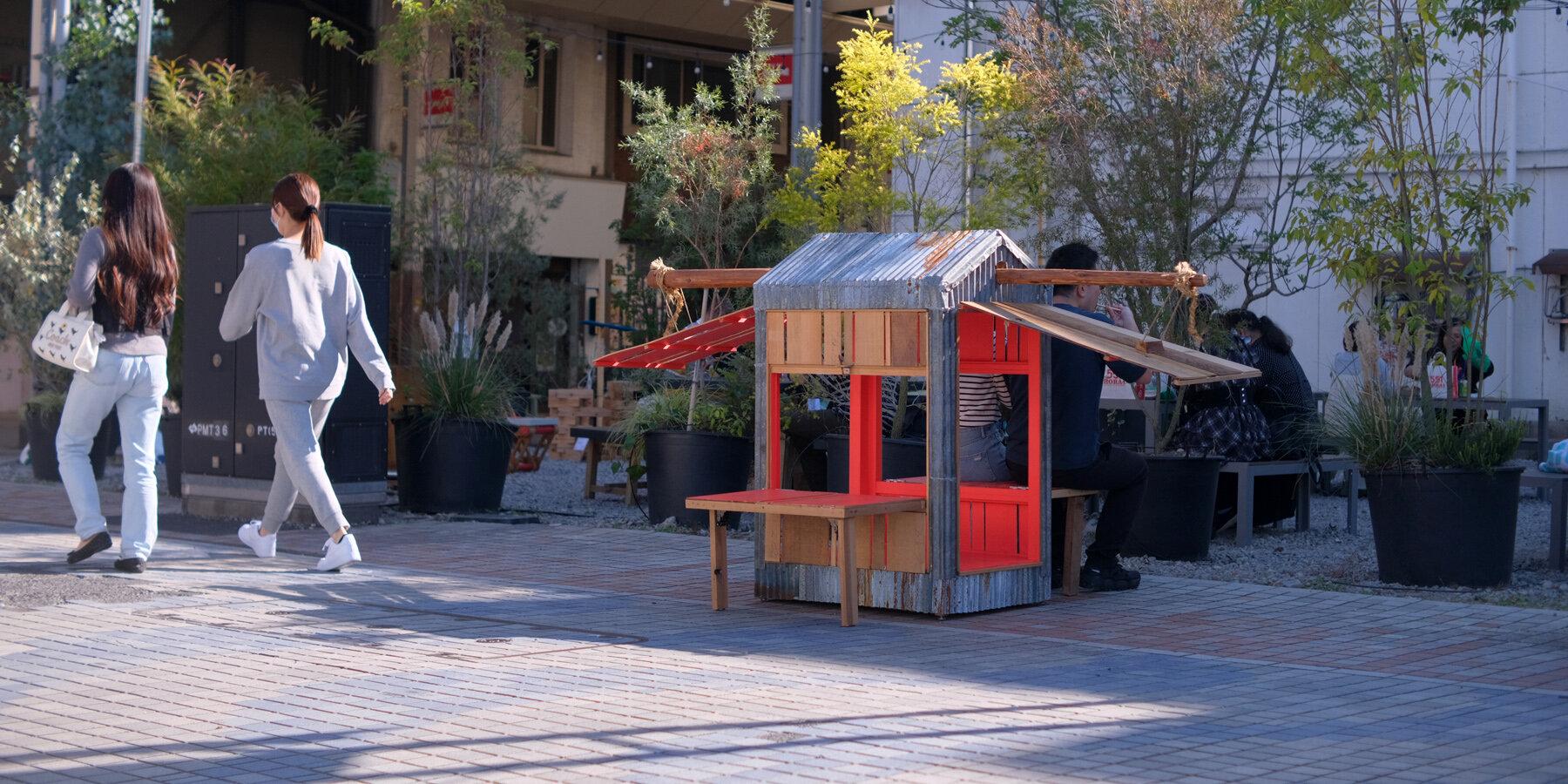
In the photos, the carry pole runs through the top of the unit and is lashed with rope at each end. Closed, it’s a plain box of patched boards, with corrugated iron over the roof and wrapped around the corners. Opened, panels drop onto their own legs as benches, side flaps prop up like awnings on ropes hung from the pole, and the red inside shows. Some photos show it in a plaza with people sitting on it, others in a covered shopping street with a child standing inside. That’s our read of the photos: the published text doesn’t mention the awnings or the legs.
What a touring build can take from it
Brience is a Toronto-based custom fabrication and experiential design studio, and most of what we’d take from this applies to any activation that moves between sites: a street team kit, a touring sampling unit, a booth that does five shows a year.
Design to the crew. EHHO!² is sized for two people to carry. A touring piece should start from the same kind of question: who moves it, through which doors, into what vehicle. We’d write that into the brief before the concept, and check real weights on a scale.
Make the shell do the furniture. Here the walls become the benches, so there’s no separate seating to pack, track or lose.
Use fasteners a crew can replace on the spot. A twig pin is the extreme version. The question for any touring piece is the same: if a latch pin, clip or knob goes missing late at night in a loading dock, can the crew swap it from a hardware store, or does the piece stop working?
Build the reveal into the hinge. Closed, it’s quiet. Open, it’s red. Because the reveal comes from the panels themselves, it happens every time the unit opens, with no separate set piece to pack.
Let reuse show. The rust and patchwork are left visible. If a brief calls for salvaged material, showing it plainly tells the story without a sign.

 Get a QuoteRequest your personalized project
What we’d check before taking it on tour
Before we’d send something like this around the GTA, we’d want to know:
the loaded weight per carrier, and how far they can walk with it;
how the hinges and bench legs hold up to opening and closing every day;
how the rusted roof edges are finished, so nobody gets cut;
how it’s strapped down in a van.
Get a QuoteRequest your personalized projectNone of that is in the published material, and each answer would change the build.
If you’re planning an activation that has to travel by hand, truck or both, talk to us about the kit.
Source: designboom, “built from upcycled timber and iron, portable micro-barn wanders through japan” (October 2026). Images by DOBEDO STUDIO.