 Sign In
 5 min5 min read

Is foam core allowed at Toronto trade shows? Fire rules for booth materials
Not at the Metro Toronto Convention Centre. Its fire regulations for exhibitors, in both the 2023-24 and 2026-27 editions, prohibit Styrofoam, foam core, gatorboard and corrugated plastic, and the IDS Toronto exhibitor kit says foam core is forbidden in any form. Wood, noncombustible materials and plastics with a low flame spread rating are acceptable; fabrics should meet CAN/ULC-S109 or NFPA 701; corrugated cardboard passes only if treated at the factory. Settle materials before drawings are final.
In brief. Not at the Metro Toronto Convention Centre. Its fire regulations for exhibitors, in both the 2023-24 and 2026-27 editions, prohibit Styrofoam, foam core, gatorboard and corrugated plastic, and the IDS Toronto exhibitor kit says foam core is forbidden in any form. Wood, noncombustible materials and plastics with a low flame spread rating are acceptable; fabrics should meet CAN/ULC-S109 or NFPA 701; corrugated cardboard passes only if treated at the factory. Settle materials before drawings are final.
Foam core is light, cheap and easy to cut, so it's tempting for a quick sign or a mock-up wall. At the Metro Toronto Convention Centre, it's off the table. The MTCC's Fire Regulations for Exhibitors put Styrofoam, foam core, gatorboard and corrugated plastic on the list of strictly prohibited materials, alongside fireworks and flammable liquids. The line reads the same in the 2023-24 edition as in the current 2026-27 one, and the rules apply to every convention and trade show in the building, open to the public or not.
Brience is a Toronto-based custom fabrication and experiential design studio, and materials are the first thing we check against a venue's rules, before a drawing goes out for sign-off. Here is what the MTCC allows, what IDS Toronto adds, and what booths at IDS Toronto 2026 were built from instead.
 Shop Objects
 Explore our curated brand essentials
What the MTCC rules ban and allow
The 2026-27 regulations sort booth materials into three groups:
Prohibited: acetate fabrics, corrugated paper box board, no-seam paper, Styrofoam, foam core, gatorboard and corrugated plastic. Paper-backed foil is out unless it is glued to a backing.
Acceptable for construction: wood; noncombustible materials as the Ontario Building Code defines them; and combustible materials, plastics included, with a flame spread rating of 150 or less and a smoke developed classification of 300 or less.
Finishes, with conditions: drapes, fabrics, artificial plants, projection screens and paper (cardboard thinner than 1/8 inch counts as paper) must be noncombustible or treated to stay flame retardant. Corrugated cardboard is allowed only if it was fire-retardant treated at the factory, and decorative plastics need the approval of the MTCC's Safety Compliance Manager.
Fabrics should meet CAN/ULC-S109, the Canadian flame test for fabrics and films, or the US standard NFPA 701, which the 2026-27 edition added as an option. Merchandise on display for sale doesn't need flameproofing.
The shape of the booth matters too. Open-top booths and platforms up to 400 square feet are acceptable as they are. Bigger platforms, flame-retardant fabric canopies, two-storey booths, roofed booths and mezzanines need approval first. A covered single-level booth under 400 square feet needs a 5 lb ABC fire extinguisher; larger covered booths add a smoke alarm, then a fire watch, then sprinklers.

 Get a QuoteRequest your personalized project
What IDS Toronto adds
The IDS Toronto exhibitor kit, current as of the January 2026 show and partly updated for 2027, says plainly that foam core and Styrofoam are forbidden in any form, and that decorating materials such as fabric and carpet must be fireproofed or fire-retardant. Fireproofing has to be done off-site before move-in and lasts six months to a year. The kit tells exhibitors to bring documentation for the fire prevention inspector showing who did the treatment, when, on which materials, with which compound and for how long. That paperwork avoids testing on the show floor. Hazardous materials are removed at the exhibitor's expense, and the kit asks for the MTCC's Fire Safety Reply Form by December 18, 2026, ahead of the 2027 show.
What builders use instead
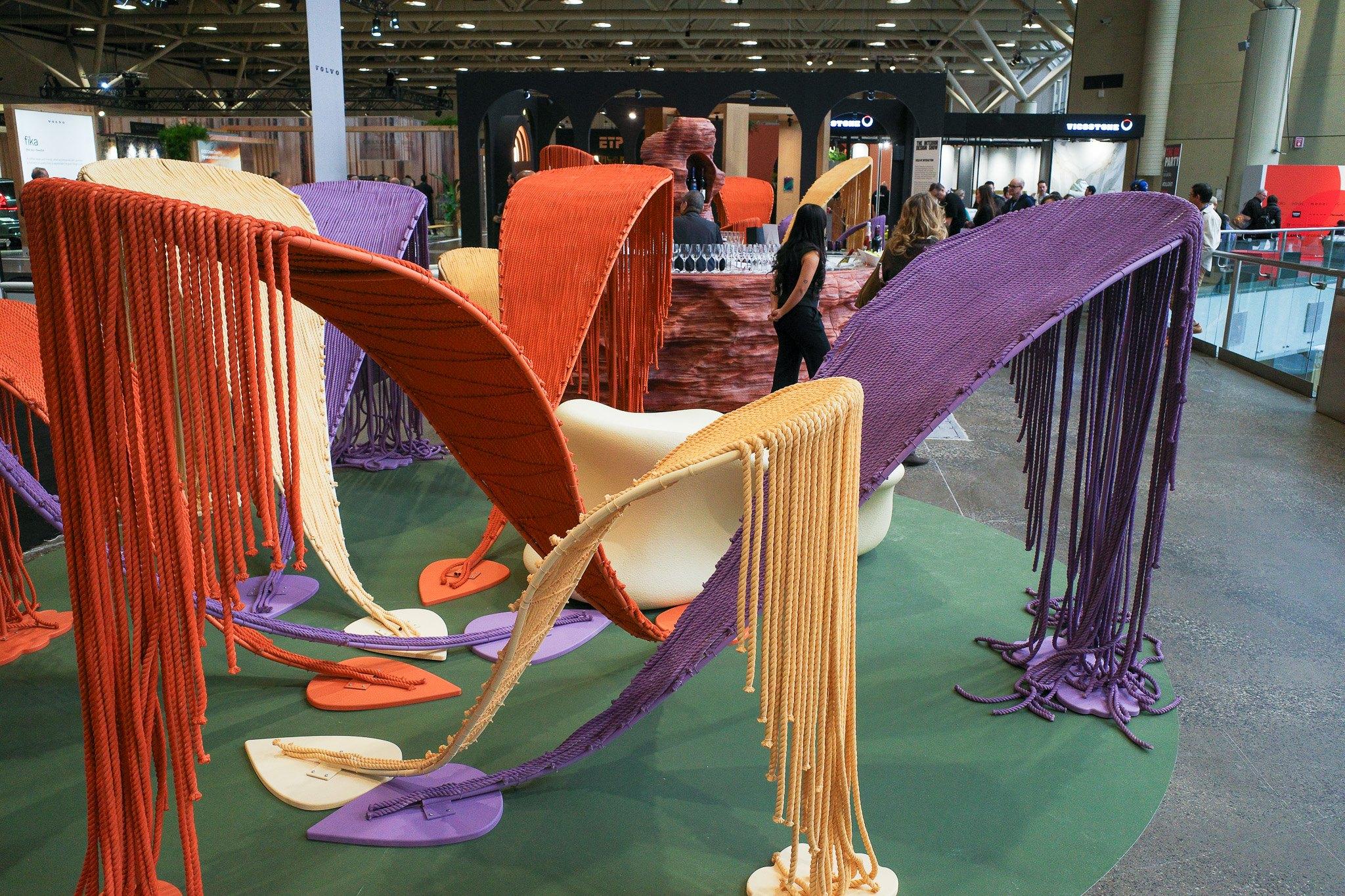
The acceptable list covers most of what makes a booth look considered. IDS Toronto 2026, going by Azure's photo gallery and Dezeen's roundup, was a good showcase:
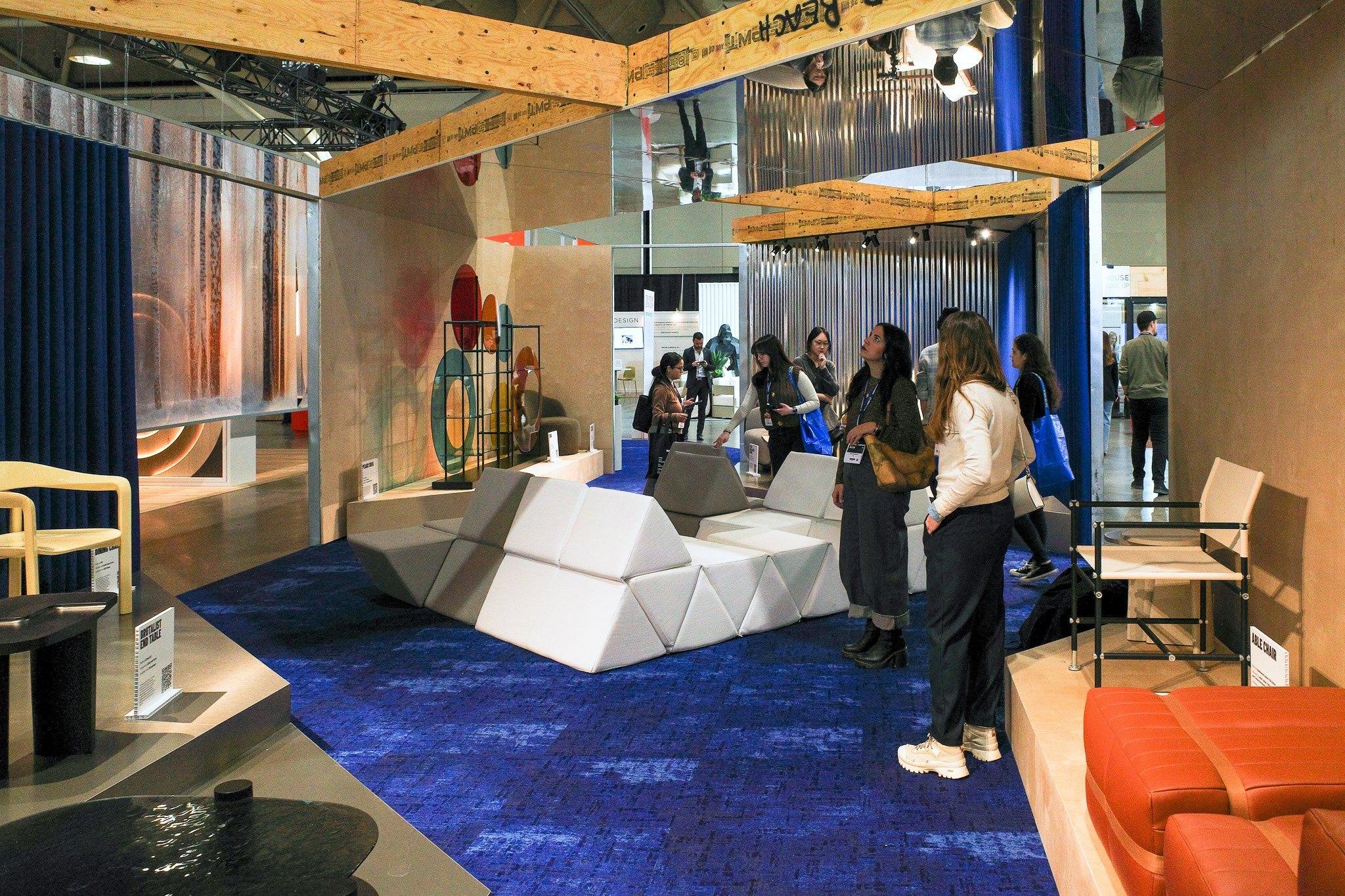
Timber and steel: the Furniture Forecast pavilion, designed by Carv Projects and built by Alta Construction, turned wood and steel into a gallery, finished with cobalt blue curtains and matching Mohawk carpet.
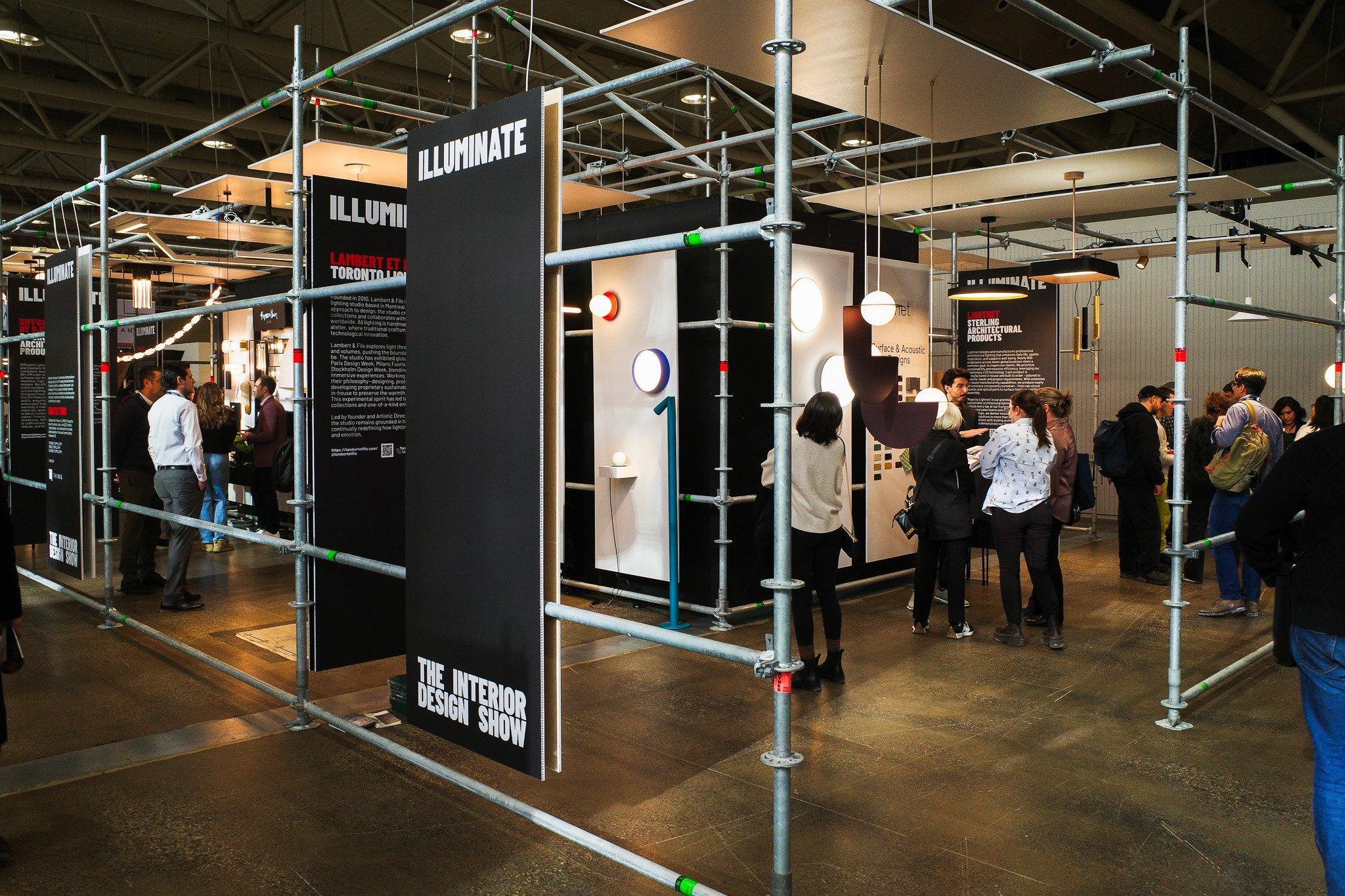
Steel frames: the Illuminate lighting zone used steel scaffolding as its shell, and Field of Interaction by Yury Goncharov and Alina Tacmelova wrapped rope around steel frames to make oversized petals.
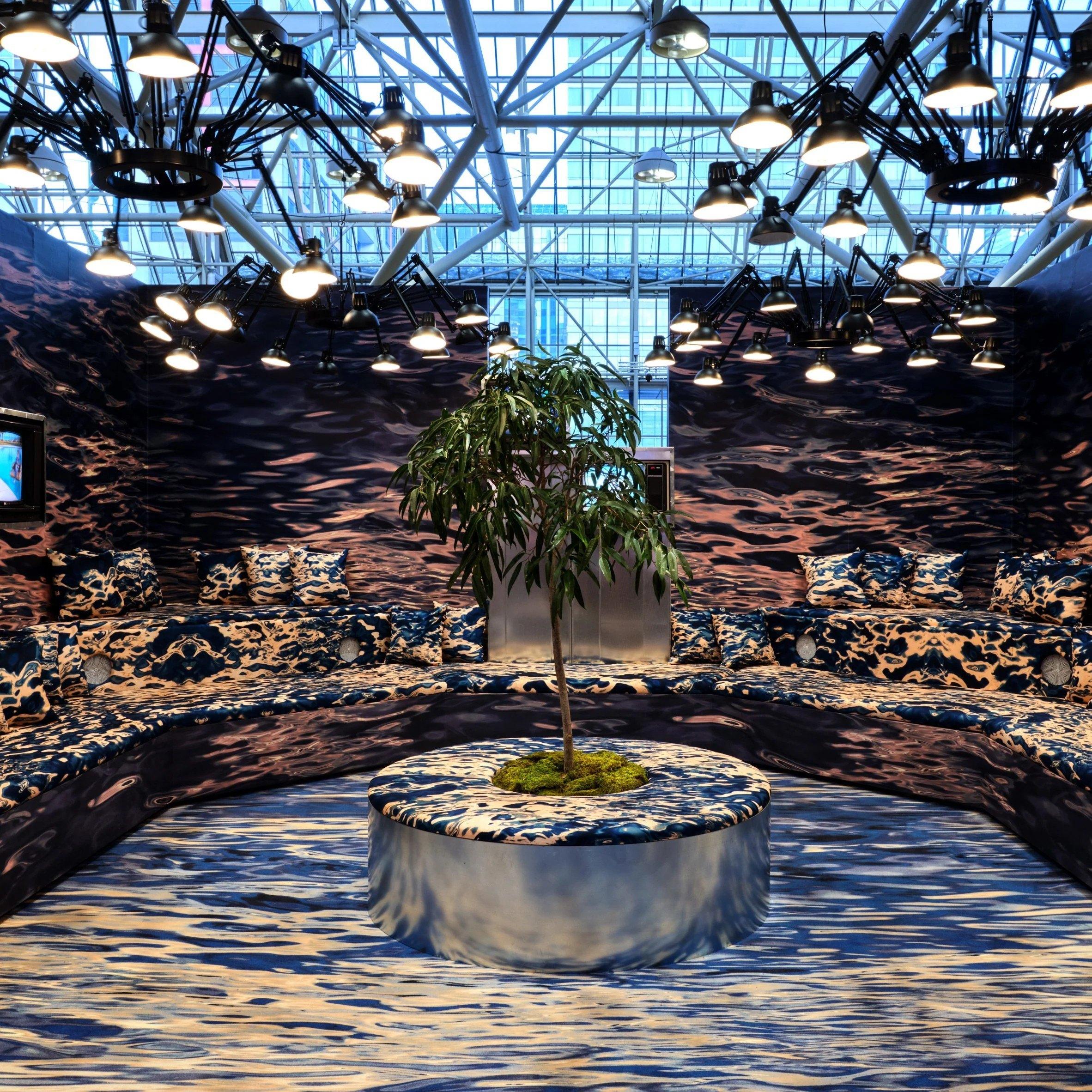
Textiles and mineral panels: Moooi and Ste Marie's Out of Office booth was clad outside in office mineral fibre panels and upholstered inside with Moooi's Fluid fabric, with a metal-wrapped planter at its centre.
Get a QuoteRequest your personalized projectFor the jobs foam core usually does, the same list points the way: signs and mock-up walls in wood-based panels or metal, graphics printed on fabric that comes with a flame-test certificate, and any plastic chosen with its flame spread and smoke ratings in hand. The materials are half of it; the certificates that go with them are what the inspector asks to see.
On a brief, we'd ask three things early: what each surface is made of, which fabrics need certificates, and whether any part has a roof, a canopy or a second level. The answers change the drawings, so they belong before sign-off, not at move-in. For the rest of what venues check, see our guide to hiring a fabricator in Toronto, or send us your brief.
Sources: Metro Toronto Convention Centre, "Fire Regulations for Exhibitors" (2023-24 and 2026-27 editions); Informa Connect, "IDS Toronto Exhibitor Kit: Show Floor Safety" (2026); Azure, "Photo Gallery: Scenes and Standouts from IDS Toronto 2026" (January 2026); Dezeen, "Eight highlights from the biggest week in Canadian design" (January 2026).