 Sign In
 5 min5 min read

Everything Moist Seems Alive made the plumbing the set at Dutch Design Week
At MU Hybrid Art House in Eindhoven, during Dutch Design Week (October 17 to 25, 2026), Maison the Faux and artist Boris Acket built Everything Moist Seems Alive: five water bodies named the Well, the Womb, the Whirl, the Wake and the Waterfall, linked by clear pipes dressed in 3D-printed metallic ornaments. Pumps, a hot plate and choral performances drive the cycle. The lesson for fabricators: when the plumbing is the set, containment, power, access and cleaning are design decisions too.
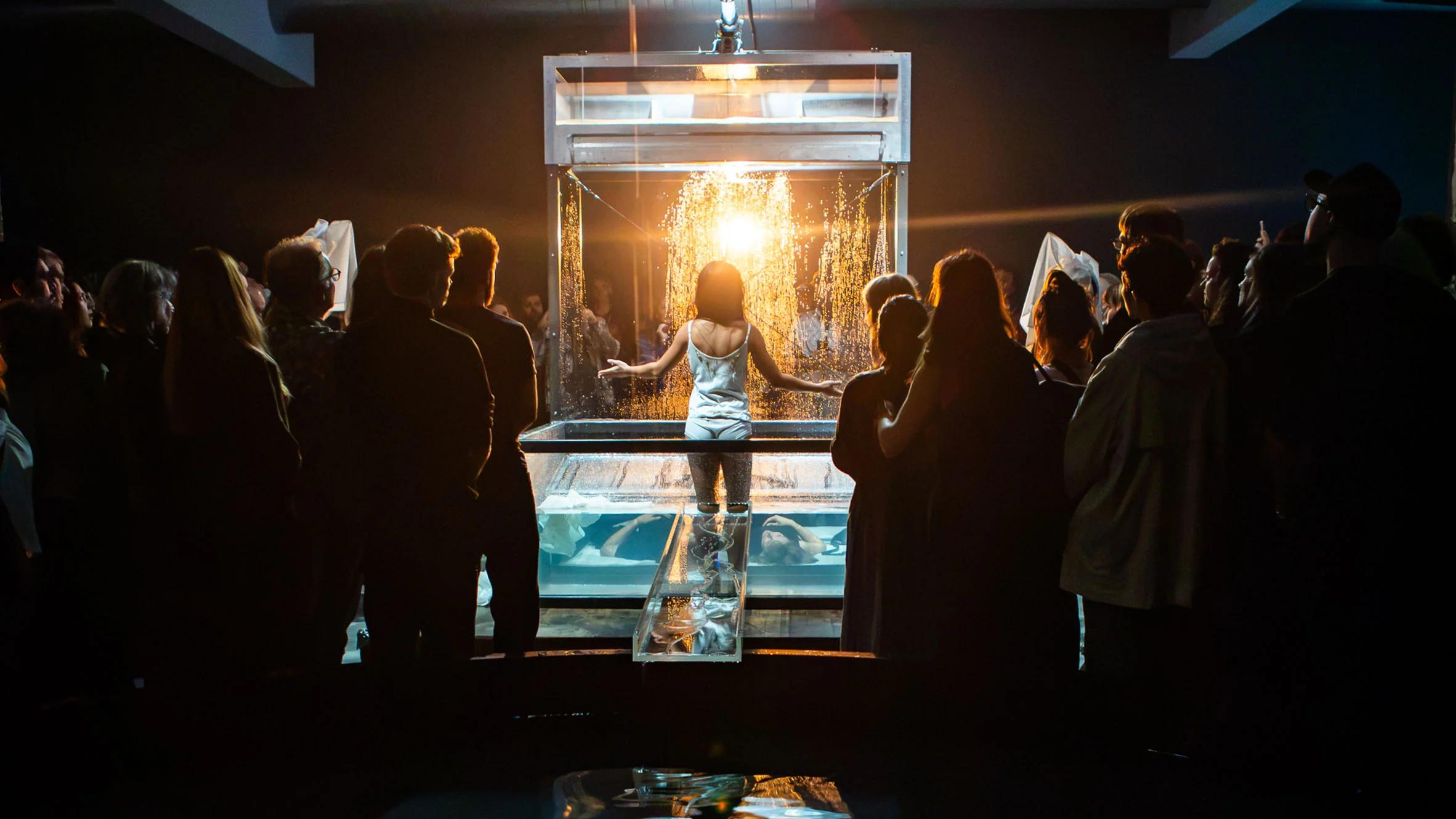
In brief. At MU Hybrid Art House in Eindhoven, during Dutch Design Week (October 17 to 25, 2026), Maison the Faux and artist Boris Acket built Everything Moist Seems Alive: five water bodies named the Well, the Womb, the Whirl, the Wake and the Waterfall, linked by clear pipes dressed in 3D-printed metallic ornaments. Pumps, a hot plate and choral performances drive the cycle. The lesson for fabricators: when the plumbing is the set, containment, power, access and cleaning are design decisions too.
At MU Hybrid Art House in Eindhoven this October, the pipes were out in the open. Clear tubes ran across a dark room between five water structures, and 3D-printed metallic ornaments clung to them like small gargoyles.
The piece is Everything Moist Seems Alive, made by Maison the Faux, the studio Joris Suk and Tessa de Boer founded in 2012 as a creative practice that plays at being a couture fashion house, with artist Boris Acket, best known for Einder, his mechanical fabric canopy for Fred Again’s world tour. They developed it with MU over two years of conversations about water, drawing on cultural theorist Astrida Neimanis’s idea of hydrofeminism: the notion that our bodies are mostly water too. It showed during Dutch Design Week, October 17 to 25.
Wallpaper put it first among its five Dutch Design Week picks. For anyone who builds experiential work, it’s a useful case: the pumps and pipes are in plain view, and they carry most of the look.
 Shop Objects
 Explore our curated brand essentials
Five water bodies, one loop
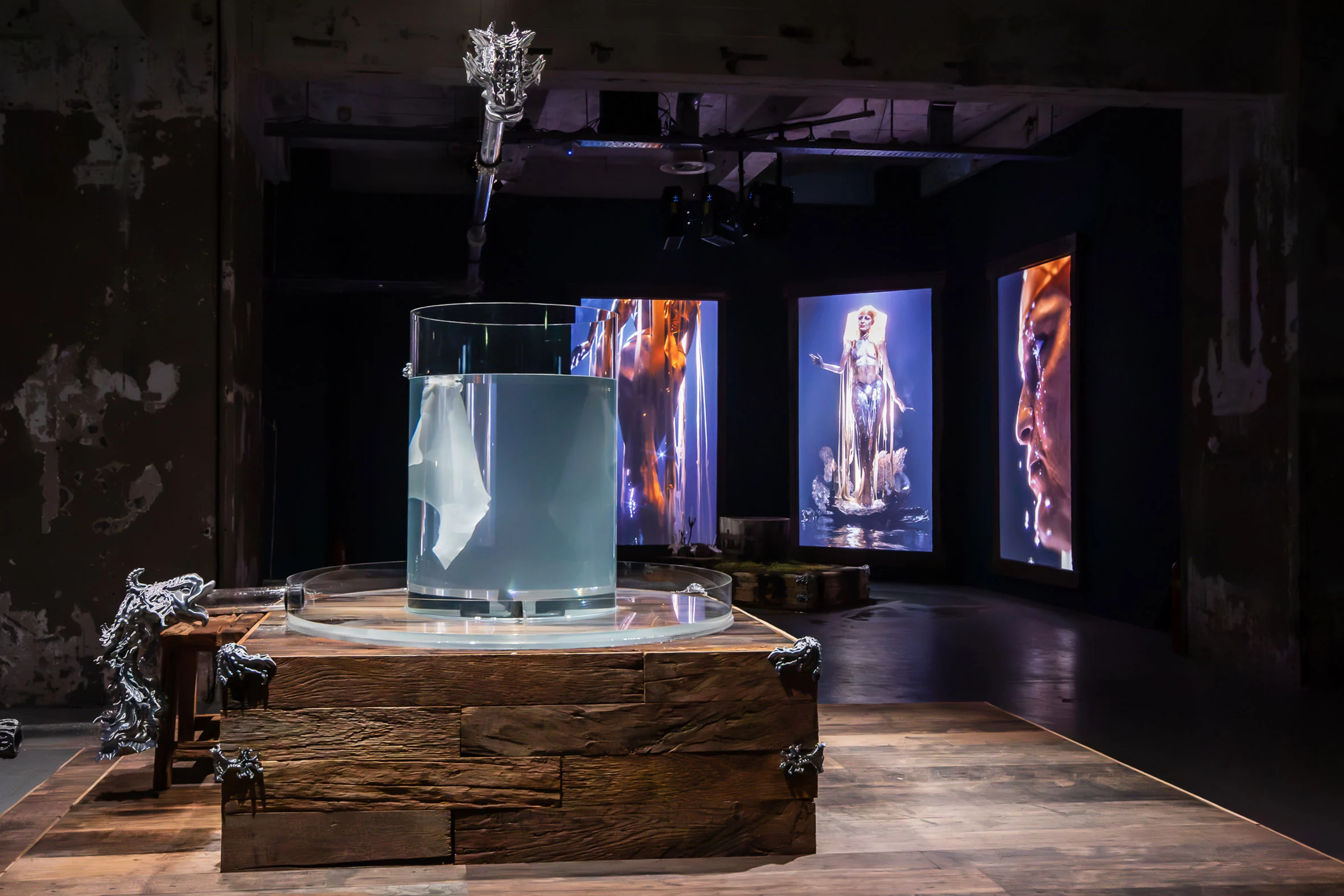
Dezeen’s report explains how the system runs. The Womb is a large circular tub in the middle of the room. The Well is a set of three pumps that draws water from the tub and sends it into the rest of the system. The Whirl holds a white cloth that twists as the water moves. The Wake drips water onto a hot plate, which throws off bursts of steam. The Waterfall, standing in for a dam, drips most of the time, then turns into a torrent at the climax of the performance.
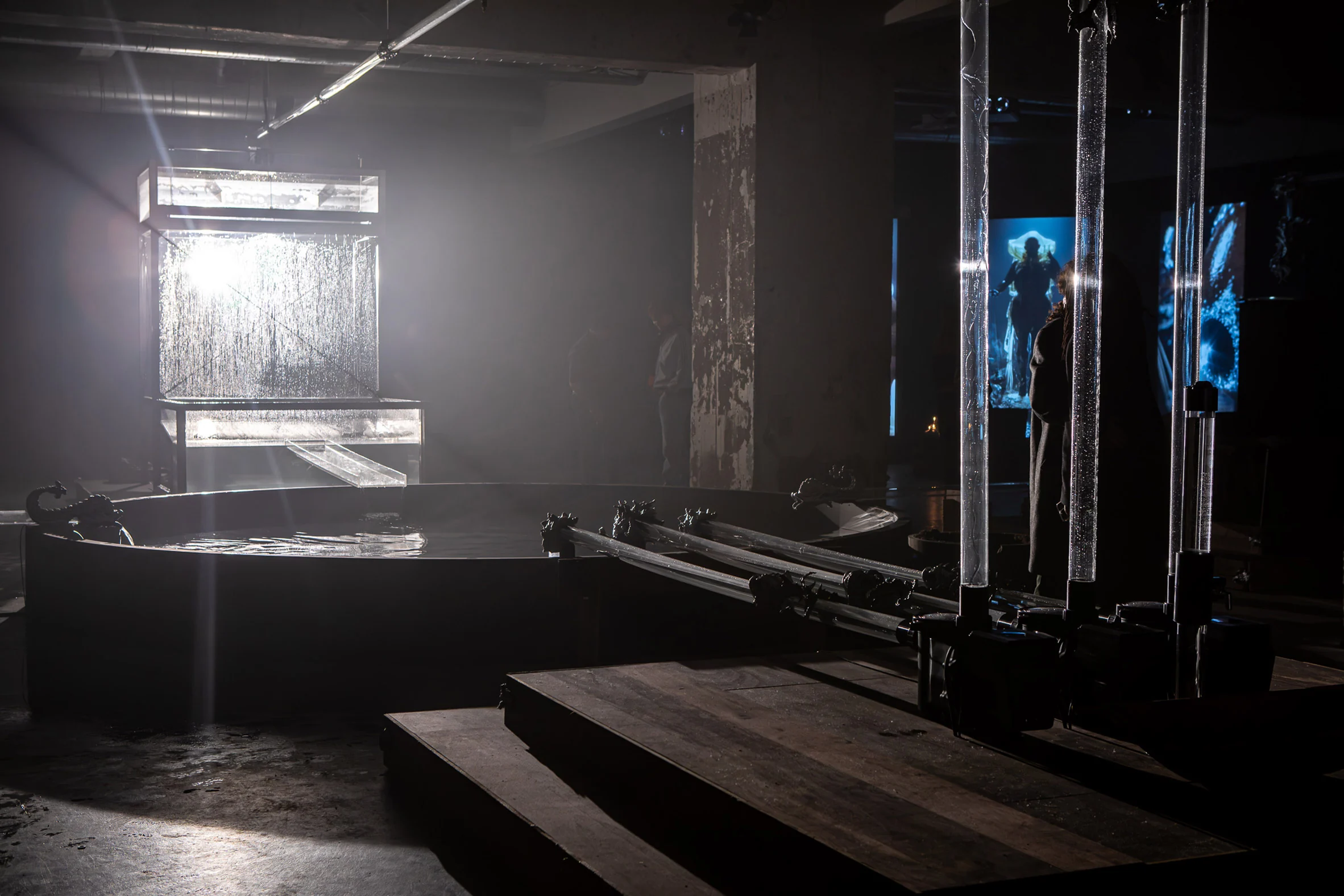
Around them sit candlelit altars, wishing wells and tall video screens of glistening figures the team calls leaky saints. Several times a day, the Dutch National Opera and Ballet staged choral performances in the room. At the entrance, a water bar let visitors taste three kinds of water, or pour it into the installation instead.
The plumbing is the set
The pipes are clear on purpose. Dezeen says they nod to the sanitation systems behind our everyday use of water, and the gothic ornaments on them borrow from the gargoyles of Paris, which were built to throw rainwater away from buildings. MU director Angelique Spaninks summed up our usual attitude to water: “We tend to hide it. We want to control it.”
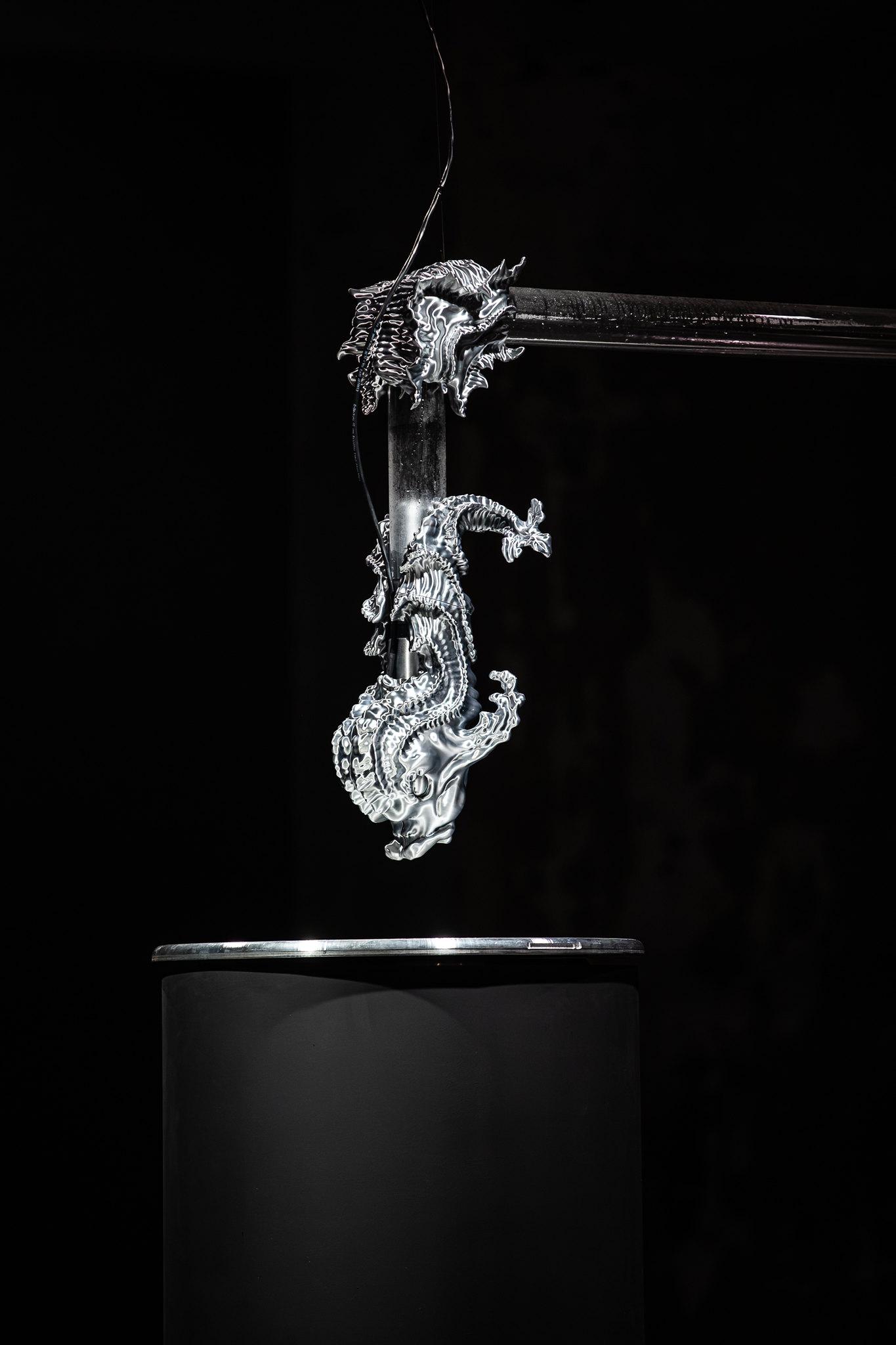
That’s the move we’d borrow. In our experience, wet builds tend to box in the pumps, hoses and fittings. In the photos here, pipe runs and fittings stay in view, and the plinths are rough timber with metal ornaments fixed to the corners. Suk told Dezeen the look came from colliding Acket’s technical, minimal style with the studio’s maximalism. You can see both in a single piece: a precise clear cylinder of water on a heavy timber base, dressed in silver.

 Get a QuoteRequest your personalized project
What a wet build asks of the shop
Neither Dezeen nor Wallpaper names a fabricator, and neither gives water volumes, pump specs or how the floor was protected. So this is our own checklist, the questions we’d want answered before quoting anything like it:
Containment: every tank, tub and joint needs a plan for the day it leaks, plus a tray or bund underneath. Clear pipes show every drip and air bubble.
Power: pumps and a hot plate near open water mean protected circuits, cable runs kept out of splash zones, and a qualified sign-off.
Access: pumps fail. You need to reach them without draining the show or taking a plinth apart.
Cleaning: standing water clouds up and grows things if nobody looks after it. Plan filtration, a daily check, and a way to drain and refill.
Steam: a hot plate making steam in a closed room affects lighting, screens and anything made of wood or paper.
None of this shows up in the photos. All of it affects how the piece looks on the last day.
Get a QuoteRequest your personalized projectBrience is a Toronto-based custom fabrication and experiential design studio, and we’d treat a brief like this as two jobs from the start: the set people see, and the system that keeps it wet and safe. If you’re scoping water, steam or anything else that moves in a GTA venue, talk to us early, ideally before the venue walkthrough. We’d rather ask them on paper than on site.
Sources: Dezeen, “’Hydrofeminism’ and leaky saints feature in Everything Moist Seems Alive installation” (October 2026); Wallpaper, “Highlights from Dutch Design Week 2026” (October 2026).