One hundred finches, twenty guitars: the room that composes itself
At MAAT in Lisbon (July 8 to August 31, 2026), Céleste Boursier-Mougenot’s from here to ear v.26 fills a gallery with one hundred zebra finches living among roughly twenty amplified electric guitars. As birds land on and leave the strings, they play the room; composition is replaced by chance, movement, and collective behavior. It’s the purest current example of a generative experience with no software in sight, and a masterclass in designing systems rather than content.
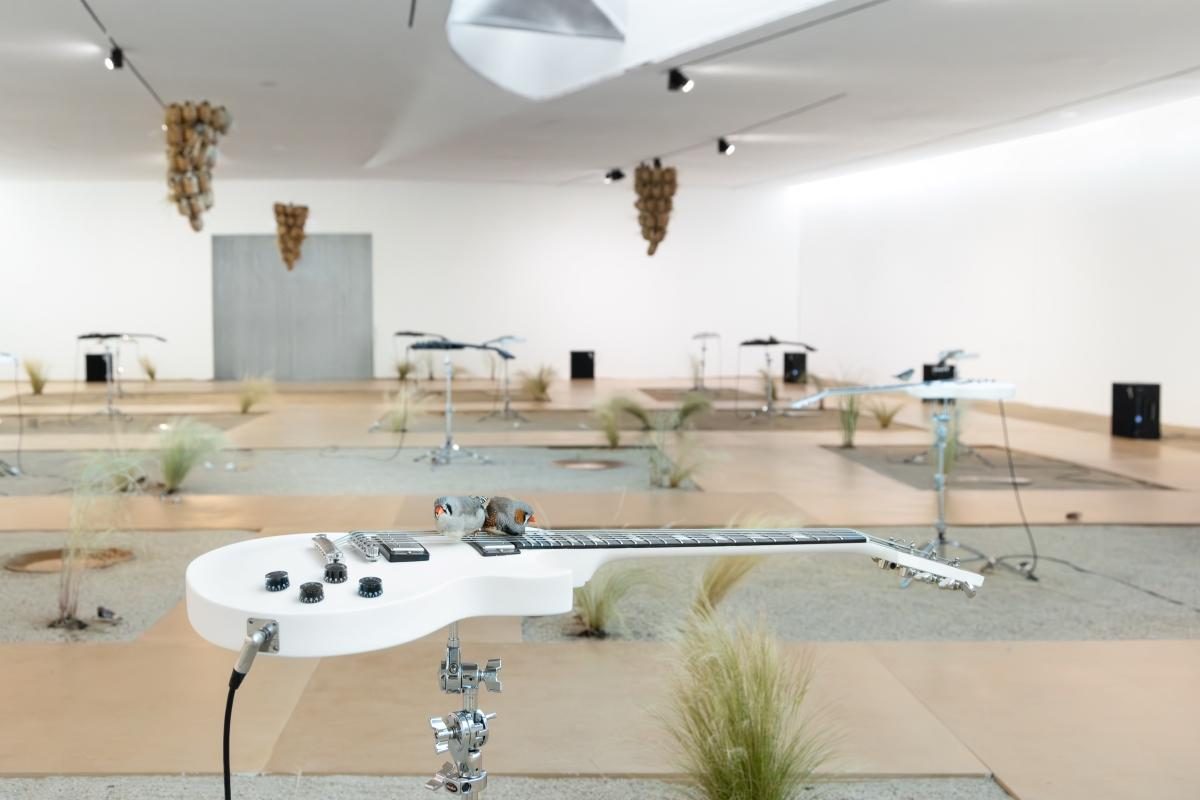
In brief. At MAAT in Lisbon (July 8 to August 31, 2026), Céleste Boursier-Mougenot’s from here to ear v.26 fills a gallery with one hundred zebra finches living among roughly twenty amplified electric guitars. As birds land on and leave the strings, they play the room; composition is replaced by chance, movement, and collective behavior. It’s the purest current example of a generative experience with no software in sight, and a masterclass in designing systems rather than content.
The most talked-about immersive room of the European summer contains no projector. At Lisbon’s MAAT, French artist Céleste Boursier-Mougenot has installed the latest version of from here to ear: one hundred zebra finches living freely in a gallery furnished with around twenty amplified electric guitars. When a bird lands on a string, a note sounds through the space. When a flock startles, a chord does. Visitors walk through the same field as the performers, adjusting their pace and attention, because their movement changes the music too.
Sit with what’s actually been designed here, because it isn’t a soundtrack. Boursier-Mougenot designed a system: the instrument tuning, the amplification, the perch heights, the feeding stations, the flight paths, the visitor route. The content (the actual music, minute to minute) is authored by chance and collective behavior. No two visits are the same, and the room never needs a refresh, because the performers are alive.
This is the word "generative" reclaimed. Before software borrowed it, generative art meant exactly this: an artist designs the conditions and rules, and the work produces itself, endlessly and unrepeatably. The finches are a pointed reminder that the magic was never the algorithm. It was the surrender of authorship to a well-designed system.
For experience designers, there’s a hard practical lesson inside the poetry: systems beat content on every dimension that matters for duration. Content-based experiences (a film, a loop, a show) exhaust themselves; the second visit is the first visit again. System-based experiences (chance, live inputs, audience behavior, birds) renew themselves for free. BMW’s SYMBIOSIS at Art Basel ran the same logic with bubbles and airflow. Our AI DJ runs it with guest choices and a live mix. The common thread is designing the conditions and letting the moment author itself.
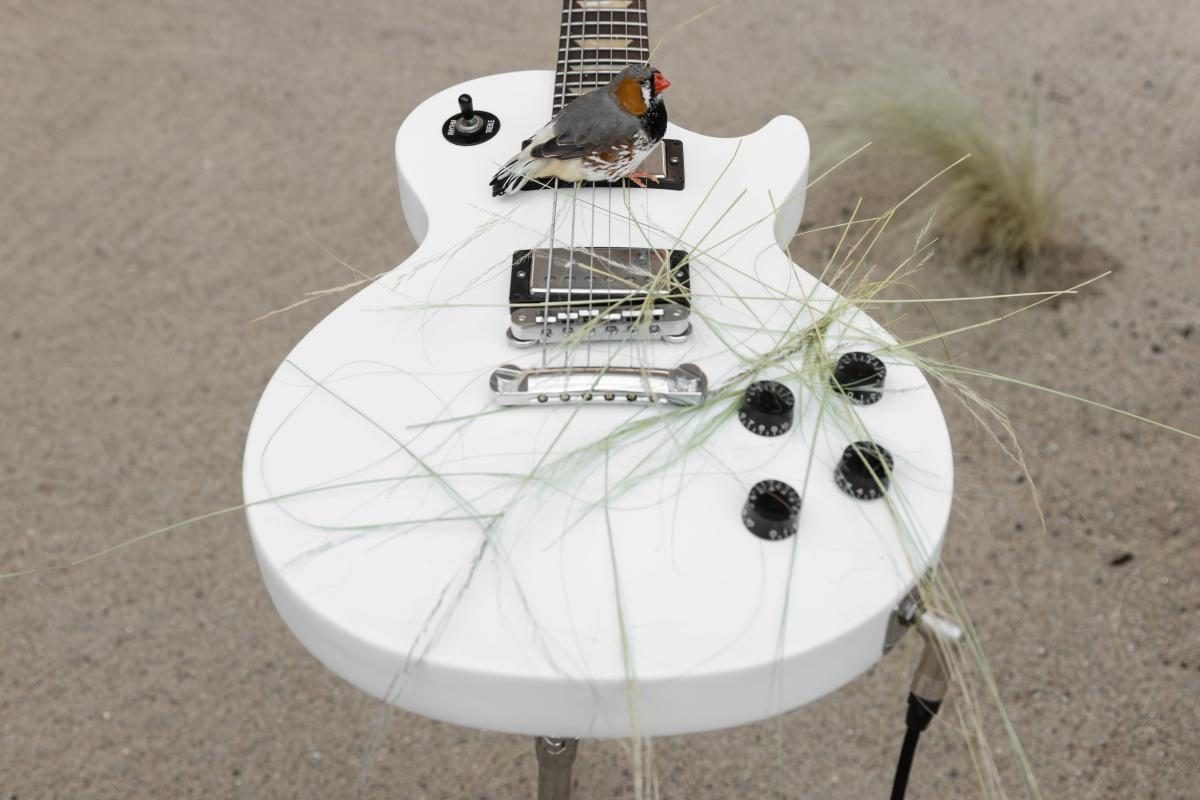
A performer at work: one finch, one amplified string. Photo: Bruno Lopes / MAAT.
The unglamorous half of the lesson is care. An installation with living performers means climate, welfare, cleaning, acoustics, and daily upkeep engineered as seriously as the concept. That’s true of every system-based experience: the system only feels effortless because its infrastructure is invisible and relentless.
For brand work, the takeaway question is worth taping to the brief: what’s our version of the finches? What live input (audience, weather, data, chance) could author our experience so it’s different every visit and never needs a content refresh? If you want help finding that answer and building the system around it, that’s the work Brience, a Toronto-based custom fabrication and experiential design studio, most enjoys.
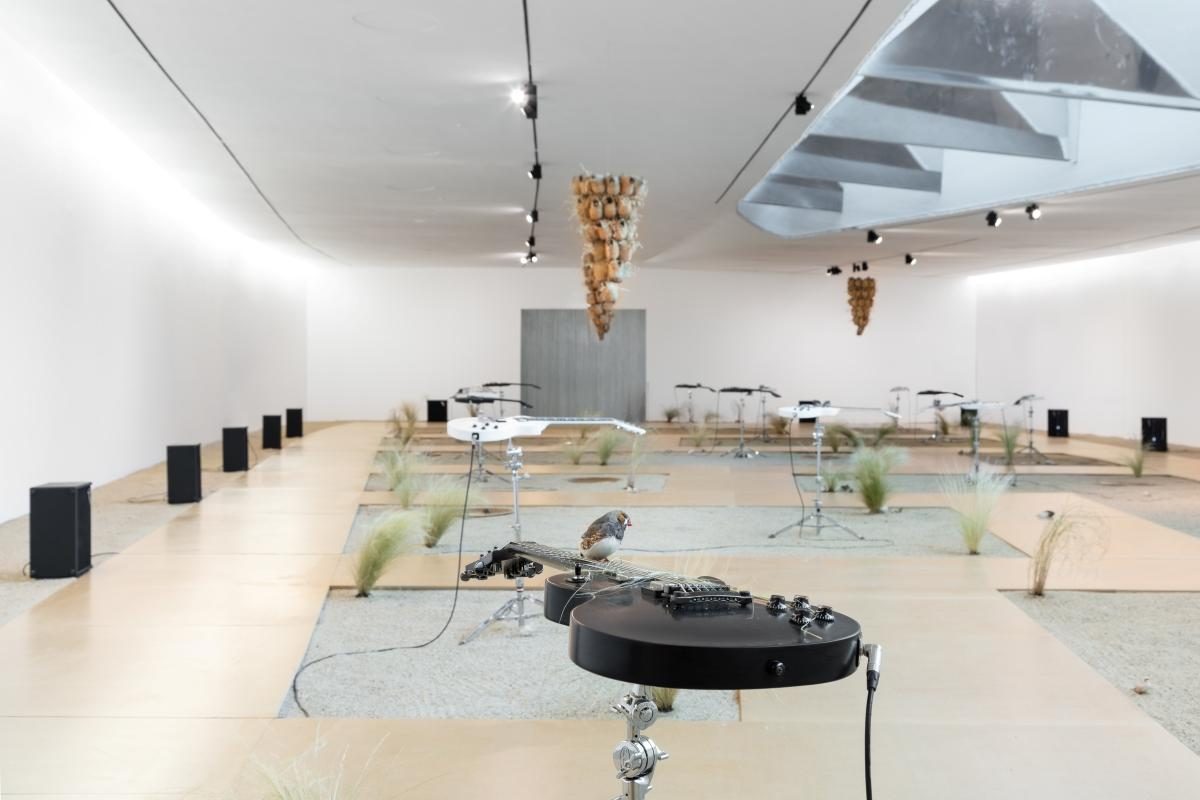
The long view: twenty instruments, one self-composing system. Photo: Bruno Lopes / MAAT.
Source: designboom radar, August exhibitions (early Aug 2026). Céleste Boursier-Mougenot, from here to ear v.26, MAAT, Lisbon, July 8 to Aug 31, 2026. Photography credit Bruno Lopes.