 Sign In
 5 min5 min read

Test the tech before the doors open: interactive installations that hold up on the night
An interactive installation has to work for hours, with real crowds, on a network and a power supply you don't control. Test on the network you'll actually have, with the final content, for longer than the event runs and with strangers in the room. Decide what the piece does when something drops, switch off automatic updates, pack spares, and in Ontario plan power around certified equipment or ESA's trade show permissions. Rain Room and Rafael Lozano-Hemmer's studio show how.
In brief. An interactive installation has to work for hours, with real crowds, on a network and a power supply you don't control. Test on the network you'll actually have, with the final content, for longer than the event runs and with strangers in the room. Decide what the piece does when something drops, switch off automatic updates, pack spares, and in Ontario plan power around certified equipment or ESA's trade show permissions. Rain Room and Rafael Lozano-Hemmer's studio show how.
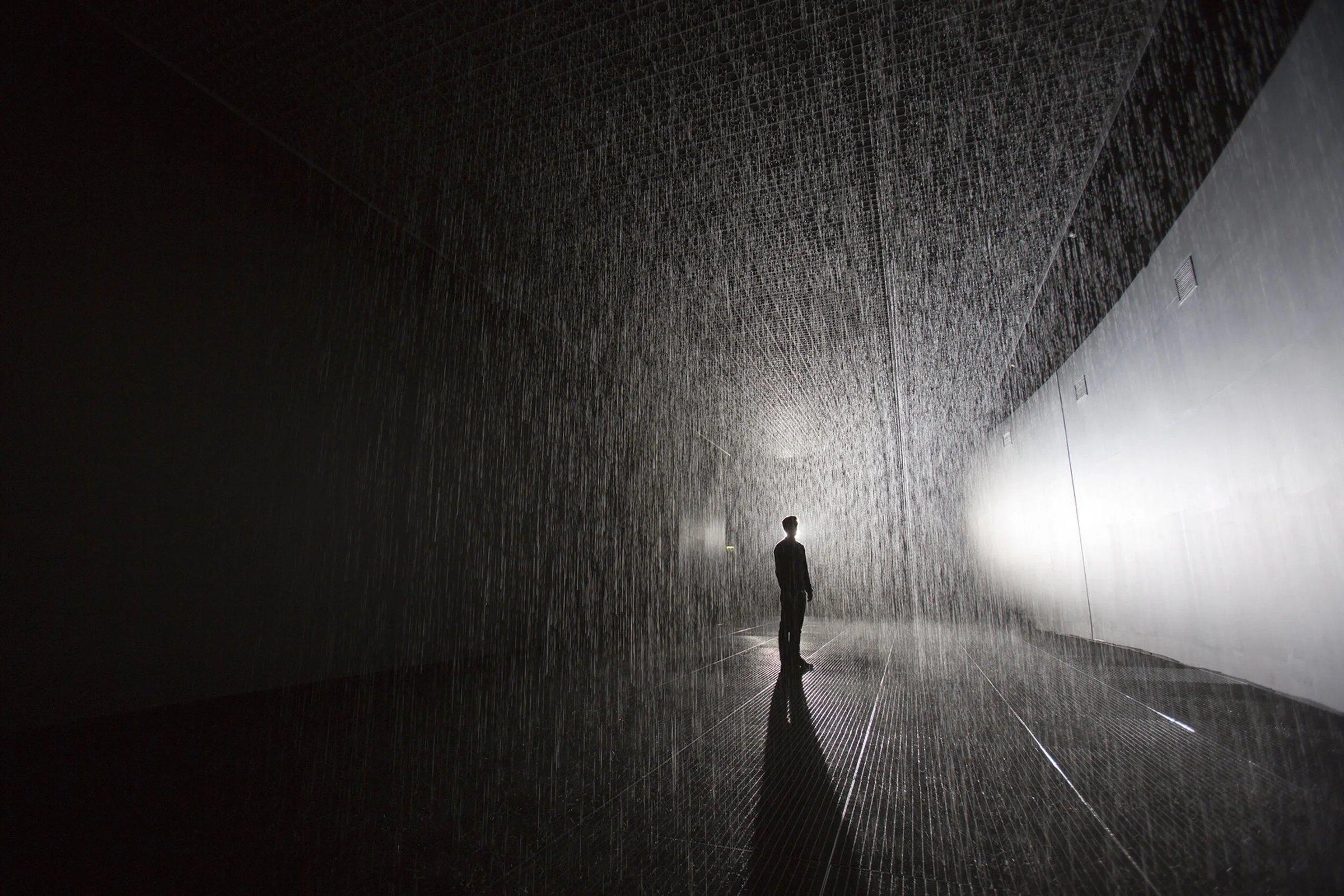
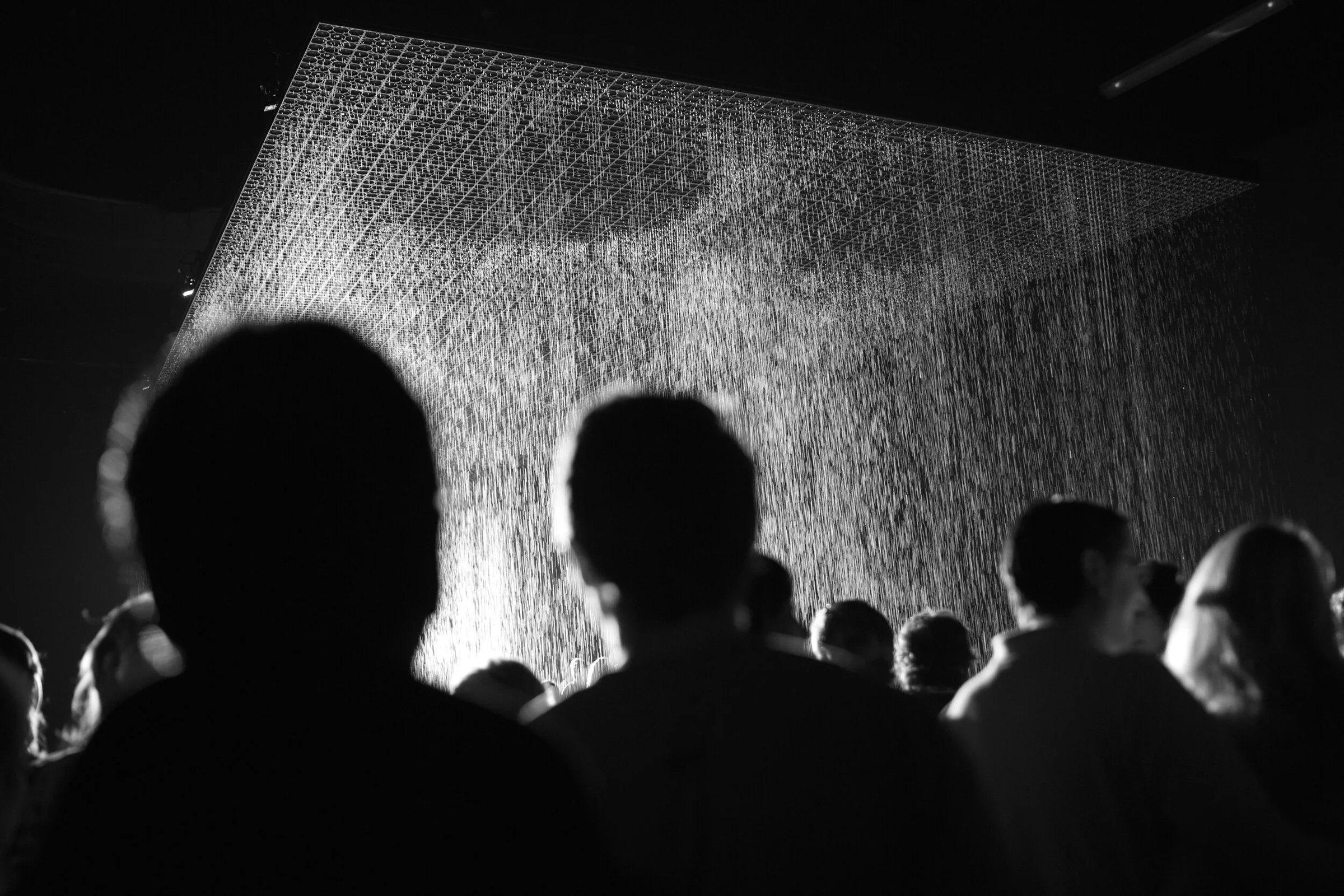
Before Rain Room opened at London's Barbican in 2012, Random International built between 10 and 20 prototypes while working out how its rain should fall, then tested ceiling tile shapes until the water could stop instantly, Ingenia reported. The finished piece covered 100 square metres: 3D tracking cameras, solenoid valves, custom software and 2,500 litres of recycled water falling at 1,000 litres a minute, stopping above each visitor. Testing showed the rain was barely visible against a white backdrop, so the whole Curve gallery was painted black. Then the public did things nobody planned for: on the first day, a camera crew walked straight into the rain with all its equipment.
When the piece moved to MoMA in 2013, visitors went in ten at a time. Capacity was managed at the door.
For an interactive brand activation, the idea is the part you've already tested. The network, the content, the crowd and the power are the parts that need testing before doors open. Brience is a Toronto-based custom fabrication and experiential design studio, and these are the tests we'd put in the schedule.
 Shop Objects
 Explore our curated brand essentials
Test it the way the night will run it
On the network you'll have. Not the office Wi-Fi. If the piece needs the internet, test on the venue's connection, or the wired line you've ordered, with a room full of phones. Better still, make it run offline.
With the real content. Final videos, final playlists, final brand files, at full resolution. Placeholders hide the slow load and the wrong aspect ratio.
For the full run time, and longer. A four-hour event needs a test that runs past four hours without a restart, in a room as warm as the venue.
With real people. Strangers, not the team who built it. Watch where they stand, what they press first and how many fit at once, then set capacity the way MoMA did.
Decide what happens when something drops
In 2015 the artist Rafael Lozano-Hemmer published his studio's best practices for keeping media artworks working. Several translate directly to a brand activation:
Fewer moving parts. Solid-state drives over spinning disks, heat sinks over fans, and common off-the-shelf components over rare ones.
No surprises from the operating system. Turn off automatic updates and notifications, and monitor the temperature inside enclosures.
An idle mode. When nobody has interacted for a while, the piece should settle into a state that still looks good.
Remote access and a power sequence. Be able to log in remotely to fix problems, and use a programmable power bar so everything shuts down in the right order.
Spares and simple checks. Pack spares of the hardest-to-replace parts. His troubleshooting note: over 95 per cent of failures are something simple, like a power cable that isn't fully seated.

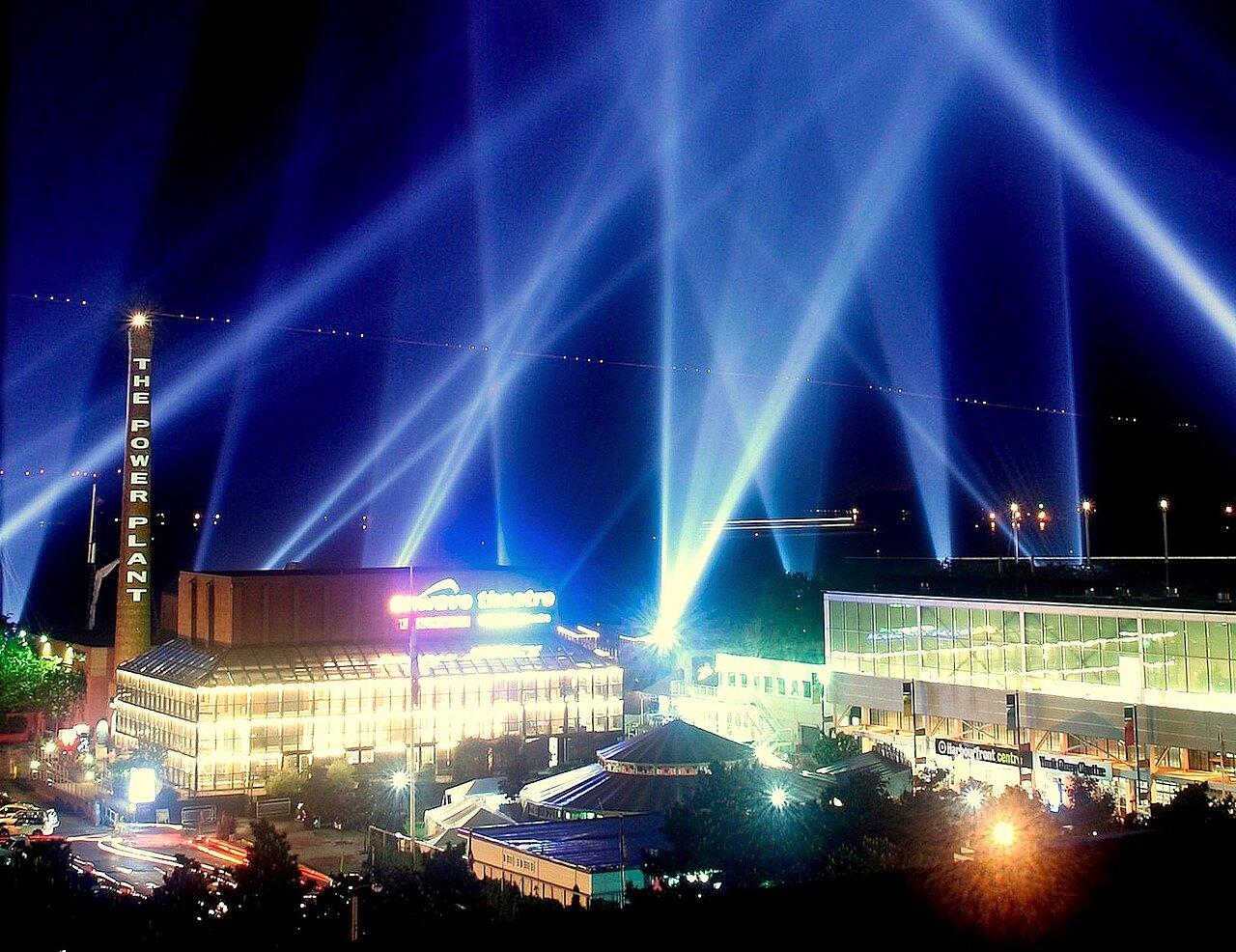
Toronto saw the idle-mode idea at full scale in 2007. Pulse Front, commissioned by Luminato and co-produced with Harbourfront Centre, turned 20 robotic searchlights into a matrix of light driven by the heart rates of passers-by holding ten metal sensor sculptures. When no one was participating, the lights replayed the heartbeats of the previous ten people.

 Get a QuoteRequest your personalized project
Power: plan it before you design around it
In Ontario, electrical equipment on display or in use has to be approved, which means it carries a recognized certification mark or field evaluation label. At trade shows only, the Electrical Safety Authority (ESA) makes room for unapproved equipment if you apply in advance: a Permission to Show or a Permission to Energize, the second for demonstration and valid only for the show. Applying doesn't automatically grant permission, and ESA lists neither for consumer shows. For a mall, a store or a public event, build with approved components from the start.
Venue power has its own rules. At the Metro Toronto Convention Centre, electrical services go through Showtech, the exclusive supplier, so order early and test at the load you'll actually draw.
Get a QuoteRequest your personalized projectIf you have an interactive idea and a date, tell us about it. Our guide to hiring a fabricator in Toronto covers the rest of the brief.
Source: Ingenia, "Inside the Rain Room: No umbrella required" (December 2012); Smithsonian, "This Incredible Art Installation Makes It Rain Everywhere But On You" (June 2013); Rafael Lozano-Hemmer, "Best practices for conservation of media art from an artist's perspective" (September 2015); Atelier Lozano-Hemmer, "Pulse Front"; Electrical Safety Authority, "Trade Shows"; Exhibit City News, "Metro Toronto Convention Centre renews partnership with Showtech".