 Sign In
 4 min4 min read

Sabine Marcelis multiplied a lava lamp until it became a room
Light and Color, Sabine Marcelis’s first museum exhibition, runs at Museum für Gestaltung Zürich’s Toni-Areal from October 30, 2026 to April 4, 2027. Eight 2.56-metre Mathmos lava columns stand in a mirrored room, 125 IKEA VARMBLIXT lamps and a gradient mirror wall form an 11-metre tunnel, and Sunbeam Captured, made with Boris Acket, moves light across water. A limited Mathmos Astro lamp in the same pink follows in November. The lesson: repeat one product, add mirrors, and it reads as architecture.
In brief. Light and Color, Sabine Marcelis’s first museum exhibition, runs at Museum für Gestaltung Zürich’s Toni-Areal from October 30, 2026 to April 4, 2027. Eight 2.56-metre Mathmos lava columns stand in a mirrored room, 125 IKEA VARMBLIXT lamps and a gradient mirror wall form an 11-metre tunnel, and Sunbeam Captured, made with Boris Acket, moves light across water. A limited Mathmos Astro lamp in the same pink follows in November. The lesson: repeat one product, add mirrors, and it reads as architecture.
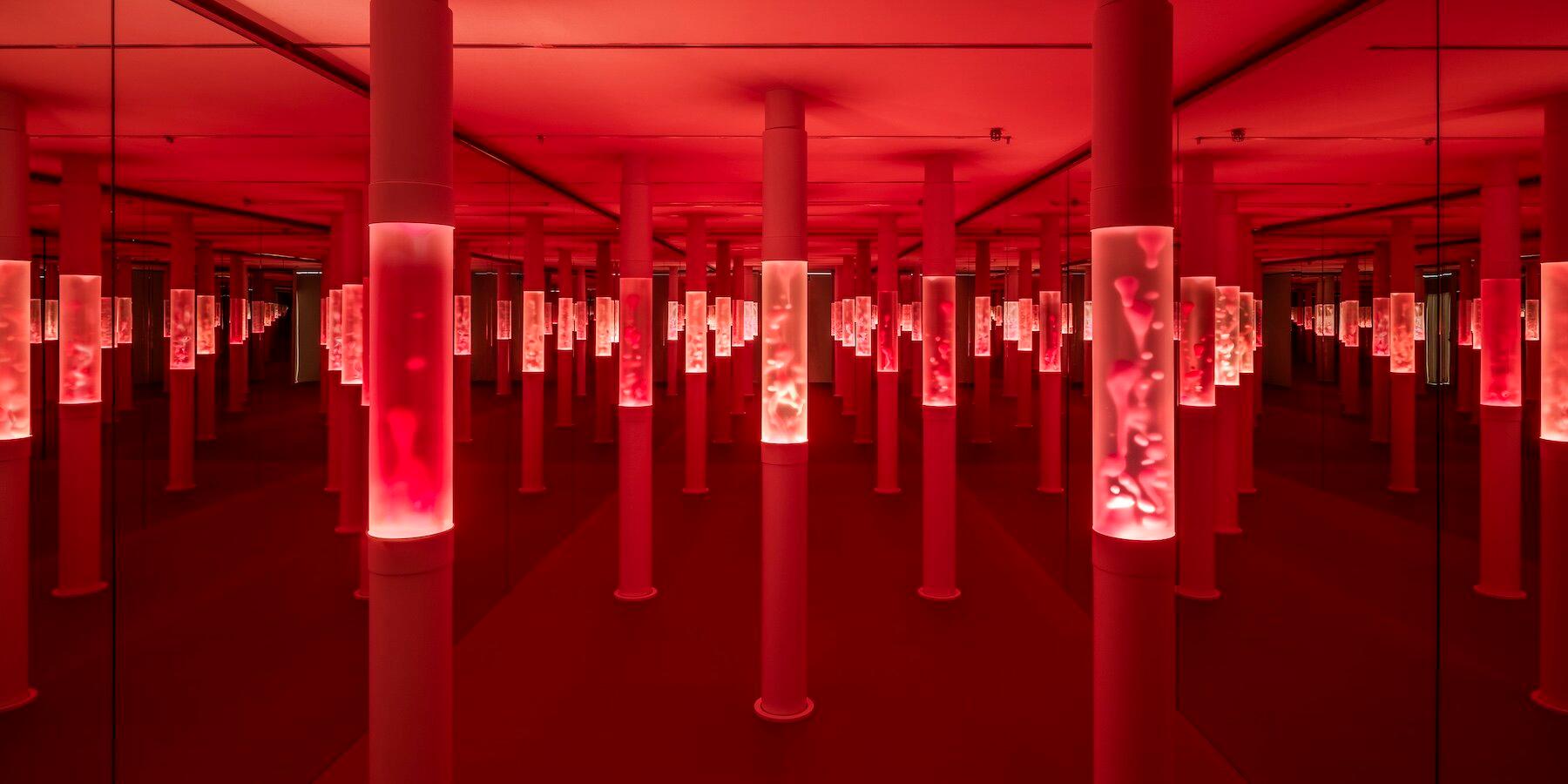
Walk into one room at the Museum für Gestaltung Zürich and the lava lamp stops being a desk object. Eight columns of Bubblegum pink lava, each 2.56 metres tall, stand in a mirrored room, and the reflections carry them out of sight in every direction.
It’s part of Light and Color, Sabine Marcelis’s first museum exhibition, at the museum’s Toni-Areal venue from October 30, 2026 to April 4, 2027. Designboom’s write-up describes a mix of key works from recent years and installations made for these galleries, across furniture, lighting and mirrors, in glass, resin and stone.
Two of those installations grew out of brand collaborations. Here, two brand products became rooms, and that’s the part worth bringing back to a brief.
One object, repeated, then mirrored
The lava columns come out of Marcelis’s ongoing work with Mathmos, the British manufacturer that makes lava lamps at its factory in Poole, Dorset. She visited the factory to approve the final prototypes. “I always wanted to design a giant lava lamp,” she told designboom. The lava moves inside frosted glass, between white aluminum bases and caps, so the frame stays plain and the lava is what you look at.
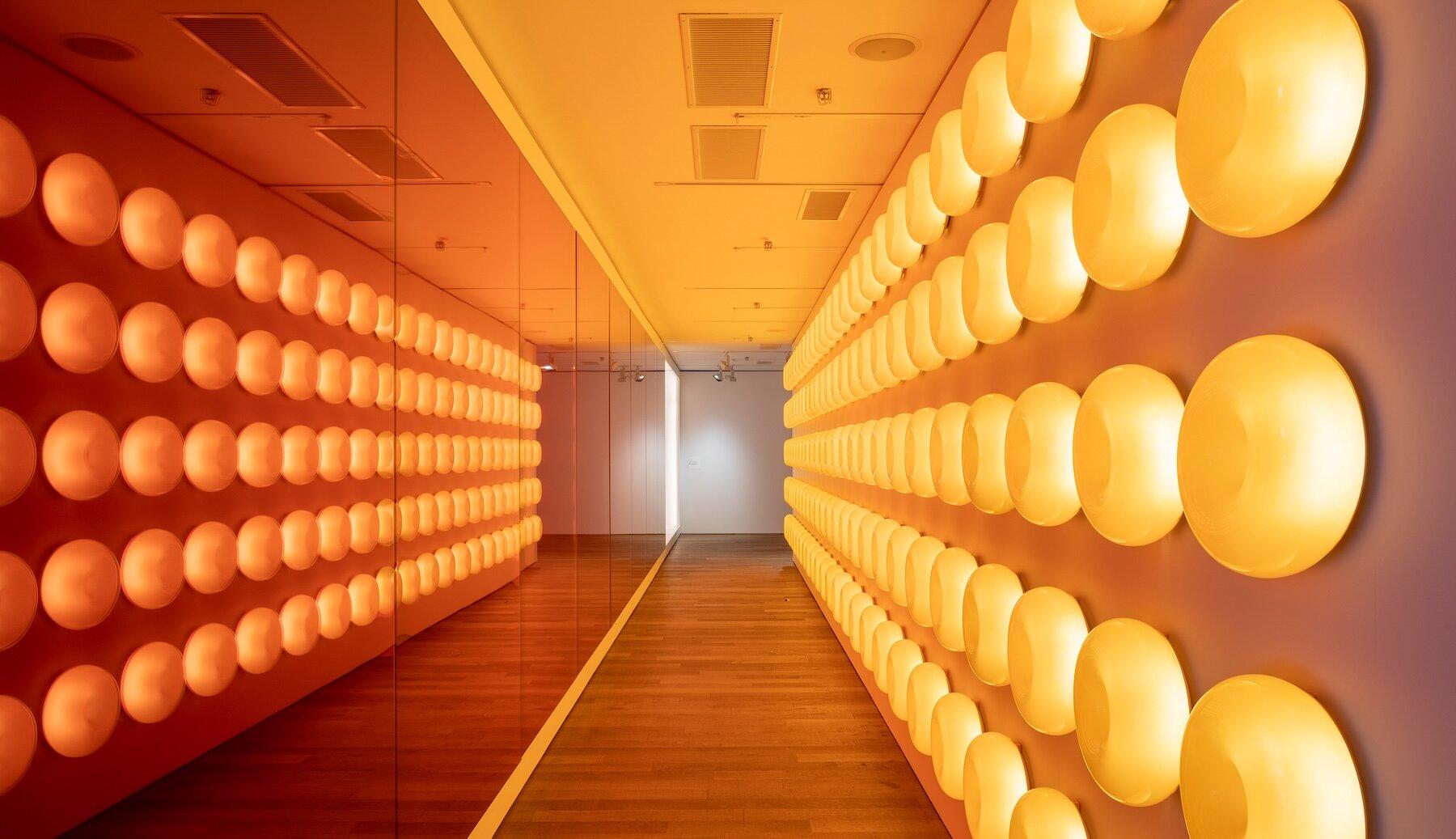
The second room uses VARMBLIXT, the lighting collection Marcelis developed with IKEA. 125 of its lamps line a walk-through tunnel 11 metres long, and a gradient mirror wall reshapes how deep the space feels.
Put the two side by side and you get a recipe:
One object people recognize: a lava lamp, an IKEA VARMBLIXT lamp.
Enough of them to read as a field: eight columns, 125 lamps.
Mirrors to finish the job: the reflections take the field past the walls.
A quiet frame: white bases and caps, and a restrained exhibition design around them.
None of it needs a screen, and none of it asks visitors to learn a new object. People know what a lava lamp is, so the scale is the surprise.
 Shop Objects
 Explore our curated brand essentials
The show feeds the shop
Here’s the commercial part. Designboom reports that the columns’ Bubblegum palette carries into a limited-edition Mathmos Astro lamp launching in November. So the museum room doubles as a backdrop for a product people can put on a shelf at home.
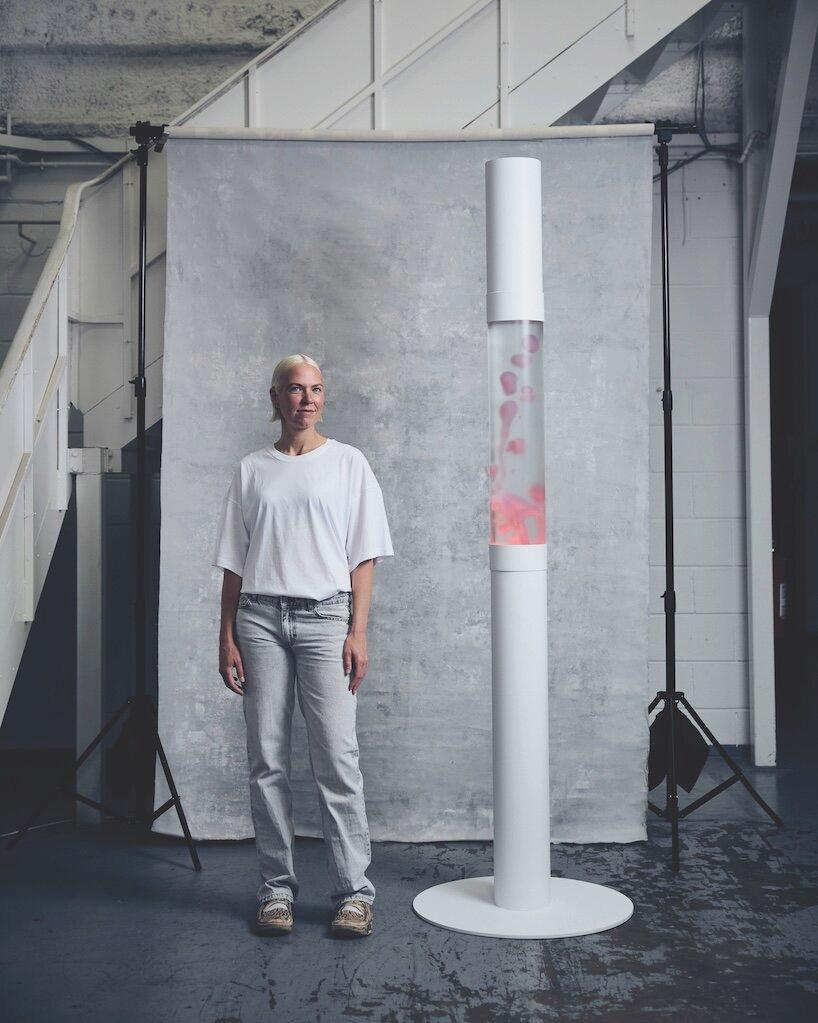
Designboom doesn’t say whether that was the plan. The order is still worth noting: a version too big for any living room, then one that fits on a side table, in the same pink.
What designboom doesn’t say: who built the mirrored room and the column housings, what any of it cost, or who paid for what. If you’re pricing a version of this, those are your first questions.

 Get a QuoteRequest your personalized project
What we’d take into a brief
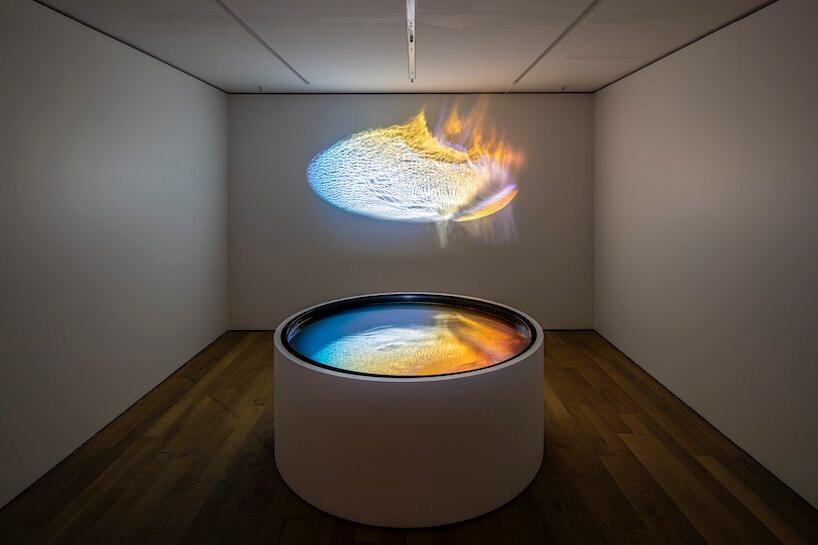
Not every room in the show is a product. Sunbeam Captured, made with artist Boris Acket, ripples a thin layer of water while a moving light traces the sun’s path, and a mirror shifts from blue to orange. It uses the same tool, a mirror, with no brand object at all.
Brience is a Toronto-based custom fabrication and experiential design studio, and mirrors are the part of this we’d plan hardest. They repeat everything: every cable, every seam, every fingerprint on the glass. A mirrored room only works if the joints are tight and the hardware is hidden, because any mistake shows up dozens of times.
Get a QuoteRequest your personalized projectIf you have a client with a product people already know, try the exercise. How many would it take to fill a room, and what happens when you add a mirror? Talk it through with us before the brief goes out.
Source: designboom, “sabine marcelis turns light and color into immersive spaces at zurich’s museum für gestaltung” (October 2026).