 Sign In
 5 min5 min read

Toronto’s newest arch is missing a leg. Visitors finish it with one hand.
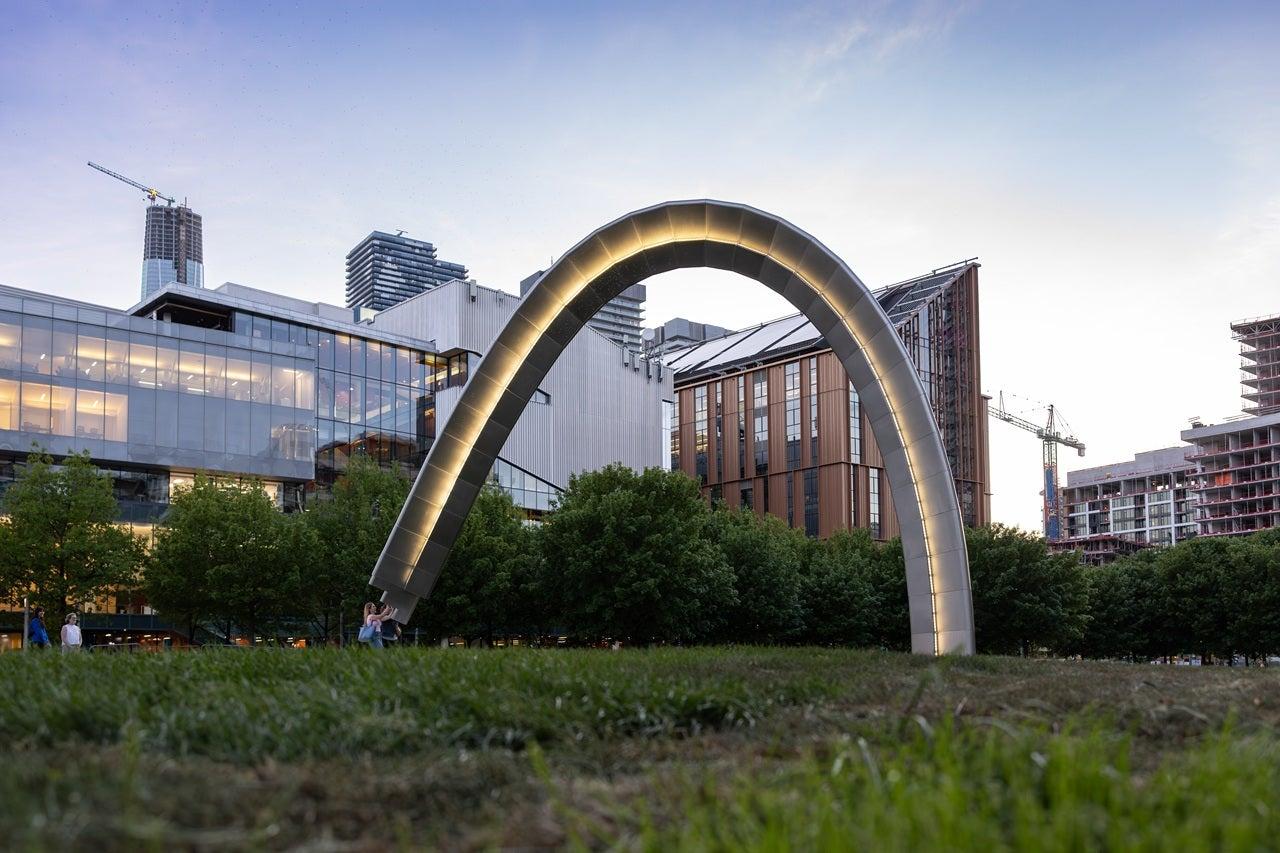
Unfinished Arch, Rafael Lozano-Hemmer’s first permanent public artwork in Canada, opened in Sherbourne Common on Toronto’s waterfront on June 1, 2026. The stainless-steel arch rises 9.1 metres and cantilevers 14 metres from one support, stopping in mid-air. Touch its floating end and more than 1,000 LEDs light from your hand down to the base. Toronto’s Eventscape built and installed it. The lesson: when one touch is the whole idea, the build has to make that touch easy to reach and easy to see.
In brief. Unfinished Arch, Rafael Lozano-Hemmer’s first permanent public artwork in Canada, opened in Sherbourne Common on Toronto’s waterfront on June 1, 2026. The stainless-steel arch rises 9.1 metres and cantilevers 14

 Get a Quote
 Request your personalized project
metres from one support, stopping in mid-air. Touch its floating end and more than 1,000 LEDs light from your hand down to the base. Toronto’s Eventscape built and installed it. The lesson: when one touch is the whole idea, the build has to make that touch easy to reach and easy to see.
Rafael Lozano-Hemmer calls Unfinished Arch an “anti-monument”. It’s a 9.1-metre stainless-steel arch in Sherbourne Common that stops in mid-air, about where a second leg should land. Put your hand on the floating end and the arch lights up. Let go and it goes dark.
Waterfront Toronto and the City of Toronto unveiled it on June 1, 2026. It’s the artist’s first permanent public artwork in Canada, picked from more than 80 submissions to an international call, and the centrepiece of the East Bayfront Public Art Master Plan. Toronto fabricator Eventscape engineered, built and installed it. Five months after opening, a visitor’s reel of it is still doing the rounds.
How one touch lights 1,000 LEDs
Waterfront Toronto’s write-up lays out the mechanism. A triangular metal plate sits in the ground where the missing support would be. You stand on it and touch the end of the arch, which the artist describes as closing a circuit, though no current runs through your body. Contact and proximity sensors in the stainless-steel plates at the truncated end pick up the touch.
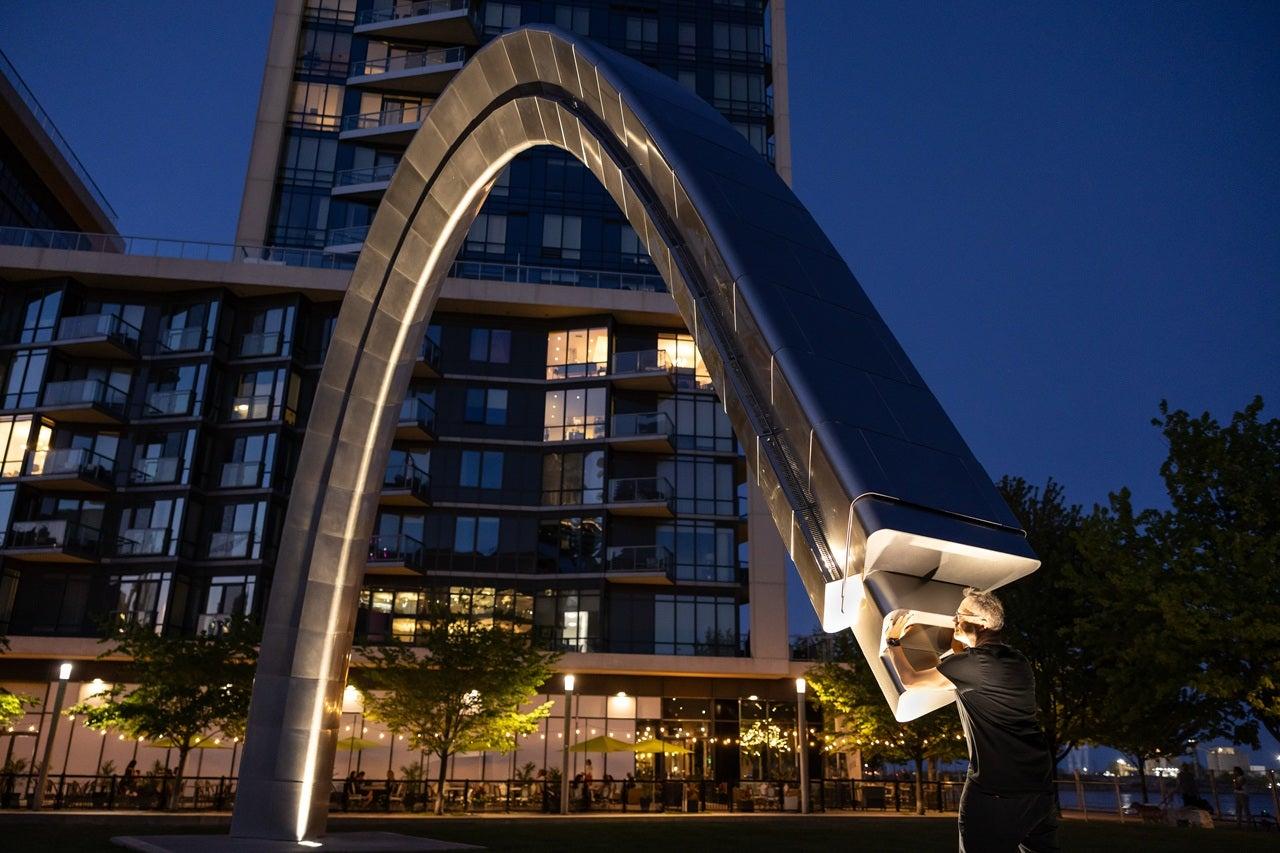
More than 1,000 embedded LEDs then light in sequence, starting near your hand and running down to the base. Let go and the animation runs in reverse. The LEDs light the recessed undersides of the arch’s triangular profile, so the effect reads in daylight as well as at night. After dark, uplights keep a steady glow on the steel. Several people can complete the gesture at once.
A cantilever built to look like it’s falling
The fact sheet gives the numbers: 9.1 metres tall, a 14-metre cantilever from a single ground support, 25,000 lb of stainless steel and a foundation nearly 50 feet deep. The site is reclaimed waterfront land, so it needed detailed geotechnical work, with freeze-thaw and the services underground to plan around.
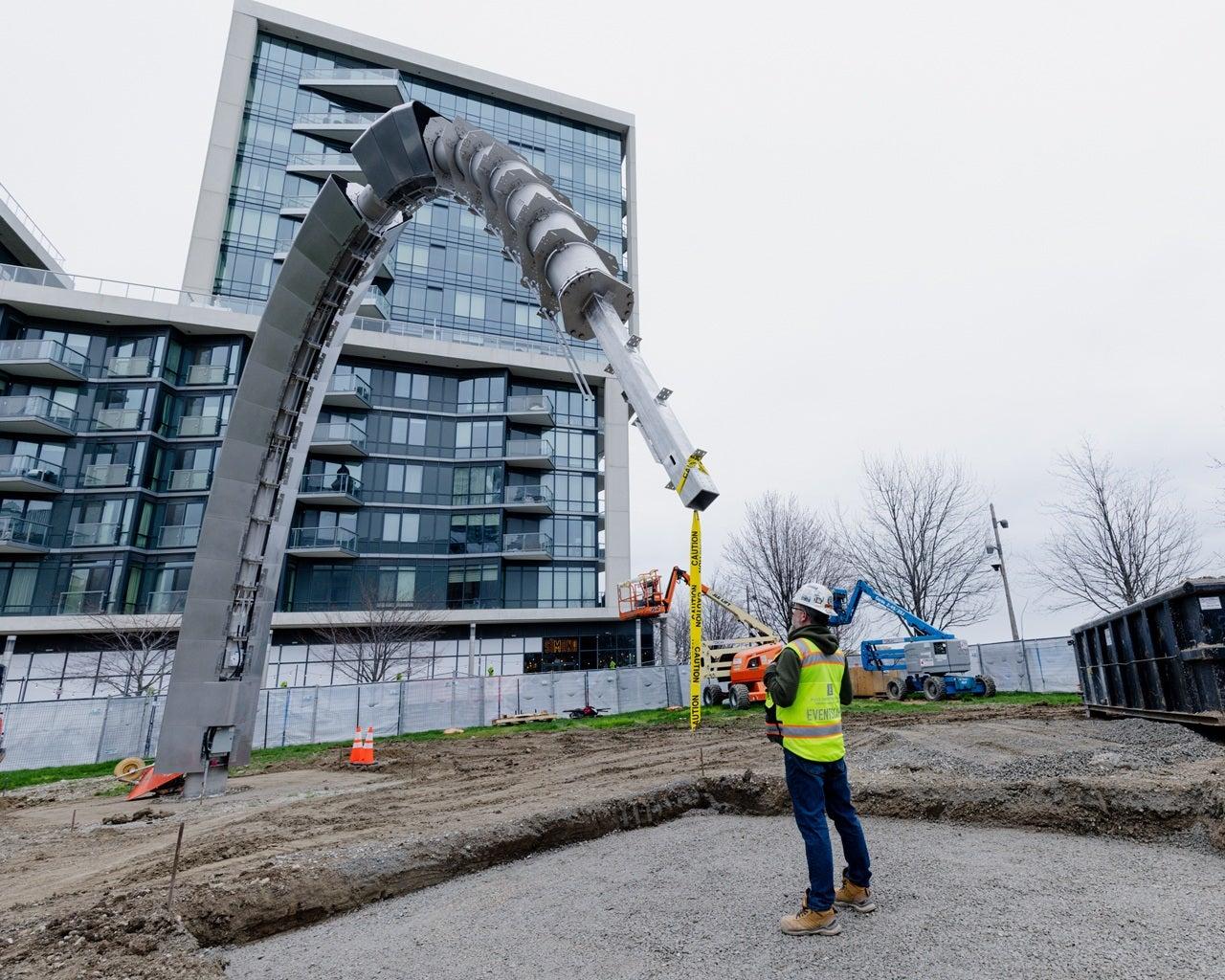
A cantilever that long sags under its own weight. According to Waterfront Toronto, the team predicted that deflection and compensated for it before installation, and the finished arch has a slight sway you can notice. Eventscape built the main stainless-steel spine in sections, assembled it to tight tolerances and used 3D scanning to check fit and alignment. “I made this artwork teetering,” Lozano-Hemmer told UrbanToronto. “I made it so that it was unstable.”
 Shop ObjectsExplore our curated brand essentials
Reachable by everyone, not just the tall
This was the first Waterfront Toronto public art commission reviewed by its Accessibility Advisory Committee, and that review shaped the paths, clearances and interaction zones. The truncated end is stepped, so people of different heights and abilities, wheelchair users included, can reach it. Tactile paving leads to the interaction point, and a quiet ticking sound near the lowest point of the cantilever helps blind and low-vision visitors find it.
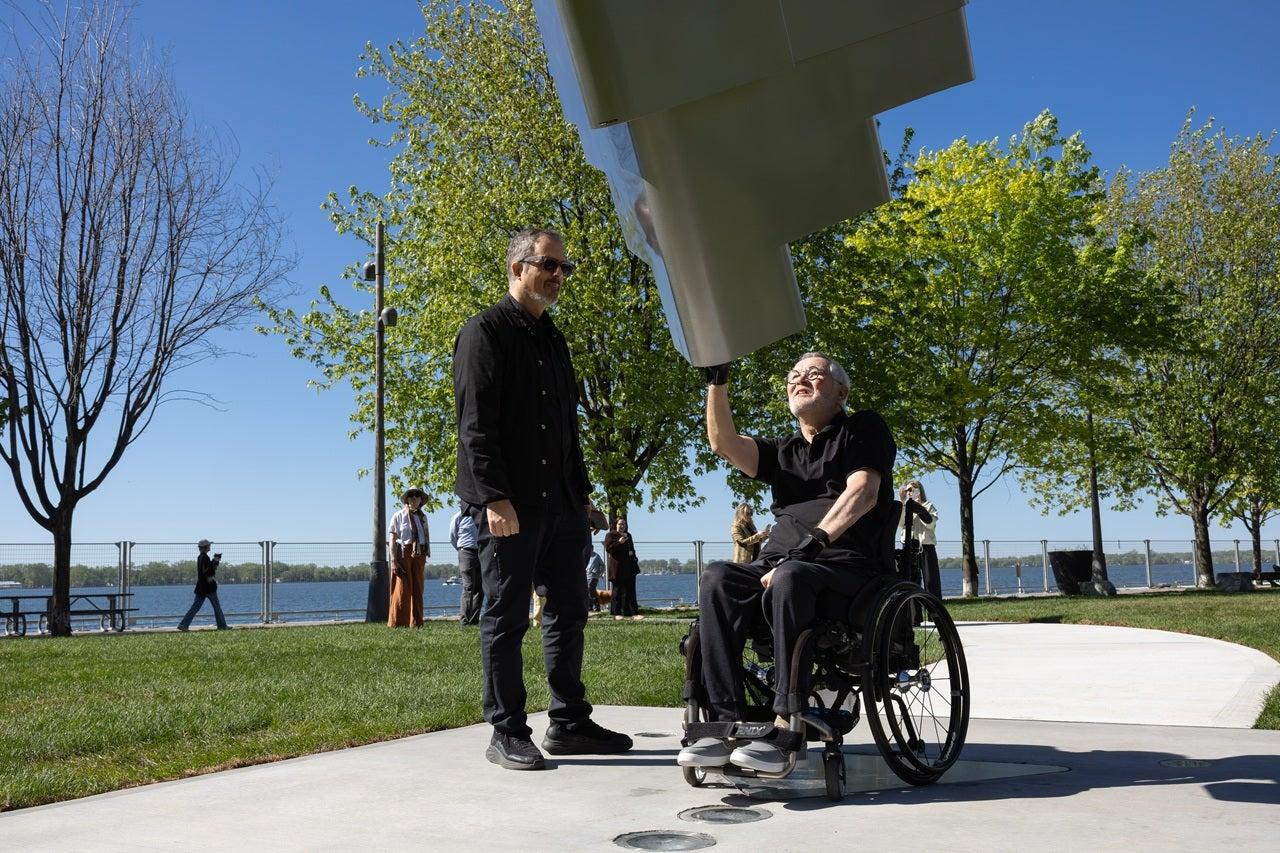
That’s the detail we’d point brand teams to. When an activation depends on a touch, the touch point is the most important dimension in the build.
What a brand activation can borrow
One gesture, no instructions. The shape tells you where your hand goes. Nobody needs a sign to know what an unfinished arch is asking for.
Light that works at 2 p.m. Most activations run in daylight. Lighting recessed surfaces, as the arch does, keeps the reaction visible when the sun is out.
Design the reach first. Set the touch point for a range of heights and for a seated visitor, then mark the way to it.
Plan for weight and weather. Outdoors, a piece has to allow for how it moves, flexes and ages over a season.
Get a QuoteRequest your personalized projectWe wrote more on keeping interactive pieces working in our guide to testing an installation before the doors open.
At Brience, a Toronto-based custom fabrication and experiential design studio, we’d start an interactive build from the touch point and work outward. If you’re planning something people complete with their hands, talk to us.
Sources: Waterfront Toronto, “Fact Sheet: Unfinished Arch” (2026); Waterfront Toronto, “Incomplete by Design: Rafael Lozano-Hemmer’s Unfinished Arch Opens at Sherbourne Common” (June 2026); Waterfront Toronto, “You Complete Me: Experience the Unfinished Arch at Sherbourne Common” (June 2026); UrbanToronto, “Interactive public art Unfinished Arch lights Sherbourne Common” (June 2026); Atelier Lozano-Hemmer, “Unfinished Arch” (2026).