 Sign In
 5 min5 min read

After the show: strike, storage and reuse for booths and pop-ups
Plan the strike when you plan the build. Toronto shows set hard move-out deadlines: at Congress 2027 every exhibit must leave the Toronto Congress Centre by 2 p.m. on January 15, and IDS Toronto gives exhibitors until 8 p.m. on January 25 to clear the MTCC, with anything left removed at their expense. Agree who strikes and who pays overtime, what gets thrown away, where the build is stored and how its condition is recorded, and design it to be rebuilt: numbered parts, drawings on file and crates made with the build.

In brief. Plan the strike when you plan the build. Toronto shows set hard move-out deadlines: at Congress 2027 every exhibit must leave the Toronto Congress Centre by 2 p.m. on January 15, and IDS Toronto gives exhibitors until 8 p.m. on January 25 to clear the MTCC, with anything left removed at their expense. Agree who strikes and who pays overtime, what gets thrown away, where the build is stored and how its condition is recorded, and design it to be rebuilt: numbered parts, drawings on file and crates made with the build.
At Congress 2027, Landscape Ontario's show at the Toronto Congress Centre, dismantling may not start until the show closes at 4 p.m. on Thursday, January 14; exhibitors who pack early can be refused at future Landscape Ontario shows. The loading docks open at 5 p.m., and trucks get a bay only once the whole shipment is packed and labelled. Every exhibit must be out by 2 p.m. the next day. Anything left in the hall is removed by Stronco, the official supplier, and stored in its warehouse, and show management can invoice the exhibitor for the shipping and storage.
Ten days later at the Metro Toronto Convention Centre, IDS Toronto runs move-out from 5 p.m. to midnight on Sunday, January 24, and from 8 a.m. to 8 p.m. on Monday. Trucks need a booked slot, and only fully packed booths reach the loading area. Everything, brochures and trash included, has to be out by 8 p.m. Monday; after that, show management may remove it at the exhibitor's expense.
Strike is a deadline with a bill attached, and the cheapest time to plan it is before anything is built. Brience is a Toronto-based custom fabrication and experiential design studio. Here's what we'd settle at the brief stage, alongside the points in our guide to hiring a fabricator in Toronto.
 Shop Objects
 Explore our curated brand essentials
Who strikes, and what it costs
Whose crew. Your fabricator's, the venue's, or both. At the Enercare Centre, one 2025 show handbook required booth labour through a contractor affiliated with Local 506. Ask who is on the floor at move-out and whether it's in the quote.
Safety on the floor. The IDS exhibitor kit notes that the Ministry of Labour treats the show floor as a construction site during move-in and move-out, so hard hats, safety shoes and vests are required. Congress requires CSA-approved steel-toe footwear for both.
Overtime. If move-out runs past midnight on a Sunday, who pays? Put it in writing.
Disposal. Whatever isn't coming home has to leave by the same deadline. Decide before the show what gets kept, donated or thrown out, so nobody is deciding at 11 p.m.
Storage: where it lives and how it comes back
Where. The fabricator's shop, a show contractor's warehouse or your own space. IDS points exhibitors to Stronco's post-show warehousing to avoid pickup congestion, with extra charges for storage beyond the deadline. Get the rate in writing.
Condition. Pack it in its own crates, not shrink-wrapped on a pallet, and photograph each piece going into storage and coming out. Damage found at the next install leaves no time to fix it.
Inventory. List every crate and its contents against the drawings, so a different crew can rebuild it.

 Get a QuoteRequest your personalized project
Design it to come back
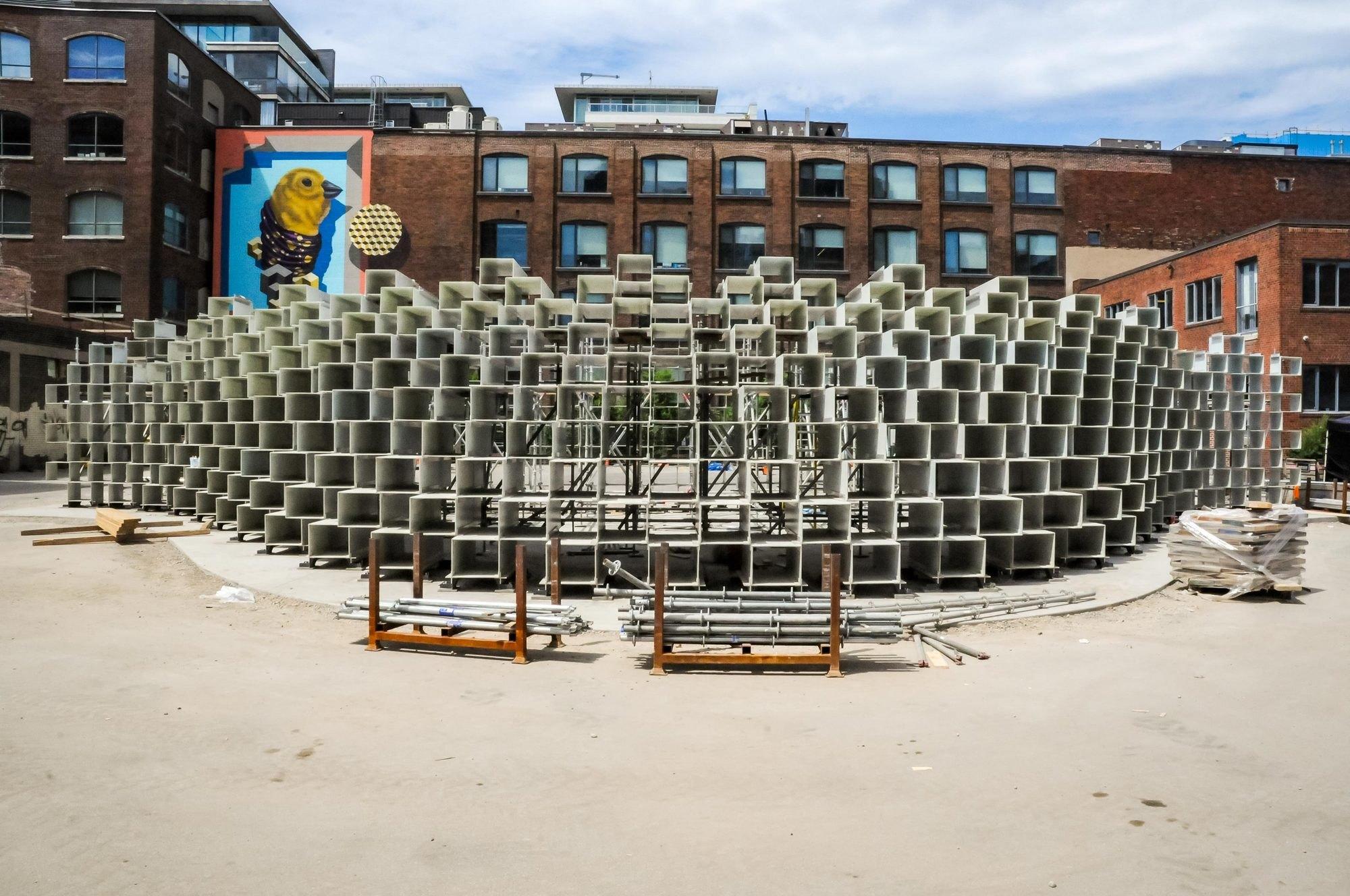
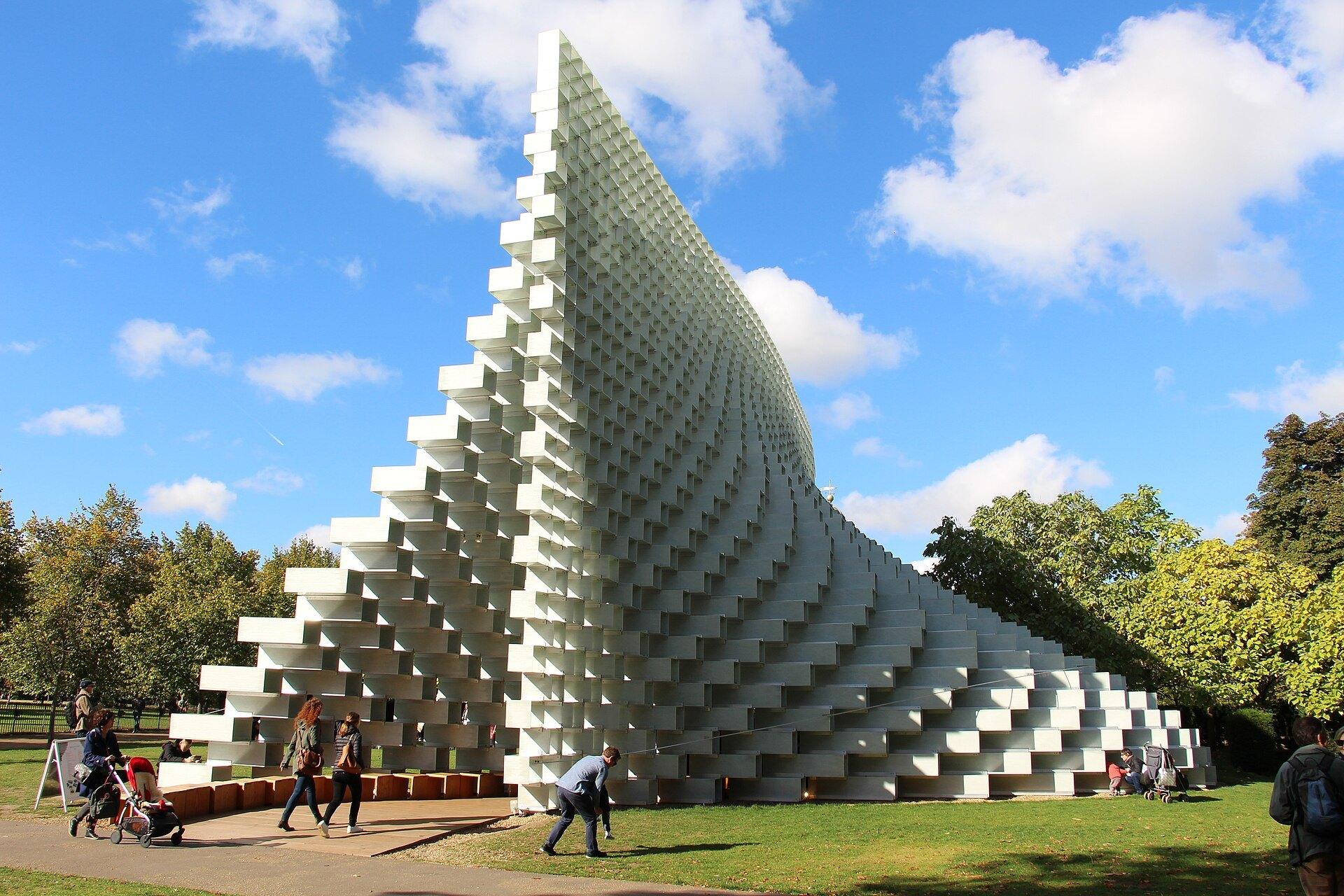
Reuse is easiest when it's in the brief. Bjarke Ingels Group's 2016 Serpentine Pavilion in London was a wall of 1,802 stacked fibreglass "bricks". After its London run it was taken apart, shipped to North America and rebuilt on King Street West, Toronto, as the home of Westbank's exhibition Unzipped, open from September 15 to November 30, 2018: the first Serpentine Pavilion to make it to North America.
Number every part
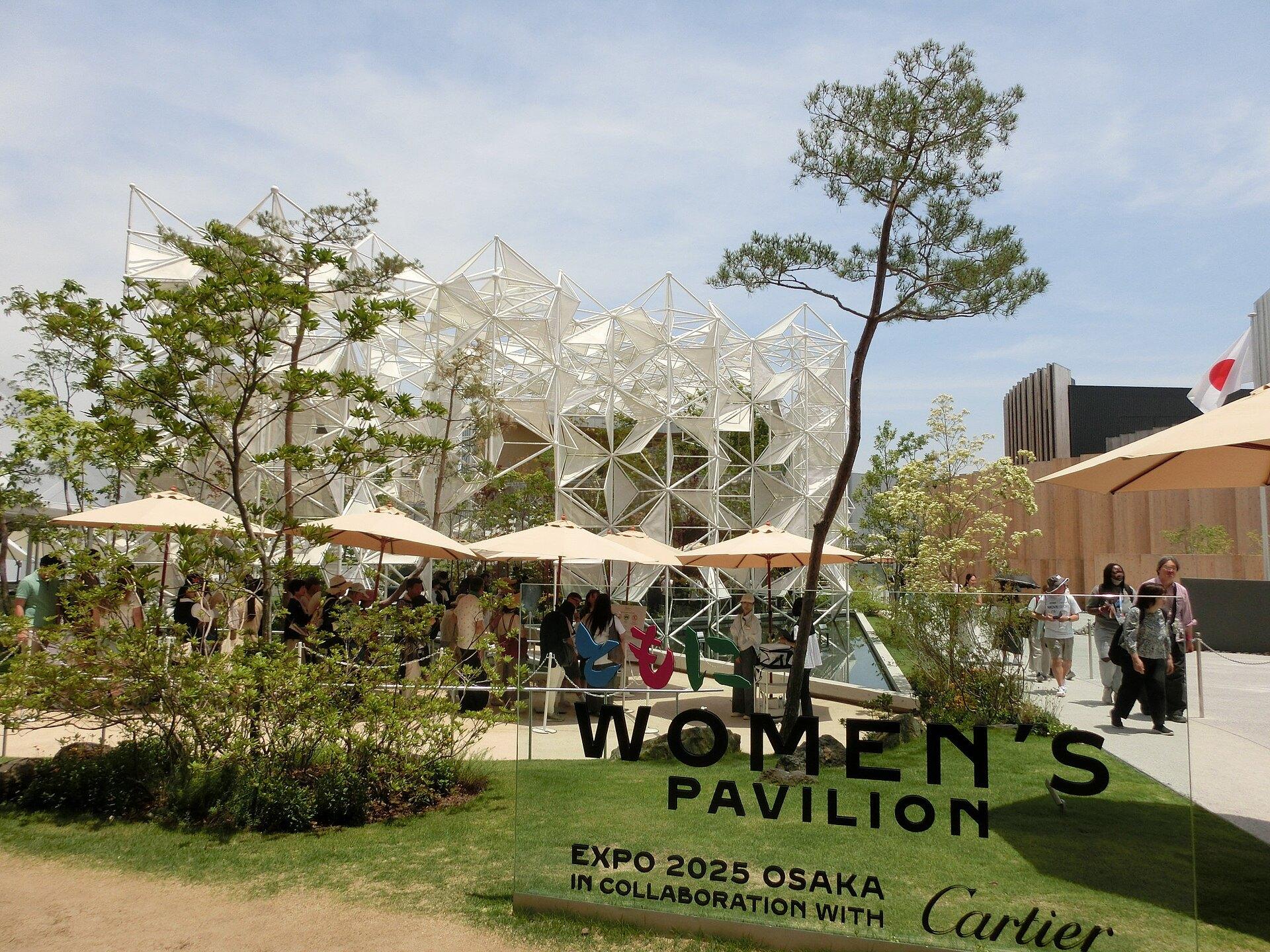
The facade of Japan's pavilion at Expo 2020 Dubai went further. It was designed from the start to come apart: a ball-joint system whose tubes, nodes and membranes can all be dismantled. For Expo 2025 in Osaka it became the Women's Pavilion on a long, narrow site, 18 by 110 metres. According to the architects' project notes, about 70 per cent of the original 10,000 components were reused, and fitting them without fabricating new parts took three months. Every part carried a QR code linked to the building model. The facade is now being repurposed a third time, for the 2027 horticultural expo in Yokohama.
A booth or pop-up can follow the same rules at a smaller scale:
Joins that come apart without damage, and no glue where a bolt will do.
A number on every part, matched to drawings kept on file.
Graphics that change without the structure changing, so the next campaign is a reprint, not a rebuild.
Crates designed with the build, sized for the truck and the storage rack.
Get a QuoteRequest your personalized projectIf you want your next booth or pop-up built to come back, start with a conversation.
Source: Landscape Ontario, Congress 2027 Move-Out and Shipping Instructions Form; IDS Toronto Exhibitor Kit, Move-In/Out and Show Safety (2026 kit, January 2027 dates); TCS Toronto Waterfront Marathon Expo Exhibitor Handbook (2025); Canadian Architect, "Bjarke Ingels Serpentine Pavilion comes to Toronto as 'Unzipped'" (September 2018); TensiNet, "Transformative Architecture: Dubai 2020, Osaka 2025, Yokohama 2027".