 Sign In
 5 min5 min read

What is an exhibitor-appointed contractor, and when do you need one?
An exhibitor-appointed contractor (EAC) is any company you bring in to work on your booth that isn't one of the show's official contractors: your fabricator's install crew, an AV company, a supervisor. You need one whenever outside hands touch the booth during move-in or move-out. The Buildings Show 2026 at the MTCC asks for a form signed by both companies and $5 million in liability cover naming Informa Canada and the MTCC, and bars EACs from rigging, electrical, plumbing and lift work.
In brief. An exhibitor-appointed contractor (EAC) is any company you bring in to work on your booth that isn't one of the show's official contractors: your fabricator's install crew, an AV company, a supervisor. You need one whenever outside hands touch the booth during move-in or move-out. The Buildings Show 2026 at the MTCC asks for a form signed by both companies and $5 million in liability cover naming Informa Canada and the MTCC, and bars EACs from rigging, electrical, plumbing and lift work.
The Buildings Show's occupancy of the Metro Toronto Convention Centre runs from November 30 to December 5, 2026. Any exhibitor who wanted an outside company to work on their booth had a paper deadline a month earlier: the show's exhibitor-appointed contractor form, signed by both the exhibitor and the contractor, plus the contractor's certificate of insurance, due November 2.
An exhibitor-appointed contractor, or EAC, is the term Toronto exhibitor manuals use for that outside help, and the rules around it decide who can do what on the floor. Brience is a Toronto-based custom fabrication and experiential design studio. When a brand or agency hires a fabricator to build and install a booth, the fabricator is usually the EAC, so these forms sit on both desks. Here is what the term means and what the rules ask, with the show each rule comes from.
 Shop Objects
 Explore our curated brand essentials
What counts as an EAC
GES, which runs exhibitor services for shows such as LUPUS Toronto 2025, defines it in its EAC notice for that show at the Westin Harbour Castle: a company other than the show's general or official service provider that needs access to your booth during installation and dismantling. An EAC can only provide services that the venue or the show hasn't made exclusive to someone else.
That covers most outside help:
Your fabricator's install crew, or a supervisor directing show labour.
An AV or technology company setting up screens and interactive pieces.
A rental company delivering and setting up furniture or equipment.
The Buildings Show form lists the same kinds of work: install and dismantle labour, equipment rental and set-up, and booth design and supervision.
The GES notice asked for the form and a valid certificate of insurance at least 30 days before the show, with a separate notice for every third party. Skipping it may keep the contractor's people off the floor. It also makes the exhibitor responsible for losses an EAC causes that the EAC's insurance doesn't cover.

 Get a QuoteRequest your personalized project
What an EAC can't do at the MTCC
At The Buildings Show 2026, the official contractors are Freeman, Encore A/V, Showtech Power & Lighting and the MTCC itself, and the form spells out what outside contractors may not touch:
Drayage, moving freight from the dock to your booth: Freeman.
Forklift and Genie lift operation: Freeman and Showtech.
Overhead rigging, electrical, plumbing and mechanical services: Showtech.
Telecommunications, booth cleaning and catering: the MTCC.
The insurance ask is specific: comprehensive liability of at least $5 million per occurrence, from an insurer licensed in North America, in force through the occupancy period, with Informa Canada and the Metropolitan Toronto Convention Centre Corporation named as additional insured. The contractor also agrees to indemnify both, works only inside the exhibitor's space, may be on the floor without a show badge only during move-in hours, and may not solicit other exhibitors.
Rigging gets its own policy. The MTCC's rigging and overhead work policy makes rigging attached to the building's structure an exclusive Showtech service, and its 2026-27 fire regulations say every item suspended from the ceiling must be approved in advance. Rig plots for significant loads go to the MTCC at least four weeks before move-in; banners and signs that Showtech installs don't need one.
When you need one, and what to plan for
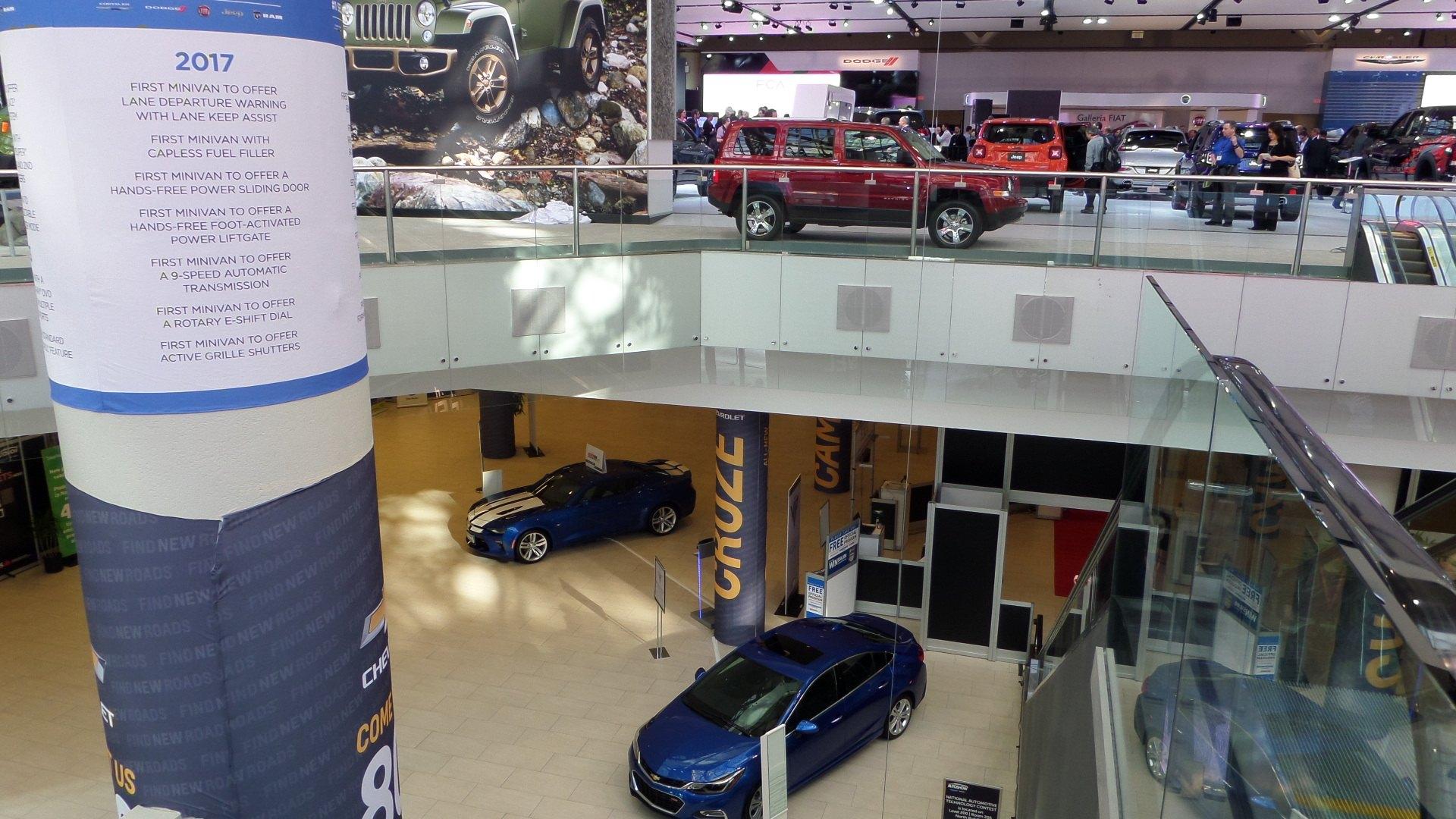
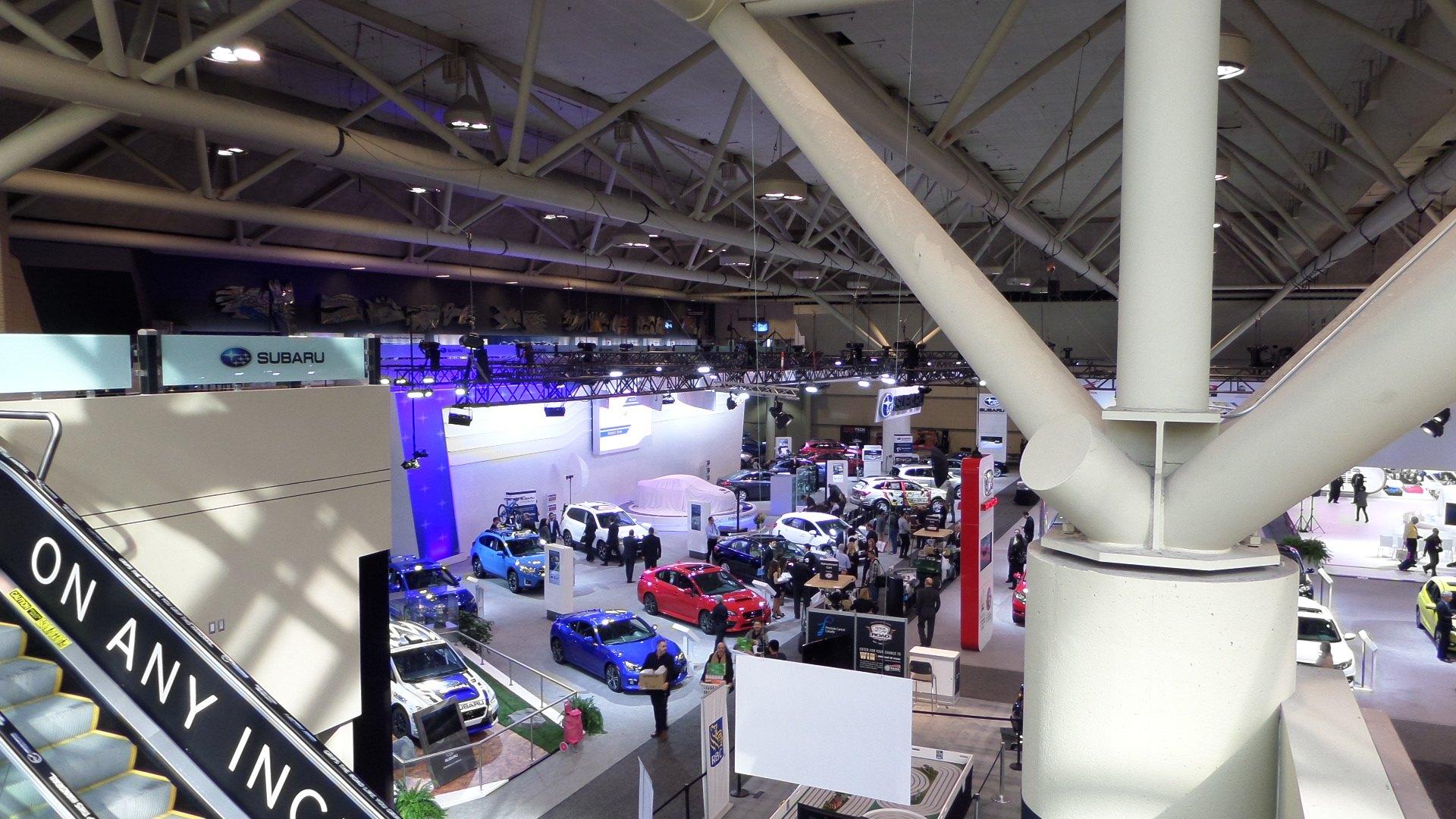
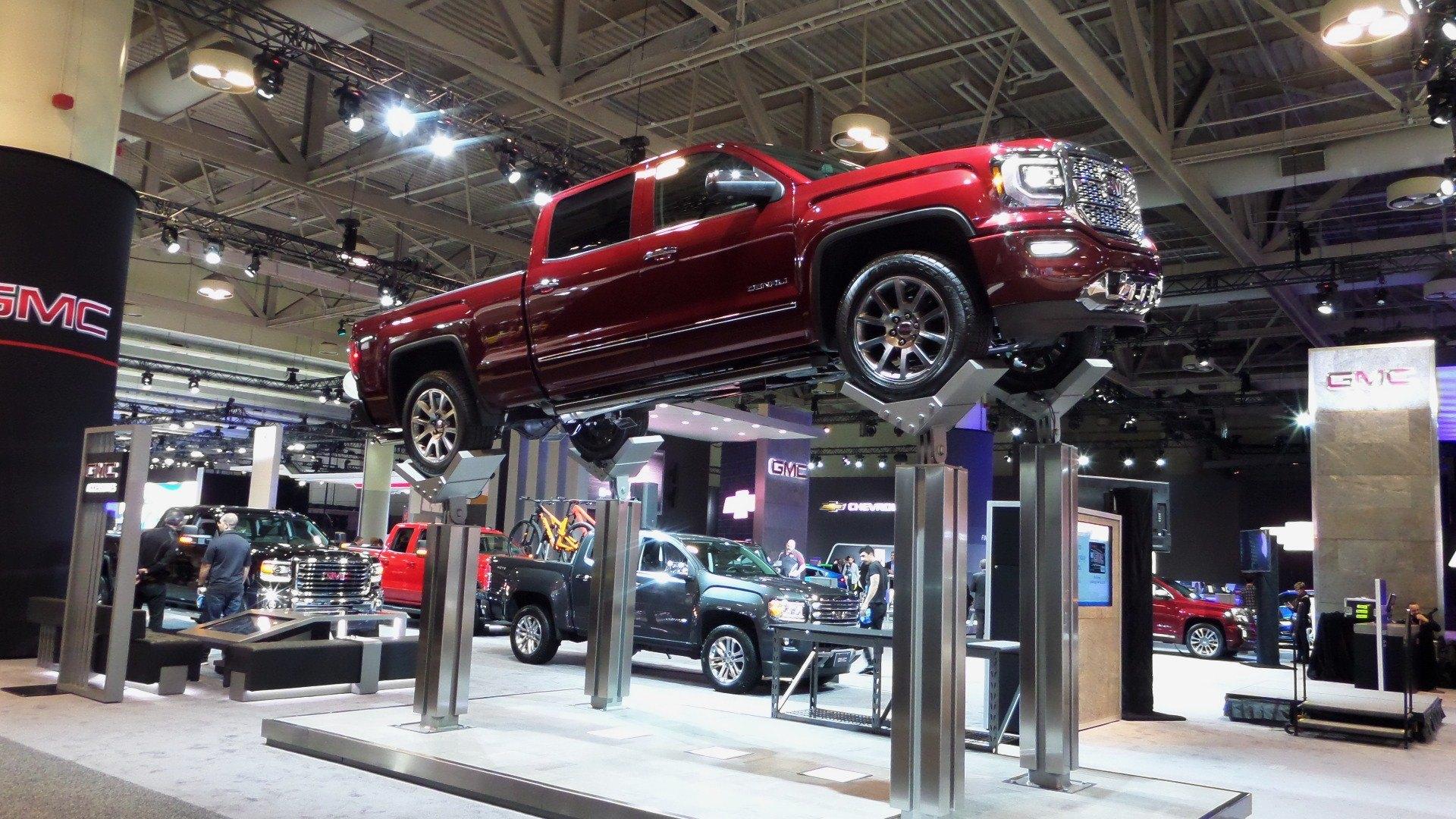
The Canadian International AutoShow, which returns to the MTCC from February 12 to 21, 2027, shows the split in a single photo. Carmakers' stands are custom structures, with brand signs hanging above them and, at the 2016 show, a pickup truck raised high on a steel frame. Under the MTCC's policy, signs hung from the building are Showtech's job. The stand underneath is the kind of work the EAC paperwork exists for.
You need the form whenever anyone who isn't an official contractor will work on your booth during move-in or move-out. For a custom booth, that means:
File early. Deadlines land weeks before the show: November 2 for a show moving in on November 30.
Get the certificate right. Check the limit, the dates and the exact names of the additional insured before the broker issues it.
Order the exclusives separately. Power, rigging, freight and lifts are booked with the official contractors, so the drawings should show where power and hanging points go.
Pass on the manual. At The Buildings Show, the exhibitor is responsible for giving the EAC the utilities, dates, hours and booth rules.
Get a QuoteRequest your personalized projectIf you're planning a booth at the MTCC and want help reading the manual, contact us. Our guide to hiring a fabricator in Toronto covers the rest of the brief.
Sources: Informa Canada, "The Buildings Show 2026: Exhibitor Appointed Contractors" (2026); GES, "LUPUS Toronto 2025: Notice of Intent to Hire an EAC" (May 2025); Metro Toronto Convention Centre, "Rigging / Overhead Work Policy" (2021-22) and "Fire Regulations for Exhibitors" (2026-27); Canadian International AutoShow (accessed November 2026).